• HOME
  • NEWS
  • EXPLORE
    • CAREER
      • Companies
      • Jobs
    • EVENTS
    • iGEM
      • News
      • Team
    • PHOTOS
    • VIDEO
    • WIKI
  • BLOG
  • COMMUNITY
    • FACEBOOK
    • INSTAGRAM
    • TWITTER
Friday, October 30, 2026
BIOENGINEER.ORG
No Result
View All Result
  • Login
  • HOME
  • NEWS
  • EXPLORE
    • CAREER
      • Companies
      • Jobs
        • Lecturer
        • PhD Studentship
        • Postdoc
        • Research Assistant
    • EVENTS
    • iGEM
      • News
      • Team
    • PHOTOS
    • VIDEO
    • WIKI
  • BLOG
  • COMMUNITY
    • FACEBOOK
    • INSTAGRAM
    • TWITTER
No Result
View All Result
Bioengineer.org
No Result
View All Result
Home NEWS Science News Biology

Traditional Chinese Medicine Compounds Trigger Cancer Cell Ferroptosis via TP53

by
October 30, 2026
in Biology
Reading Time: 3 mins read
0
Traditional Chinese Medicine Compounds Trigger Cancer Cell Ferroptosis via TP53

Traditional Chinese Medicine Compounds Trigger Cancer Cell Ferroptosis via TP53

Share on FacebookShare on TwitterShare on LinkedinShare on RedditShare on Telegram

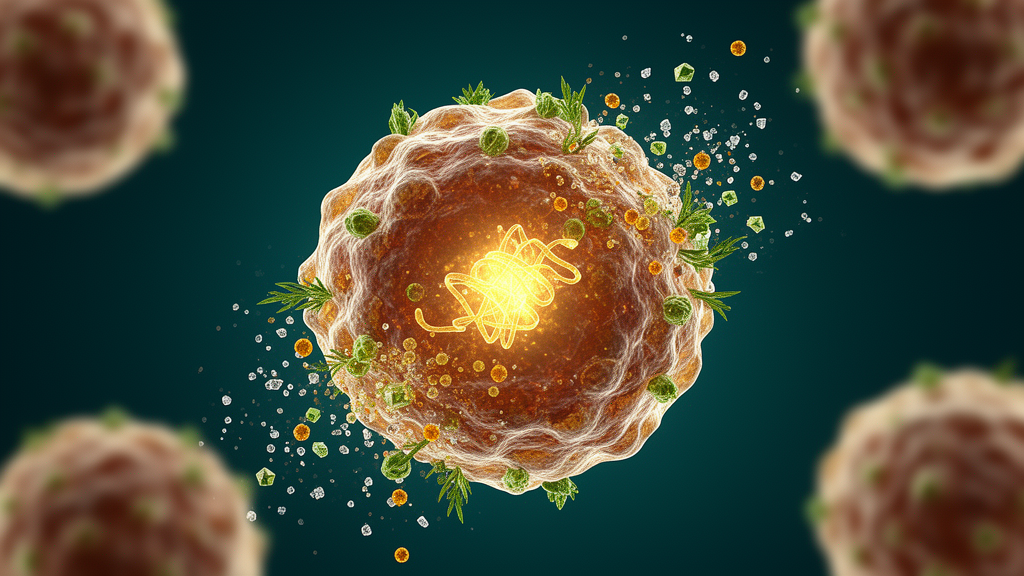
A traditional Chinese medicine formula and two of its key components may fight prostate cancer by pushing tumour cells into ferroptosis, an iron-dependent form of cell death, according to a study published in Biological Procedures Online. Researchers report that the formula, known as Fuzheng Yiai Formula (FZYAF), and its constituents ursolic acid (UA) and Anhydroicaritin (AHI) appear to act on the tumour-suppressor protein TP53, a pathway linked to the ferroptosis machinery involving SLC7A11 and GPX4.

The team began with network pharmacology, a computational approach that maps the molecular relationships between a multi-component remedy and human disease targets, and then verified the predictions experimentally using HPLC-MS analysis. Together, these methods identified UA and AHI as the key active components of FZYAF and flagged TP53 as a core target through which the formula might exert its antitumor effects in prostate cancer (PCa).

In laboratory experiments, human PCa cells treated with UA and AHI showed reduced proliferation and reduced migration, two behaviours central to cancer progression. The treatments also induced ferroptosis in the cells. Notably, when the two compounds were applied in combination, the effect was stronger than with either compound alone, suggesting a synergistic interaction between the two plant-derived molecules.

The work then moved into animal models. The team established a PCa mouse model and analysed tumour tissue from FZYAF-treated mice using metabolomics, a technique that profiles the small metabolic molecules in a sample. The analysis showed that FZYAF inhibited tumour growth in the mice and induced ferroptosis, and that these effects were associated with alterations in lipid metabolism-related pathways.

By binding to and upregulating TP53, UA and AHI may tip this balance toward ferroptotic cell death in prostate tumour cells.

Several caveats are worth keeping in view. The published version is an early-release, peer-reviewed accepted manuscript that may still undergo editorial changes before the final version of record. The in vivo work relied on mouse models rather than human trials, and the metabolomic findings describe associations with lipid metabolism pathways rather than a fully resolved causal chain. The study itself noted that the mechanisms of action of FZYAF and its key components in prostate cancer had previously remained unclear, and the findings were limited to cell and mouse models. Clinical application would require dosing, safety and efficacy studies in humans, none of which are reported here.

Even so, the study offers a concrete molecular story connecting a traditional formula to a modern cell-death pathway: two identified components, a verified protein target, enhanced effects in combination, and tumour growth inhibition in mice accompanied by ferroptosis and lipid-metabolism changes.

Subject of Research: Ferroptosis-based inhibition of prostate cancer by traditional Chinese medicine compounds targeting TP53

Article Title: Fuzheng Yiai Formula and its Key Components Inhibited PCa by TP53/SLC7A11/GPX4-Induced Ferroptosis

Article References: Sheng, W., Li, Y., Yu, X., Zeng, X., Jiang, Y., Wu, Q., Shen, F., Ouyang, X., & He, Q. (2026). Fuzheng Yiai Formula and its Key Components Inhibited PCa by TP53/SLC7A11/GPX4-Induced Ferroptosis. Biological Procedures Online. https://doi.org/10.1186/s12575-026-00357-x

Image Credits: AI Generated

DOI: 10.1186/s12575-026-00357-x

Keywords: prostate cancer, ferroptosis, TP53, ursolic acid, Anhydroicaritin, Fuzheng Yiai Formula, network pharmacology, metabolomics, SLC7A11, GPX4, traditional Chinese medicine, cancer research

News Source: Nathaniel Bowman. (October 30, 2026). Traditional Chinese Medicine Compounds Trigger Cancer Cell Ferroptosis via TP53. Scienmag.
Tags: Anhydroicaritincancer researchferroptosisFuzheng Yiai FormulaGPX4Metabolomicsnetwork pharmacologyProstate CancerSLC7A11TP53traditional Chinese medicineursolic acid
Share12Tweet7Share2ShareShareShare1

Related Posts

Reduced False Lumen Flow Near the Renal Arteries Emerges Early After Aortic Dissection Repair in Kidneys That Later Atrophy

Reduced False Lumen Flow Near the Renal Arteries Emerges Early After Aortic Dissection Repair in Kidneys That Later Atrophy

October 30, 2026
Research report: 35-minute protocol for high-yield RNA extraction from gram-positive & gram-negative bacteria at room temperature without toxic chemicals

Research report: 35-minute protocol for high-yield RNA extraction from gram-positive & gram-negative bacteria at room temperature without toxic chemicals

October 30, 2026

Warm Eggs Before Hatch Plus Turmeric and Ginger Boost Heat Tolerance in Chickens

October 30, 2026

m6A RNA tags may shape chronic wound healing phase by phase, review finds

October 30, 2026

POPULAR NEWS

  • When Doctors Show Emotion: Public Perceptions of Serious Illness Conversations

    When Doctors Show Emotion: Public Perceptions of Serious Illness Conversations

    29 shares
    Share 12 Tweet 7
  • New Protocol Aims to Predict Serious Treatment Side Effects in Advanced Lung Cancer

    29 shares
    Share 12 Tweet 7
  • Dense Microporous Layers Keep Phosphoric Acid Inside Fuel Cells Under Heavy Loads

    29 shares
    Share 12 Tweet 7
  • Low-Cost 3D-Printed Robotic Arm Lifts 0.8 kg Payload With 100% Success

    29 shares
    Share 12 Tweet 7

About

We bring you the latest biotechnology news from best research centers and universities around the world. Check our website.

Follow us

Recent News

Electric pulses keep fresh roselle flowers vibrant and antioxidant-rich for eight days

Machine Learning Maps Three Fatigue Subgroups in Breast Cancer Patients

Scoping Review Maps How Depression Treatments Fare in Autistic People

Subscribe to Blog via Email

Enter your email address to subscribe to this blog and receive notifications of new posts by email.

Join 86 other subscribers
  • Contact Us

Bioengineer.org © Copyright 2023 All Rights Reserved.

Welcome Back!

Login to your account below

Forgotten Password?

Retrieve your password

Please enter your username or email address to reset your password.

Log In
No Result
View All Result
  • Homepages
    • Home Page 1
    • Home Page 2
  • News
  • National
  • Business
  • Health
  • Lifestyle
  • Science

Bioengineer.org © Copyright 2023 All Rights Reserved.