


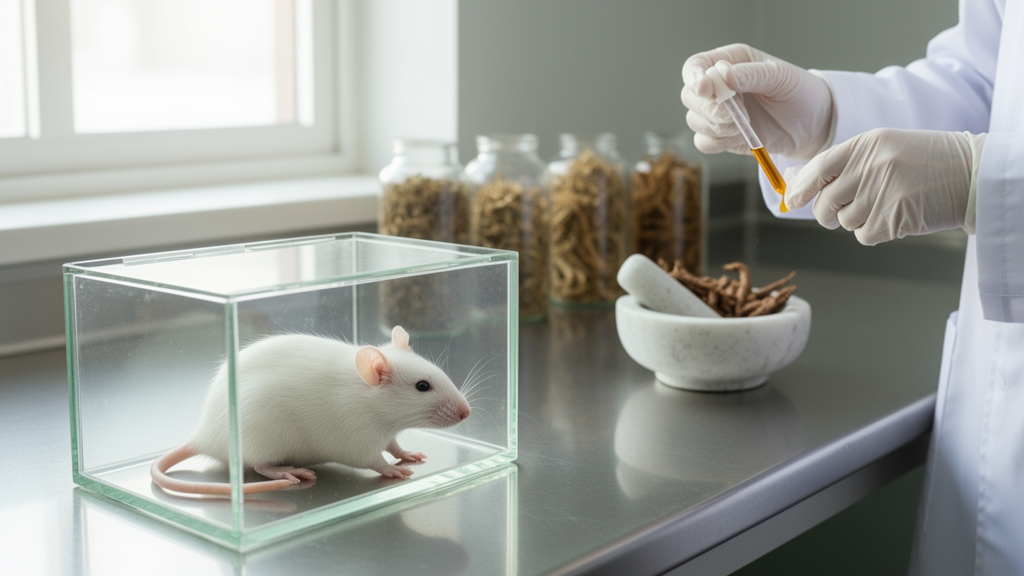
A classical two-herb Chinese formula has shown measurable effects in rats with constipation-predominant irritable bowel syndrome, easing weight loss, improving stool output and softening feces while reducing visceral pain responses. The study, published in Biological Procedures Online, combined computer-based network pharmacology with molecular docking and live animal experiments to probe how Zhizhu Decoction, a prescription recorded in the third-century text Jin Gui Yao Lue, might act on the disorder. The work was led by researchers including Zhibin Zhang and Xuegui Tang and published on 29 July 2026.
Zhizhu Decoction pairs Atractylodis Macrocephalae Rhizoma, known as Baizhu, with Aurantii Fructus Immaturus, known as Zhishi. In traditional Chinese medicine theory the pair addresses spleen deficiency and qi stagnation, concepts the authors link to impaired intestinal propulsion. The team screened the TCMSP database for active constituents of the two herbs, keeping only compounds with at least 30 percent oral bioavailability and a drug-likeness score of at least 0.18. That filter yielded four active components from Baizhu and nineteen from Zhishi, which after deduplication mapped to 128 unique predicted targets.
To find which of those targets matter for the disease, the researchers searched GeneCards for genes tied to constipation-predominant irritable bowel syndrome, retrieving 2,426 disease-related targets. The intersection with the formula’s targets produced 100 shared genes. A protein-protein interaction network built in the STRING database and visualized in Cytoscape highlighted core targets including AKT1, BCL-2, Caspase-3 and EGFR. Gene Ontology enrichment pointed to biological processes involving oxidative stress responses, inflammatory regulation, small-molecule metabolism and apoptotic signaling, while Kyoto Encyclopedia of Genes and Genomes analysis at a threshold of P < 0.01 identified 179 pathways, with PI3K/AKT, apoptosis, TNF and NF-κB signaling among the top 19 most relevant.
Molecular docking then tested whether representative compounds could physically bind those core proteins. Using AutoDock Vina, the team docked luteolin, naringenin, 3β-acetoxyatractylone and 8β-ethoxyatractylenolide III against AKT1, BCL2, Caspase-3 and EGFR. All four compounds showed binding energies below −5.0 kcal/mol, the study’s threshold for strong interactions, with luteolin binding EGFR most tightly at −8.6 kcal/mol. The authors note these docking results support the multi-target character of the herbal formula, though docking predictions alone do not establish activity in living tissue.
Chemical confirmation came from UPLC-MS analysis of the prepared decoction, which identified 22 compounds including synephrine, chlorogenic acid, narirutin and atractylenolide III. The decoction itself was prepared to the ratio specified in the Synopsis of the Golden Chamber: 12 grams of Zhishi slices and 6 grams of Baizhu slices, decocted twice and concentrated to 1 gram per milliliter of crude drug, with the herbs verified by Prof. Xuegui Tang of Chengdu University of TCM.
The in vivo validation used 48 male Sprague-Dawley rats, aged 6 to 7 weeks, randomly divided into six groups of eight: healthy controls, an IBS-C model group, three Zhizhu Decoction dose groups at 0.90, 1.80 and 2.70 grams per kilogram, and a mosapride reference group at 1.57 milligrams per kilogram. The model was induced by gavaging rats with ice-cold water twice daily for 14 days, a protocol the authors say produces reduced fecal pellet numbers, delayed intestinal transit and marked visceral hypersensitivity, and which they argue mimics the traditional etiology of spleen deficiency with cold accumulation. Treatment then ran for another 14 days by daily gavage.
By the experiment’s end the model rats had lost significant weight compared with controls, at P < 0.0001, and showed dry feces and reduced activity. Both mosapride and all three decoction doses significantly attenuated that weight loss, at P < 0.05, and improved 24-hour fecal output, fecal water content, Bristol stool scale scores and small intestinal carbon powder transit while lowering abdominal withdrawal reflex scores, with improvements appearing dose-dependent. Histological inspection of colon sections showed the model group had disorganized epithelial structure, fewer goblet cells, diminished acidic mucin, irregular crypt branching and submucosal inflammatory infiltration, changes that were partially reversed in the treated groups, which showed recovered goblet cell populations, more regular crypts and thicker mucus and muscular layers.
At the molecular level the decoction appeared to act on the epithelial barrier. RT-qPCR showed ZO-1 and Claudin-1 messenger RNA levels were significantly depressed in model rats, at P < 0.0001, and high-dose treatment markedly raised them again, while western blotting confirmed upregulation at the protein level, at P < 0.05. Immunohistochemistry added a spatial dimension: staining intensity for both proteins dropped and became discontinuous along the epithelial membrane in model rats, but high-dose treatment restored strong, continuous distribution along the colonic epithelial margins. TUNEL staining revealed increased epithelial apoptosis in model rats, at P < 0.0001, which all decoction doses significantly reduced, and western blots showed the pro-apoptotic protein Caspase-3 was downregulated while the anti-apoptotic proteins Bcl-2 and c-JUN were upregulated after treatment, each at P < 0.05.
Two further findings rounded out the picture. Immunohistochemistry for TPH1, a marker of enterochromaffin cells that produce most intestinal serotonin, showed these cells were significantly depleted in model rats, at P < 0.0001, and significantly restored by mosapride and all decoction doses, accompanied by elevated serum 5-HT levels. The decoction also increased phosphorylation of EGFR, PI3K and AKT in colonic tissue, at P < 0.05, and raised fecal levels of short-chain fatty acids including acetic, propionic, isobutyric, butyric, isovaleric and caproic acids, which had been significantly reduced in model rats. The authors caution that these are associations rather than proven causes: no pathway inhibitors were used, intestinal permeability was not directly measured, colonic serotonin levels were not assessed, and gut microbiota composition was not characterized. They conclude that further studies, including pathway-specific inhibition experiments and microbial analysis, are needed to confirm the causal mechanisms, and that the results support the traditional use of the formula while highlighting its potential as a complementary strategy for the disorder.
The choice of animal model deserves a closer look, because it shapes what the results can and cannot say about human disease. The rats were made constipated-predominant not through a genetic or surgical manipulation but by repeated gavage with ice-cold water at 0 to 4 degrees Celsius, twice daily for two weeks. According to the authors, this cold-water stimulation lowers fecal pellet numbers and fecal moisture, slows intestinal transit and, notably, produces marked visceral hypersensitivity, which distinguishes it from models of simple slow-transit constipation. They also point out that in clinical settings the ingestion of cold food or beverages, or exposure to cold environments, is a common trigger for symptom exacerbation in a significant subtype of irritable bowel syndrome patients. Cold stimulation is thought to activate temperature-sensitive transient receptor potential channels such as TRPA1 and TRPM8, which are abundantly expressed in enteric neurons and mucosal epithelial cells, inducing low-grade mucosal inflammation, barrier disruption and smooth muscle dysmotility. From the traditional medicine perspective, the authors argue that ice-water gavage reproduces the etiology of spleen deficiency with cold accumulation and qi stagnation, making it a disease-syndrome combination model that suits a formula designed to invigorate the spleen and regulate gastrointestinal qi. Whether this cold-stress model faithfully reproduces the human condition remains an open question, and the findings should be read as evidence from a specific experimental paradigm rather than a direct proxy for patients.
The dosing logic also reflects the translation from classical practice to the laboratory. The three decoction doses of 0.90, 1.80 and 2.70 grams per kilogram were converted from a human clinical dose of 18 grams of crude drug per day for a 60-kilogram adult, using a standard body surface area conversion method in which the equivalent rat dose is six times the human dose per kilogram of body weight. Mosapride, a prokinetic agent used clinically, served as the positive control at 1.57 milligrams per kilogram, allowing the herbal formula’s effects to be benchmarked against an established symptomatic treatment. Across most endpoints the two interventions performed comparably, with both mosapride and the decoction improving fecal output, stool consistency, transit and visceral sensitivity relative to untreated model rats.
Several methodological details qualify how strongly the molecular findings can be interpreted. The histological assessments of goblet cells, crypt architecture and mucus layer thickness were qualitative, performed by visual inspection of representative sections by two blinded observers rather than by quantitative morphometry. The western blot quantification of phosphorylated EGFR, PI3K and AKT, along with the apoptosis-related proteins, drew on a smaller sample of three rats per group, in contrast to the eight animals used for the physiological and histological endpoints. The authors also acknowledge that TPH1 immunostaining serves only as an indirect indicator of local serotonin biosynthesis, since the enzyme marks enterochromaffin cells but does not measure the neurotransmitter itself in the colon. Serum 5-hydroxytryptamine was quantified by ELISA, but colonic tissue levels and downstream serotonergic signaling were not assessed, leaving the local contribution of the enterochromaffin system unresolved.
The short-chain fatty acid results add a metabolic dimension that the authors treat as suggestive rather than settled. Fecal concentrations of acetic, propionic, isobutyric, butyric, isovaleric and caproic acids all fell significantly in model rats compared with controls, and high-dose decoction produced a general rightward shift in the z-score distribution of these metabolites, indicating increased levels of most of them. Because short-chain fatty acids, particularly butyrate, are known to support epithelial energy metabolism, regulate tight junction proteins and modulate immune responses and visceral sensitivity, their recovery plausibly reinforces the barrier and neuroendocrine effects observed in parallel. Prior work cited in the paper also indicates that these metabolites can promote serotonin synthesis in enterochromaffin cells and enhance barrier integrity, offering a possible link between microbial metabolism and the epithelial findings. Yet the study quantified only the metabolites themselves; no 16S ribosomal RNA sequencing, metagenomic analysis or microbial transplantation was performed, so the researchers cannot establish whether the decoction reshaped gut microbial communities or acted on them directly.
The mechanistic framework the authors propose is explicitly a hypothesis built on correlated measurements rather than a demonstrated causal chain. They suggest that inhibiting epithelial apoptosis acts as an upstream event: preserved epithelial integrity maintains tight junctions, limits penetration of luminal antigens and bacterial products into the lamina propria, reduces neuroimmune sensitization of nociceptors such as TRPV1, and thereby lowers visceral pain responses. In parallel, they propose that protecting the epithelium preserves enterochromaffin cells embedded within it, sustaining serotonin secretion that drives peristaltic coordination and normalizes defecation. The concurrent increase in fecal short-chain fatty acids may act synergistically on both fronts. Each step in this chain is consistent with the data collected, but none was tested in isolation, and the authors state plainly that the experimental design did not establish direct causality between apoptosis inhibition and the functional improvements. They frame the work as providing a mechanistic basis for the traditional use of Zhizhu Decoction and a rationale for its development as a complementary option, while calling for pathway-specific inhibition experiments, direct permeability assays, proliferation markers such as Ki-67 and PCNA, and gut microbial composition analysis in future studies to confirm which of these proposed mechanisms actually operate.
Subject of Research: Network pharmacology and experimental validation of Zhizhu Decoction as a potential treatment for constipation-predominant irritable bowel syndrome in a rat model.
Article Title: Exploring the Potential Mechanism of Zhizhu Decoction in the Treatment of Constipation-Predominant Irritable Bowel Syndrome Through Network Pharmacology and Experimental Validation
Article References: Zhang, Z., Wu, R., Liu, F., Chen, S., Guan, L., Zhan, Y., Wen, Y., & Tang, X. (2026). Exploring the Potential Mechanism of Zhizhu Decoction in the Treatment of Constipation-Predominant Irritable Bowel Syndrome Through Network Pharmacology and Experimental Validation. Biological Procedures Online, 28(1), Article 41. https://doi.org/10.1186/s12575-026-00353-1
Image Credits: AI Generated
DOI: 10.1186/s12575-026-00353-1
Keywords: Zhizhu Decoction, irritable bowel syndrome, constipation, network pharmacology, molecular docking, intestinal barrier, tight junction proteins, epithelial apoptosis, enterochromaffin cells, serotonin, short-chain fatty acids, PI3K/AKT pathway
News Source: Gregory Coleman. (October 30, 2026). Traditional Chinese Formula Zhizhu Decoction Eases IBS-Like Symptoms in Rats. Scienmag.



