• HOME
  • NEWS
  • EXPLORE
    • CAREER
      • Companies
      • Jobs
    • EVENTS
    • iGEM
      • News
      • Team
    • PHOTOS
    • VIDEO
    • WIKI
  • BLOG
  • COMMUNITY
    • FACEBOOK
    • INSTAGRAM
    • TWITTER
Sunday, May 10, 2026
BIOENGINEER.ORG
No Result
View All Result
  • Login
  • HOME
  • NEWS
  • EXPLORE
    • CAREER
      • Companies
      • Jobs
        • Lecturer
        • PhD Studentship
        • Postdoc
        • Research Assistant
    • EVENTS
    • iGEM
      • News
      • Team
    • PHOTOS
    • VIDEO
    • WIKI
  • BLOG
  • COMMUNITY
    • FACEBOOK
    • INSTAGRAM
    • TWITTER
  • HOME
  • NEWS
  • EXPLORE
    • CAREER
      • Companies
      • Jobs
        • Lecturer
        • PhD Studentship
        • Postdoc
        • Research Assistant
    • EVENTS
    • iGEM
      • News
      • Team
    • PHOTOS
    • VIDEO
    • WIKI
  • BLOG
  • COMMUNITY
    • FACEBOOK
    • INSTAGRAM
    • TWITTER
No Result
View All Result
Bioengineer.org
No Result
View All Result
Home NEWS Science News Chemistry

Tiny insects become ‘visible’ to bats when they swarm

Bioengineer by Bioengineer
December 12, 2019
in Chemistry
Reading Time: 3 mins read
0
IMAGE
Share on FacebookShare on TwitterShare on LinkedinShare on RedditShare on Telegram

3-D simulations could provide new insights into the evolution of bat echolocation
IMAGE

Credit: Mor Taub.


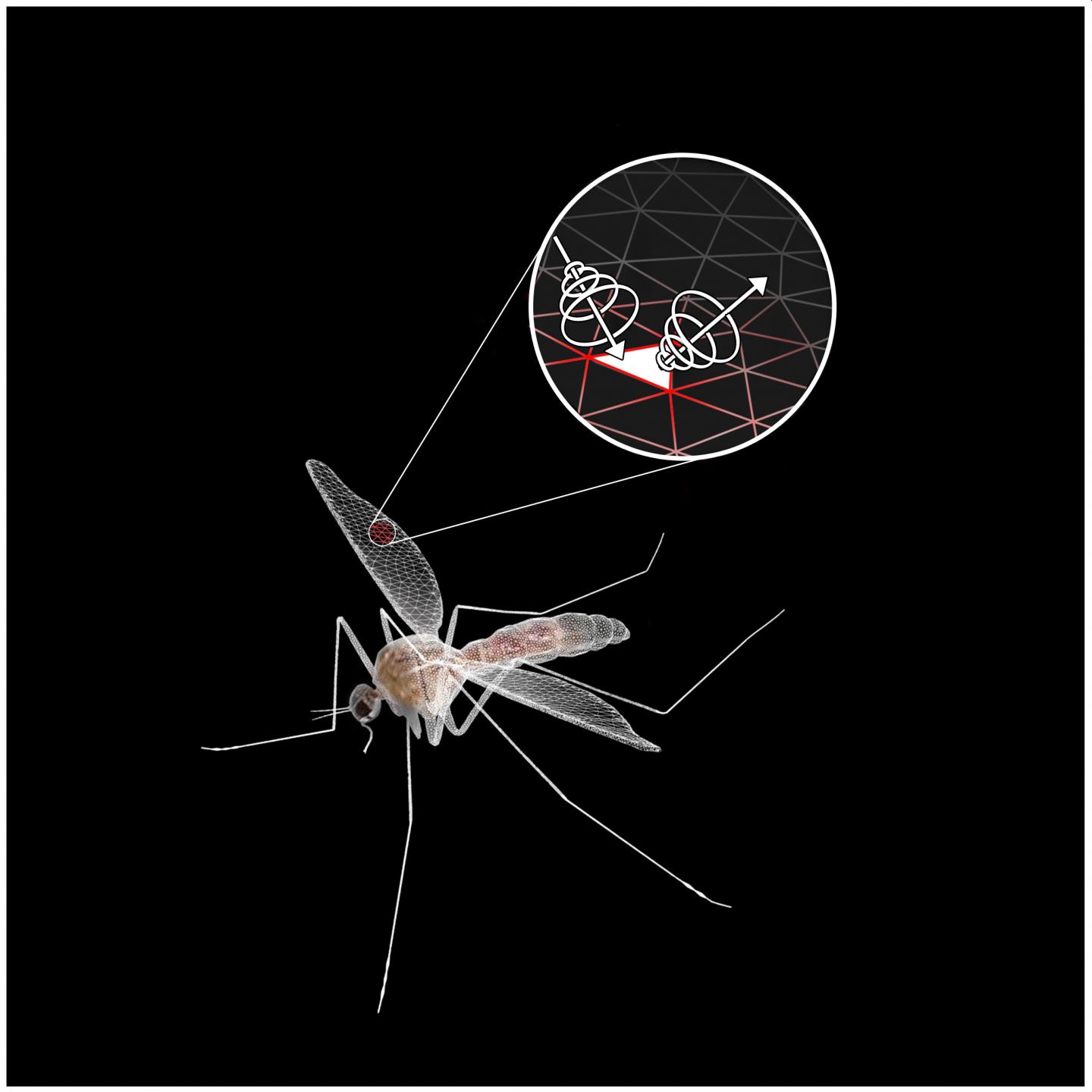
Small insects that would normally be undetectable to bats using echolocation suddenly become detectable when they occur in large swarms. Arjan Boonman of Tel-Aviv University and colleagues present these findings in PLOS Computational Biology.

Bats use echolocation to hunt insects, many of which fly in swarms. In this process, bats emit a sound signal that bounces off the target object, revealing its location. However, few studies have addressed what swarms of insects–as opposed to single insects–“look” like in the world of bat echolocation.

Now, Boonman and colleagues have combined 3-D computer simulations of insect swarms with real-world measurements of bat echolocation signals to examine how bats sense swarms that vary in size and density. They found that small insects that are probably undetectable alone, such as mosquitos, suddenly become “visible” to bats when they occur in large swarms.

They also discovered that a feature of bat echolocation signals called Quasi Constant Frequency (QCF), whose function was previously unknown, turns out to be well suited to the task of detecting insect swarms. QCF signals appear to be ideal for detecting an object if more than one target is inside the signal beam at once.

“With our simulations, we investigated something that could never have been measured in reality,” Boonman says. “Modeling enabled us to have full control over any aspect of an insect swarm, even the full elimination of the shape of each insect within the swarm.”

The findings could provide new insights into the evolution of bat echolocation; bats may have been able to gradually improve their echolocation abilities by hunting swarms of insects without being limited to only very large insects. The findings could also explain why tiny insects are found in the diets of bats that seem to use frequencies too high to effectively detect them.

Moreover, the algorithms developed for this study could potentially be applied to radar echoes of drone swarms in order to lower the probability of detection by enemy radar.

###

Peer-reviewed; Simulations/Modeling; N/A

In your coverage please use this URL to provide access to the freely available article in PLOS Computational Biology:
https://journals.plos.org/ploscompbiol/article?id=10.1371/journal.pcbi.1006873

Citation: Boonman A, Fenton B, Yovel Y (2019) The benefits of insect-swarm hunting to echolocating bats, and its influence on the evolution of bat echolocation signals. PLoS Comput Biol 15(12): e1006873. https://doi.org/10.1371/journal.pcbi.1006873

Funding: This research was funded by ONRG project N62909-16-1-2133. The funders had no role in study design, data collection and analysis, decision to publish, or preparation of the manuscript.

Competing Interests: The authors have declared that no competing interests exist.

Media Contact
Arjan Boonman
[email protected]

Related Journal Article

http://dx.doi.org/10.1371/journal.pcbi.1006873

Tags: Algorithms/ModelsBioinformaticsBiologyBiomechanics/BiophysicsBiotechnologyMathematics/StatisticsPets/EthologyPhysiologyTechnology/Engineering/Computer ScienceZoology/Veterinary Science
Share12Tweet8Share2ShareShareShare2

Related Posts

Miniature Sensor Uses Light to Detect Touch — Chemistry

Miniature Sensor Uses Light to Detect Touch

May 8, 2026
Iron Minerals Determine Whether Dissolved Organic Matter Fuels Microbes or Becomes Long-Term Carbon Storage — Chemistry

Iron Minerals Determine Whether Dissolved Organic Matter Fuels Microbes or Becomes Long-Term Carbon Storage

May 8, 2026

Kate Evans Appointed Associate Lab Director for Biological and Environmental Systems Science at ORNL

May 8, 2026

Advancing Multiscale Modeling and Overcoming Operational Challenges in Autothermal COâ‚‚-to-Methanol Reactors

May 8, 2026
Please login to join discussion

POPULAR NEWS

  • Research Indicates Potential Connection Between Prenatal Medication Exposure and Elevated Autism Risk

    840 shares
    Share 336 Tweet 210
  • New Study Reveals Plants Can Detect the Sound of Rain

    727 shares
    Share 290 Tweet 181
  • Scientists Investigate Possible Connection Between COVID-19 and Increased Lung Cancer Risk

    68 shares
    Share 27 Tweet 17
  • Salmonella Haem Blocks Macrophages, Boosts Infection

    61 shares
    Share 24 Tweet 15

About

We bring you the latest biotechnology news from best research centers and universities around the world. Check our website.

Follow us

Recent News

Evaluating Digoxin Use in Patients with Symptomatic Rheumatic Heart Disease

Evaluating the Effectiveness and Safety of Digitalis Glycosides in Treating Heart Failure

Urdu Fall Risk Questionnaire Adapted for Elderly

Subscribe to Blog via Email

Enter your email address to subscribe to this blog and receive notifications of new posts by email.

Join 82 other subscribers
  • Contact Us

Bioengineer.org © Copyright 2023 All Rights Reserved.

Welcome Back!

Login to your account below

Forgotten Password?

Retrieve your password

Please enter your username or email address to reset your password.

Log In
No Result
View All Result
  • Homepages
    • Home Page 1
    • Home Page 2
  • News
  • National
  • Business
  • Health
  • Lifestyle
  • Science

Bioengineer.org © Copyright 2023 All Rights Reserved.