In an experimental study published in Science, researchers led by scientists from Utrecht University, Leiden University, and Ludwig Maximilian University of Munich have demonstrated that one of the two key conditions for superconductivity—the pairing of electrons—can be satisfied at room temperature. The investigation, detailed in a research paper titled Equivalence of pseudogap and pairing energy in a cuprate high-temperature superconductor, sheds light on the fundamental mechanisms governing high-temperature superconductivity and provides new insight into the pathway toward achieving resistance-free electrical conduction under ambient conditions.
Superconductivity is a physical phenomenon in which specific materials conduct electric current without resistance, avoiding the energy dissipation that typically occurs in conventional conductors. In standard electrical conductors, such as the metal wire in a toaster, resistance converts electrical energy into heat, and resistance similarly causes valuable energy to be lost when charging devices such as mobile phones. Although superconductivity could enable technologies such as levitating trains, ultra-efficient energy storage, and quantum computers, practical large-scale deployment has been constrained because most superconductors function only at extremely low temperatures, often requiring cooling to approximately -260°C with liquid helium.
First discovered by scientists in 1911, superconductivity was initially confined to deep cryogenic regimes. In the mid-1980s, researchers achieved a breakthrough by discovering materials that transition into a superconducting state at considerably higher temperatures of around -173°C. However, the theoretical framework developed to explain conventional low-temperature superconductivity could not account for this higher-temperature phenomenon. As research leader Ingmar Swart of Utrecht University noted, scientists have lacked a clear understanding of superconductivity at these elevated temperatures, which has hindered systematic searches for materials that can operate at room temperature.
Superconductivity requires two fundamental physical ingredients: the binding of electrons into pairs, known as Cooper pairs, and the synchronized motion of these pairs across the material, termed phase coherence. In conventional low-temperature superconductors, electron pairing and collective coordination occur together. In high-temperature cuprate superconductors, the new experimental findings reveal that these two processes decouple. Electrons can bind into pairs at temperatures well above the point at which superconductivity sets in, with the binding interaction strong enough to maintain Cooper pairs even at room temperature.
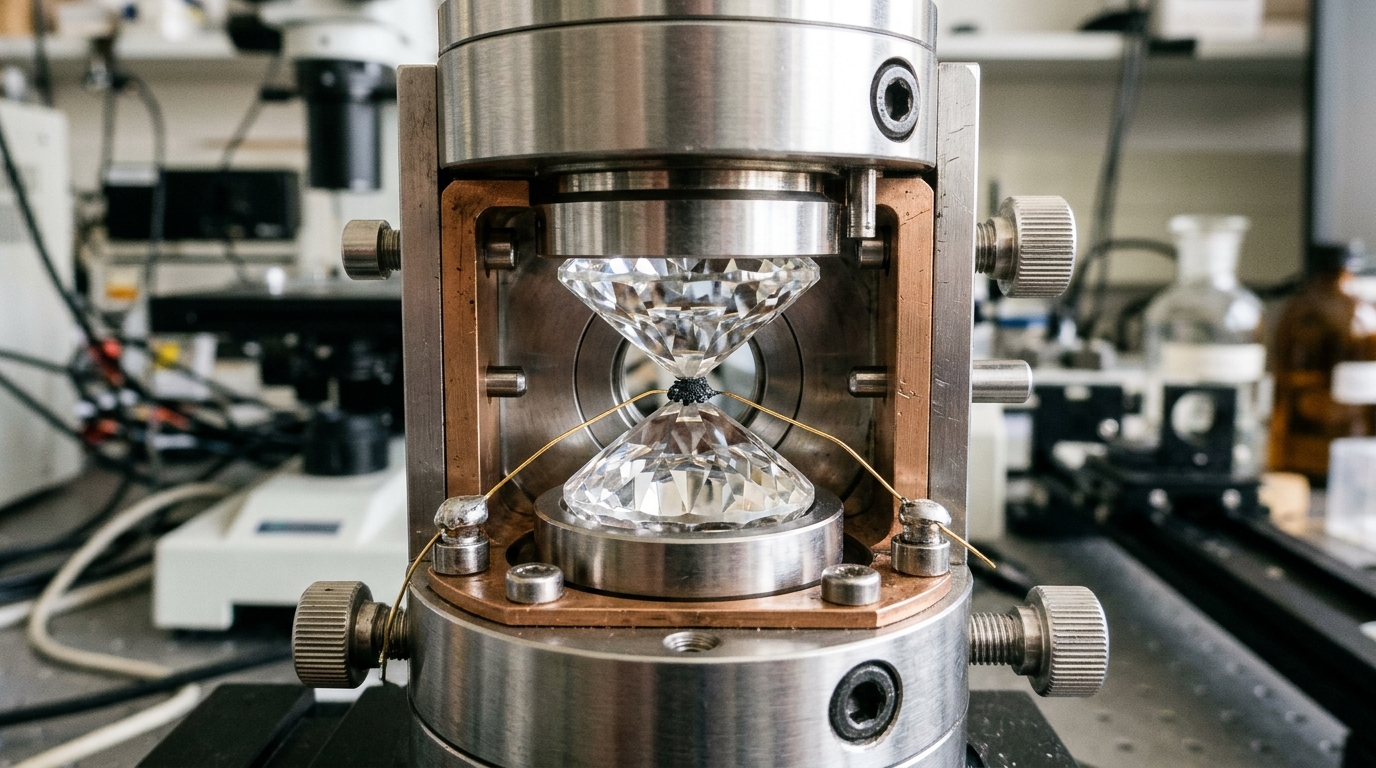
Because electron pairing persists at ambient temperatures, the researchers concluded that phase coherence represents the primary bottleneck preventing room-temperature superconductivity. To observe this distinction, first authors Maialen Ortego Larrazabal and Jiasen Niu utilized custom measuring equipment developed and constructed by the research team. This apparatus enabled the scientists to differentiate between electrical currents carried by individual electrons and currents carried by electron pairs, directly tracking when and how pairing takes place. Swart indicated that unraveling the mechanisms controlling phase coherence will be the focus of follow-up investigations to determine whether superconductivity can ultimately be established at higher temperatures.
Subject of Research: Electron pairing mechanisms and phase coherence in high-temperature superconductors
Article Title: New research offers hope for room-temperature superconductivity
Article References: New research offers hope for room-temperature superconductivity. Original publication (Bibliographic details unavailable.)
Image Credits: AI Generated
DOI: Not provided
Keywords: superconductivity, high-temperature superconductors, Cooper pairs, phase coherence, cuprates, condensed matter physics, materials science, physics research, research, offers, hope, room-temperature
News Source: Katie Riggs. (November 7, 2026). Physicists Uncover Key Electron Pairing Requirement for Room-Temperature Superconductivity. Scienmag.