• HOME
  • NEWS
  • EXPLORE
    • CAREER
      • Companies
      • Jobs
    • EVENTS
    • iGEM
      • News
      • Team
    • PHOTOS
    • VIDEO
    • WIKI
  • BLOG
  • COMMUNITY
    • FACEBOOK
    • INSTAGRAM
    • TWITTER
Sunday, November 8, 2026
BIOENGINEER.ORG
No Result
View All Result
  • Login
  • HOME
  • NEWS
  • EXPLORE
    • CAREER
      • Companies
      • Jobs
        • Lecturer
        • PhD Studentship
        • Postdoc
        • Research Assistant
    • EVENTS
    • iGEM
      • News
      • Team
    • PHOTOS
    • VIDEO
    • WIKI
  • BLOG
  • COMMUNITY
    • FACEBOOK
    • INSTAGRAM
    • TWITTER
No Result
View All Result
Bioengineer.org
No Result
View All Result
Home NEWS Science News Chemistry

First Electrochemical Insights Into Ensartinib Oxidation

by
November 7, 2026
in Chemistry
Reading Time: 2 mins read
0
First Electrochemical Insights Into Ensartinib Oxidation

First Electrochemical Insights Into Ensartinib Oxidation

Share on FacebookShare on TwitterShare on LinkedinShare on RedditShare on Telegram

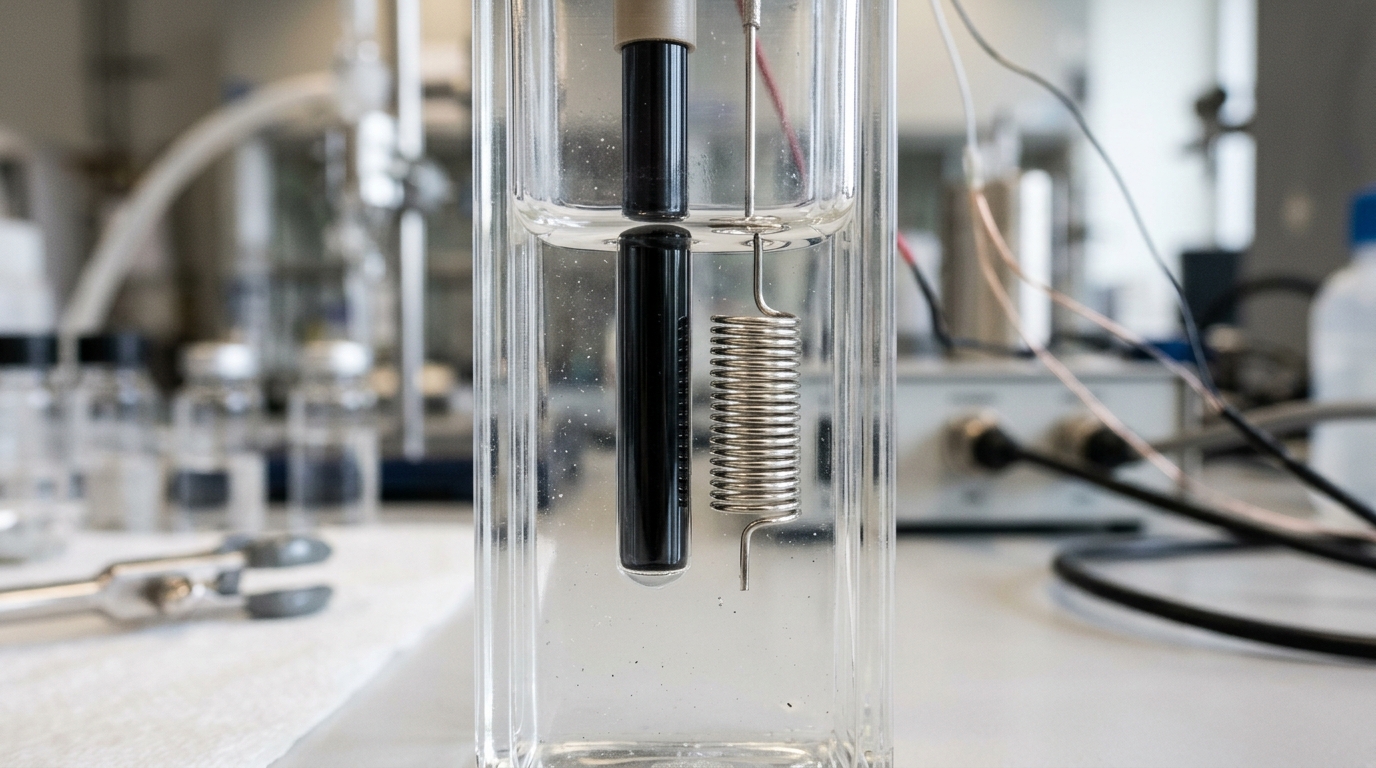
Researchers have reported the first electrochemical investigation of ensartinib, a recently approved anticancer drug, at a modified carbon paste electrode. The study, published in BMC Chemistry, examines the oxidation behavior of the drug using an electrode incorporating aluminum oxide and multi-walled carbon nanotube nanostructures.

The research team, led by Aisha A. Alsfouk and colleagues, constructed a carbon paste electrode modified with Al2O3–MWCNT nanostructures to probe the electrochemical properties of ensartinib.

Voltammetric analysis revealed a distinct anodic signal corresponding to the oxidation of ensartinib. The voltammetric response indicated an irreversible oxidation event.

Further investigation into the reaction mechanism involved varying the scan rate of the voltammetric measurements. The study found that the peak current increased proportionally with the scan rate, a pattern that supports the conclusion that adsorption is the predominant process controlling the electrode reaction.

The researchers observed a systematic displacement of the oxidation potential as the pH of the solution changed. This shift suggests that proton transfer is involved in the electron oxidation mechanism.

Modification of the carbon paste surface with the Al2O3–MWCNT nanostructure resulted in an increased measured response for ensartinib. This enhancement was attributed to two main factors: improved interfacial adsorption of the drug molecules and more efficient electron-transfer kinetics.

Based on these electrochemical characteristics, the researchers developed a differential pulse voltammetric procedure for the quantification of ensartinib at micromolar concentration levels. The method was validated by applying it to pharmaceutical formulations and spiked plasma samples, where it showed satisfactory analytical performance.

The findings establish the oxidation characteristics of ensartinib at the modified electrode and demonstrate its suitability as the basis for voltammetric determination in the investigated matrices.

Subject of Research: Electrochemical oxidation of ensartinib at a modified carbon paste electrode

Article Title: Adsorption-controlled electrooxidation of ensartinib at a nanostructured Al2O3–MWCNT electrode: first electrochemical insights

Article References: Alsfouk, A. A., Al-Khateeb, L. A., Al kamaly, O., Tantawy, M. A., Khashoqji, M. M., & Elkhamisy, A. E. (2026). Adsorption-controlled electrooxidation of ensartinib at a nanostructured Al2O3–MWCNT electrode: first electrochemical insights. BMC Chemistry. https://doi.org/10.1186/s13065-026-01945-4

Image Credits: AI Generated

DOI: 10.1186/s13065-026-01945-4

Keywords: ensartinib, electrochemistry, carbon paste electrode, nanostructures, pharmaceutical analysis, voltammetry, drug detection, BMC Chemistry, Adsorption-controlled, electrooxidation, nanostructured, Al2O3

News Source: Bethany Barker. (November 7, 2026). First Electrochemical Insights Into Ensartinib Oxidation. Scienmag.
Tags: Adsorption-controlledAl2O3BMC Chemistrycarbon paste electrodedrug detectionelectrochemistryelectrooxidationensartinibnanostructuredNanostructurespharmaceutical analysisvoltammetry
Share12Tweet7Share2ShareShareShare1

Related Posts

Crosslinked Micelles Stabilize Indium-111 for Tumor Imaging

Crosslinked Micelles Stabilize Indium-111 for Tumor Imaging

November 8, 2026
Crowded cerium complexes unlock two glowing pathways at once

Crowded cerium complexes unlock two glowing pathways at once

November 8, 2026

Catalytic Polymerization Offers New Route to Functional Polypeptide Hybrid Materials

November 8, 2026

Systematic Review Evaluates Self-Healing Polymers and Supercapacitors for Wearable Sensors

November 8, 2026

POPULAR NEWS

  • Two Rare C3 Gene Variants Show Complement Proteins Act Separately Inside and Outside Cells

    Two C3 Gene Variants Reveal Functional Independence Between Extracellular and Intracellular Forms of Complement C3

    29 shares
    Share 12 Tweet 7
  • Nearly Half of Stroke Patients in Africa and Asia Show Low HDL Cholesterol

    29 shares
    Share 12 Tweet 7
  • German heat-health plans rarely evaluated due to political and structural barriers, study finds

    29 shares
    Share 12 Tweet 7
  • Carb Quality Beats Glycemic Index in Sperm DNA Study

    29 shares
    Share 12 Tweet 7

About

We bring you the latest biotechnology news from best research centers and universities around the world. Check our website.

Follow us

Recent News

Support Program for Black Breast Cancer Survivors Shows High Satisfaction

Spinal Hydromorphone Outperforms TAP Block for Gastrectomy Pain

Pilot Study Tests Personalized DNA Assays for Head and Neck Cancer

Subscribe to Blog via Email

Enter your email address to subscribe to this blog and receive notifications of new posts by email.

Join 86 other subscribers
  • Contact Us

Bioengineer.org © Copyright 2023 All Rights Reserved.

Welcome Back!

Login to your account below

Forgotten Password?

Retrieve your password

Please enter your username or email address to reset your password.

Log In
No Result
View All Result
  • Homepages
    • Home Page 1
    • Home Page 2
  • News
  • National
  • Business
  • Health
  • Lifestyle
  • Science

Bioengineer.org © Copyright 2023 All Rights Reserved.