• HOME
  • NEWS
  • EXPLORE
    • CAREER
      • Companies
      • Jobs
    • EVENTS
    • iGEM
      • News
      • Team
    • PHOTOS
    • VIDEO
    • WIKI
  • BLOG
  • COMMUNITY
    • FACEBOOK
    • INSTAGRAM
    • TWITTER
Sunday, May 10, 2026
BIOENGINEER.ORG
No Result
View All Result
  • Login
  • HOME
  • NEWS
  • EXPLORE
    • CAREER
      • Companies
      • Jobs
        • Lecturer
        • PhD Studentship
        • Postdoc
        • Research Assistant
    • EVENTS
    • iGEM
      • News
      • Team
    • PHOTOS
    • VIDEO
    • WIKI
  • BLOG
  • COMMUNITY
    • FACEBOOK
    • INSTAGRAM
    • TWITTER
  • HOME
  • NEWS
  • EXPLORE
    • CAREER
      • Companies
      • Jobs
        • Lecturer
        • PhD Studentship
        • Postdoc
        • Research Assistant
    • EVENTS
    • iGEM
      • News
      • Team
    • PHOTOS
    • VIDEO
    • WIKI
  • BLOG
  • COMMUNITY
    • FACEBOOK
    • INSTAGRAM
    • TWITTER
No Result
View All Result
Bioengineer.org
No Result
View All Result
Home NEWS Science News Chemistry

The secret of platinum deposits revealed by field observations in South Africa

Bioengineer by Bioengineer
June 19, 2019
in Chemistry
Reading Time: 2 mins read
0
IMAGE
Share on FacebookShare on TwitterShare on LinkedinShare on RedditShare on Telegram

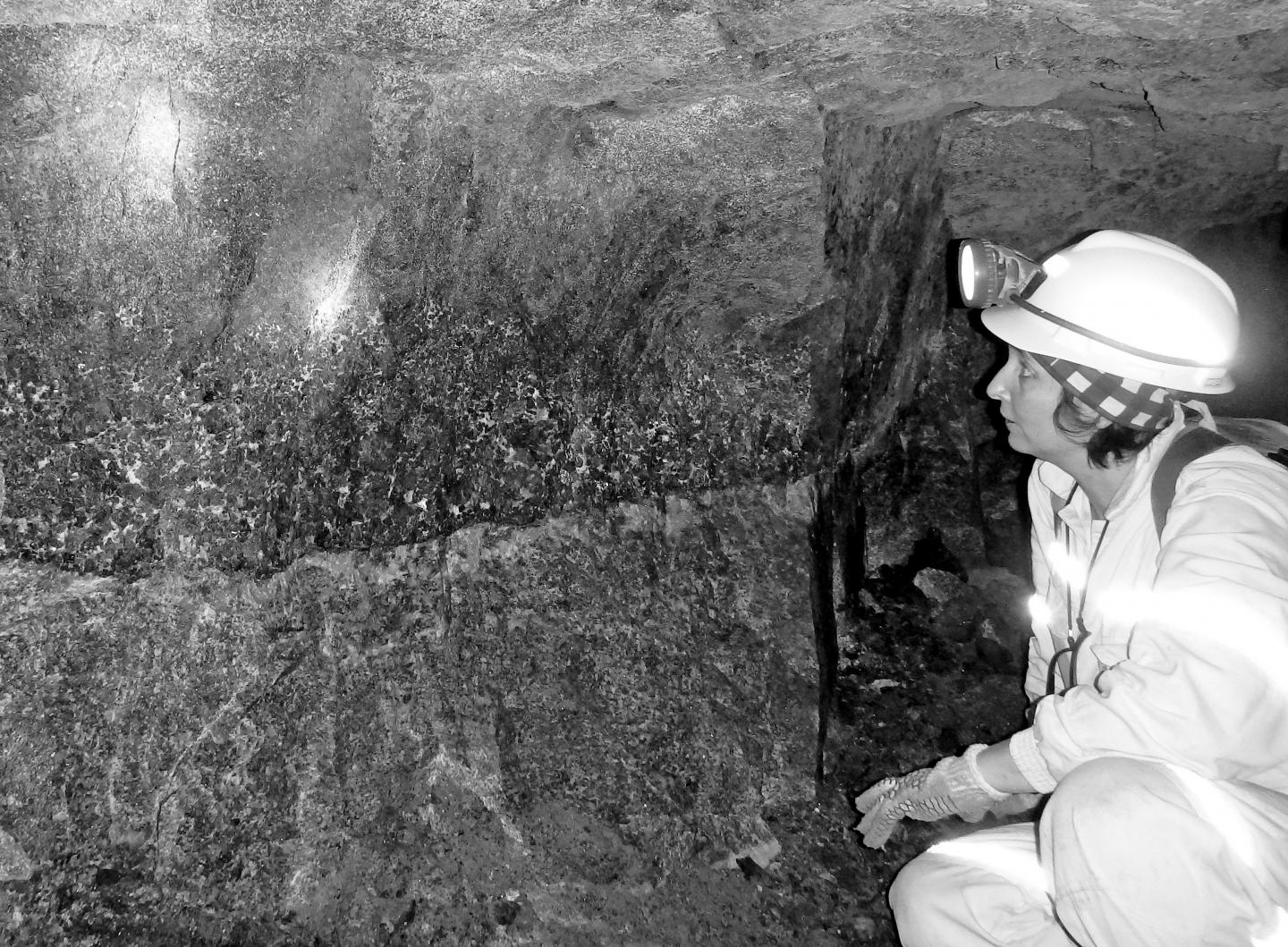
Researchers uncover the way that platinum deposits form in the magma chambers of some of the worlds’ largest platinum deposits
IMAGE

Credit: Wits University

The secret of platinum deposits revealed by novel field observations in the Bushveld Complex

Most of the world’s economically-viable platinum deposits occur as ‘reefs’ in layered intrusions – thin layers of silicate rocks that contain sulphides enriched in platinum group elements which are so vital for the sustainable development of modern human society.

There are two competing ideas of how platinum deposits formed: the first involves gravity-induced settling of crystals on the chamber floor, while the second idea implies that the crystals grow in situ, directly on the floor of the magmatic chamber.

Through examining the Merensky Reef of the Bushveld Complex in South Africa, which hosts the lion’s share of the world’s platinum and other noble metals, Dr Sofya Chistyakova from the School of Geosciences of the University of the Witwatersrand and her collaborators have established that the crystals grow in situ, with its high platinum status being attained while all its minerals were crystallising along the cooling margins of the magma chamber. Their research was published in a paper in Scientific Reports.

One of the remarkable features of the Bushveld Complex is that at the time when the Merensky Reef was forming, some portions of its chamber floor were highly irregular due to circular depressions (potholes). Such potholes with the Merensky Reef are best exposed in underground exposures of platinum mines.

“Our key discovery is that the entire Merensky Reef package in these potholes may develop as a ‘rind’ covering all the chamber floor depressions and culminations, even where these are vertical or overhanging” says Chistyakova.

This finding points to no possibility for the Merensky Reef to be formed by crystal settling on the chamber floor because sinking crystals cannot penetrate the solid rocks that form the pothole’s overhangs. This strongly supports the concept that the silicate minerals and sulphides of platinum deposits grow directly at the floor of magmatic chambers.

“This is the most fundamental conclusion of our work and it can probably be applied to platinum deposits in other layered intrusions as well as potentially extended to other types of magmatic deposits, for example, chromite and Fe-Ti-V magnetite ores in mafic-ultramafic complexes” says Chistyakova.

###

Media Contact
Schalk Mouton
[email protected]

Related Journal Article

http://dx.doi.org/10.1038/s41598-019-45288-8

Tags: Civil EngineeringEarth ScienceGeographyGeology/SoilGeophysicsGeophysics/GravityMechanical EngineeringPlate TectonicsScience/MathTemperature-Dependent Phenomena
Share12Tweet8Share2ShareShareShare2

Related Posts

Miniature Sensor Uses Light to Detect Touch — Chemistry

Miniature Sensor Uses Light to Detect Touch

May 8, 2026
Iron Minerals Determine Whether Dissolved Organic Matter Fuels Microbes or Becomes Long-Term Carbon Storage — Chemistry

Iron Minerals Determine Whether Dissolved Organic Matter Fuels Microbes or Becomes Long-Term Carbon Storage

May 8, 2026

Kate Evans Appointed Associate Lab Director for Biological and Environmental Systems Science at ORNL

May 8, 2026

Advancing Multiscale Modeling and Overcoming Operational Challenges in Autothermal COâ‚‚-to-Methanol Reactors

May 8, 2026
Please login to join discussion

POPULAR NEWS

  • Research Indicates Potential Connection Between Prenatal Medication Exposure and Elevated Autism Risk

    840 shares
    Share 336 Tweet 210
  • New Study Reveals Plants Can Detect the Sound of Rain

    727 shares
    Share 290 Tweet 181
  • Scientists Investigate Possible Connection Between COVID-19 and Increased Lung Cancer Risk

    68 shares
    Share 27 Tweet 17
  • Salmonella Haem Blocks Macrophages, Boosts Infection

    61 shares
    Share 24 Tweet 15

About

We bring you the latest biotechnology news from best research centers and universities around the world. Check our website.

Follow us

Recent News

Evaluating Digoxin Use in Patients with Symptomatic Rheumatic Heart Disease

Evaluating the Effectiveness and Safety of Digitalis Glycosides in Treating Heart Failure

Urdu Fall Risk Questionnaire Adapted for Elderly

Subscribe to Blog via Email

Enter your email address to subscribe to this blog and receive notifications of new posts by email.

Join 82 other subscribers
  • Contact Us

Bioengineer.org © Copyright 2023 All Rights Reserved.

Welcome Back!

Login to your account below

Forgotten Password?

Retrieve your password

Please enter your username or email address to reset your password.

Log In
No Result
View All Result
  • Homepages
    • Home Page 1
    • Home Page 2
  • News
  • National
  • Business
  • Health
  • Lifestyle
  • Science

Bioengineer.org © Copyright 2023 All Rights Reserved.