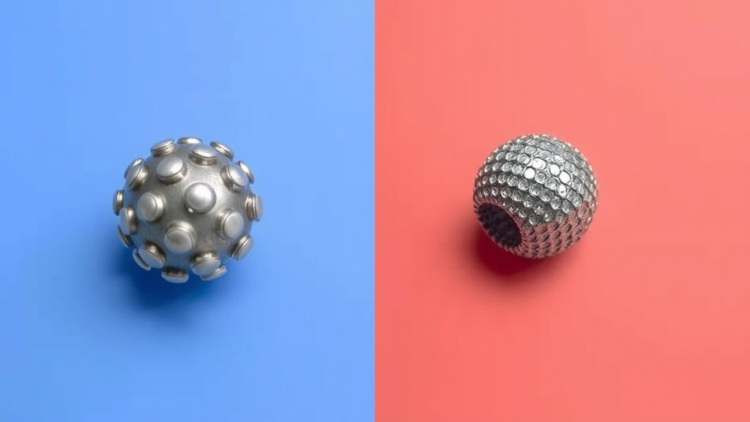
Silicon has long been the dream anode for lithium batteries, promising theoretical capacities of up to 3579 mAh per gram—roughly ten times that of conventional graphite. Yet its tendency to swell dramatically during charging has kept it largely on the laboratory bench. Now a systematic comparison of three silicon-based anode materials, tested side by side on the same sulfide-based all-solid-state lithium battery platform, offers fresh insight into why some silicon designs fail while others endure. The study, published in Discover Electrochemistry by a team at Jianghan University in Wuhan, China, contrasts pure nano-silicon, a ball-milled silicon/carbon composite, and a chemical-vapor-deposition silicon/carbon composite under the mechanical confinement that only solid electrolytes can provide.
The choice of all-solid-state architecture matters enormously. In conventional liquid-electrolyte batteries, the electrolyte wets every particle surface, masking fundamental differences in how materials handle stress and interfacial contact. Solid-state systems behave differently: the sulfide electrolyte, pressed at 300 megapascals during assembly and held under constant external pressure, constrains silicon’s volume expansion mechanically while simultaneously demanding perfect solid-to-solid contact for both ions and electrons. Most prior comparative studies were conducted in liquid cells, so the failure mechanisms of these materials in true solid-state configurations remained poorly understood.
The three materials were engineered to represent distinct fabrication philosophies. Pure nano-silicon particles, roughly 50 nanometers across, were synthesized by plasma evaporation-condensation. The ball-milled composite paired the same silicon with graphite, ground together for two hours under argon to create a defect-rich carbon network intimately mixed with silicon. The chemical-vapor-deposition composite took a fundamentally different route: silane gas was decomposed to deposit amorphous silicon both inside and outside a porous carbon framework, followed by an acetylene-derived carbon coating, forging covalent silicon–carbon bonds throughout.
Spectroscopic fingerprints confirmed just how different the two composites are. X-ray diffraction showed that ball-milled silicon retained its crystalline structure, with a graphitic carbon peak at 26.3 degrees, while the CVD material was entirely amorphous—its silicon layers so spatially confined within microporous carbon that no crystalline diffraction appeared at all. Raman spectroscopy told a complementary story: the ball-milled composite showed an ID/IG ratio of 1.079, signaling a defect-dense carbon network, whereas the CVD composite’s lower ratio of 0.882 indicated a more intact sp2-bonded electron pathway. X-ray photoelectron spectroscopy then sealed the case, revealing a distinct carbon–silicon peak in the CVD material that proved true covalent bonding—a feature entirely absent from the physically mixed composite.
In electrochemical testing, pure nano-silicon delivered a spectacular initial reversible capacity of 2810.4 mAh per gram with an initial Coulombic efficiency of 65.97 percent, but the triumph was brief. Repeated volume expansion sintered the dispersed nanoparticles into large agglomerates, and after 100 cycles the electrode had thickened by 44.6 percent—a hallmark of irreversible structural collapse. The ball-milled composite behaved in a stranger, more interesting way: it began with only 1230.1 mAh per gram, then exhibited an anomalous activation-rising behavior, stabilizing near 900 mAh per gram after 100 cycles as mechanical pressure gradually optimized the solid–solid interfaces and lithium ions slowly permeated the carbon scaffold to reach previously inaccessible silicon.
The CVD composite struck the best long-term balance. It started at 1648.2 mAh per gram with the highest initial Coulombic efficiency of the group at 72.94 percent—a benefit, paradoxically, of having the lowest surface area, which minimized parasitic side reactions with the sulfide electrolyte. Its amorphous surface silicon lithiated smoothly, without the phase-transformation stress that plagues crystalline silicon, and post-cycling electron microscopy revealed that despite the largest electrode-level thickness increase, individual particle contours remained essentially intact. Over 100 cycles the material retained 62.14 percent of its capacity, the best of the three.
Impedance analysis added a crucial nuance. The ball-milled composite showed the lowest charge-transfer resistance at 204.5 ohms, credited to its three-dimensional conductive network of defect-induced carbon that deforms elastically to maintain contact with the solid electrolyte. The CVD composite, at 298.5 ohms, was less kinetically nimble—its dense carbon coating raises the energy barrier for charge transfer. Yet it outlasted its faster rival. The authors’ conclusion is pointed: long-term cycling performance in all-solid-state batteries is governed by structural stability, not charge-transfer kinetics alone. X-ray photoelectron analysis of cycled electrodes also showed that both carbon composites suffered slightly more electrolyte decomposition than pure silicon, a trade-off of added carbon surface.
Scalability considerations may ultimately prove as decisive as electrochemistry. Producing the CVD composite requires hazardous silane gas, precision vacuum equipment, and costly safety infrastructure, making mass production unattractive. Ball milling, by contrast, uses conventional industrial equipment with low process difficulty and energy consumption, and can run continuously at scale. The authors therefore position ball-milled silicon/carbon as the optimal choice for balancing cost and service performance in sulfide-based solid-state batteries, reserving CVD materials for premium applications where longevity outweighs expense.
The study’s broader message resonates across the fast-growing field of solid-state energy storage: silicon anode design for these batteries demands simultaneous attention to conductive network construction, interfacial contact maintenance, and mechanical stress management. The divergent aging trajectories observed here—pressure-dependent activation for the milled composite, structural self-preservation for the CVD one—demonstrate that lessons learned in liquid electrolytes cannot simply be carried over. As automakers and battery manufacturers race toward commercial solid-state cells, understanding which silicon survives under real solid-state confinement may determine which designs leave the laboratory first.
Subject of Research: Comparative evaluation of nanostructured silicon and silicon/carbon composite anodes in all-solid-state lithium batteries
Article Title: Evaluation of nanostructured silicon based anodes with enhanced cycling stability for all solid state lithium batteries
Article References: Evaluation of nanostructured silicon based anodes with enhanced cycling stability for all solid state lithium batteries. (n.d.). https://doi.org/10.1007/s44373-026-00153-y
Image Credits: AI Generated
DOI: 10.1007/s44373-026-00153-y
Keywords: all-solid-state lithium batteries, silicon anodes, silicon-carbon composites, ball milling, chemical vapor deposition, sulfide electrolyte, cycling stability, charge-transfer resistance, volume expansion, energy storage, nanomaterials, electrochemistry
Cite Scienmag News
APA MLA Chicago
Bethany Barker. (September 24, 2026). Ball-Milled and CVD Silicon Anodes Face Off in All-Solid-State Batteries. Scienmag. https://scienmag.com/ball-milled-and-cvd-silicon-anodes-face-off-in-all-solid-state-batteries/
Bethany Barker. “Ball-Milled and CVD Silicon Anodes Face Off in All-Solid-State Batteries.” Scienmag, 24 September 2026, https://scienmag.com/ball-milled-and-cvd-silicon-anodes-face-off-in-all-solid-state-batteries/. Accessed 24 September 2026.
Bethany Barker. “Ball-Milled and CVD Silicon Anodes Face Off in All-Solid-State Batteries.” Scienmag. September 24, 2026. https://scienmag.com/ball-milled-and-cvd-silicon-anodes-face-off-in-all-solid-state-batteries/
Copy citation Download RIS
Tags: all-solid-state lithium batteriesball millingball-milled silicon/carbon compositecharge-transfer resistanceChemical Vapor Depositionchemical vapor deposition silicon/carbon compositecomparison of nano-silicon and composite materialscycling stabilityelectrochemistryenergy storagefailure mechanisms of silicon anodesinterfacial contact in solid electrolyteslithium battery capacity enhancementmechanical confinement in solid-state batteriesnanomaterialssilicon anodesSilicon anodes for all-solid-state lithium batteriessilicon volume expansion during chargingsilicon-carbon compositessolid-state battery assembly under high pressurestress management in silicon anodessulfide electrolytesulfide-based solid electrolytesvolume expansion