
Root-Secreted Acids Degrade Vegetation-Growing Concrete, With Acetic Acid the Worst Offender
A laboratory study finds acetic acid decomposes both portlandite and C-S-H gel in vegetation-growing concrete, while oxalic acid temporarily fills ...
A laboratory study finds acetic acid decomposes both portlandite and C-S-H gel in vegetation-growing concrete, while oxalic acid temporarily fills ...
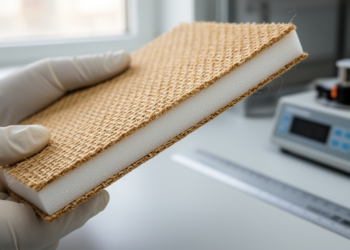
Researchers built a thin sandwich panel with an EPS core and jute-textile-reinforced cementitious facings that reached 4.53 MPa in compression ...
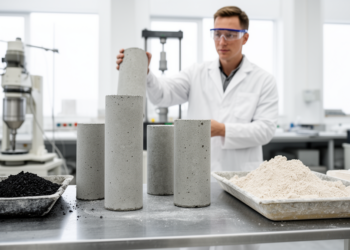
Researchers combined sugarcane bagasse ash, lime sludge ash and polypropylene fibres to make stronger, less permeable concrete, and trained a ...
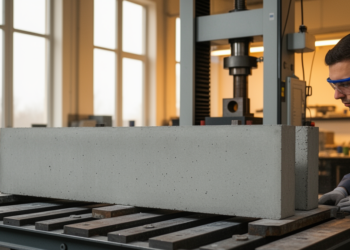
An 18-mixture response surface study identified optimized ambient-cured fly ash-slag geopolymer concrete mixes with 28-day compressive strength reaching 65.4 megapascals ...
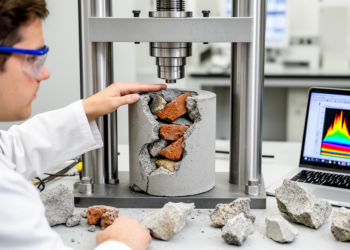
An integrated experimental and machine learning study predicted the 28-day compressive strength of recycled aggregate concrete, with Support Vector Regression ...
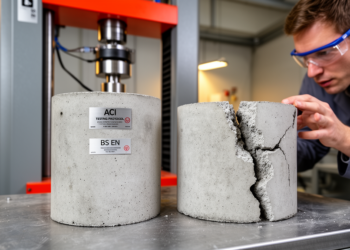
A controlled study in Ghana found ACI 211.1 concrete outperformed BS EN 206 mixes in strength and durability but cost ...
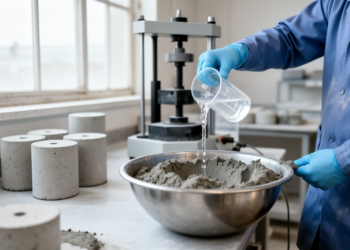
A laboratory study of magnesium slag and blast furnace slag one-part geopolymer concrete found that a water-to-binder ratio of 0.47 ...
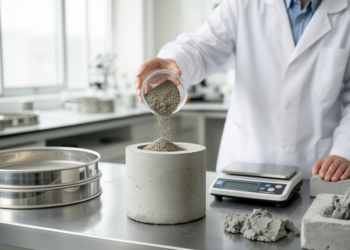
Researchers propose a composite index combining fineness modulus, sieve fractions and water absorption to rank manufactured sands for concrete, validated ...

Researchers embedded slow-release nutrient pellets into porous ecological concrete, balancing slope-protection strength, controlled phosphorus release and early plant growth in ...
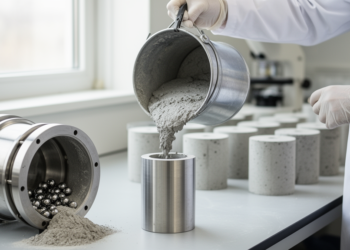
Ball milling fly ash and slag with solid alkali activator produced a one-part geopolymer with 240 mm fluidity, 47.5 MPa ...
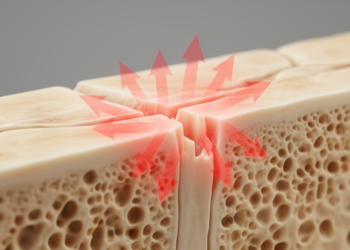
A laboratory study of bovine cortical bone shows that impact forces at a saw blade's turning point introduce microcracks that ...
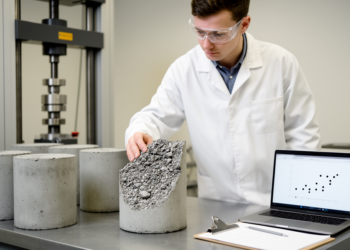
A new Scientific Reports study presents an interpretable enhanced linear regression model that predicts concrete compressive strength with a nested ...
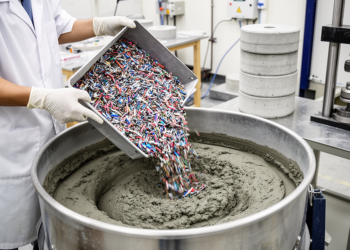
A combined laboratory and ABAQUS modeling study shows that waste plastic powder replacing river sand reduces concrete workability, compressive strength, ...
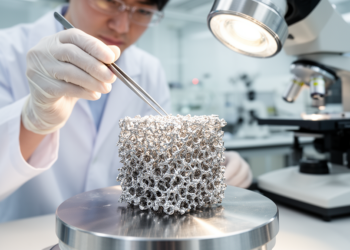
A laboratory study prepared porous Ni–Cr alloy foam by vacuum-depositing chromium onto nickel foam and measured its composition, compressive strength ...
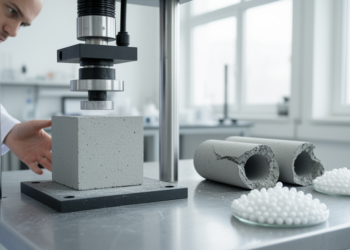
Researchers combined new laboratory tests with an interpretable machine-learning framework to predict the compressive strength of microcapsule-modified concrete, achieving an ...
A laboratory study of 15 concrete mixes shows that replacing natural aggregates with porous palm oil clinker cuts strength by ...
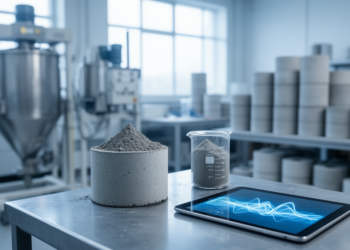
A new study combines CTGAN-generated synthetic data, hybrid machine learning, SHAP explainability, reliability analysis and multi-objective optimization to design fly ...
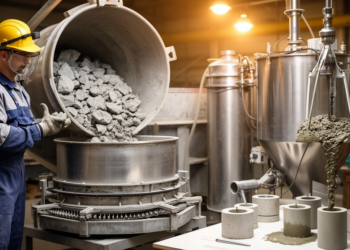
Researchers transformed tunnel excavation muck into fine-particle high-density concrete, showing that a coupled vacuum and vibration mixing process boosts compressive ...
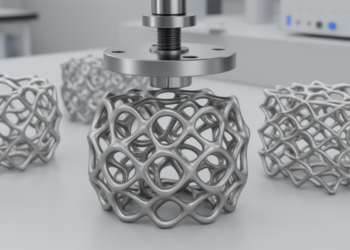
Experiments on electron-beam-manufactured Ti-6Al-4V gyroid lattices found that thicker walls increased stiffness and static strength, while all five designs exceeded ...

A response-surface-guided neural network predicted a balanced silica-fume and nano-silica formulation for coral aggregate concrete, reducing prediction error without additional ...