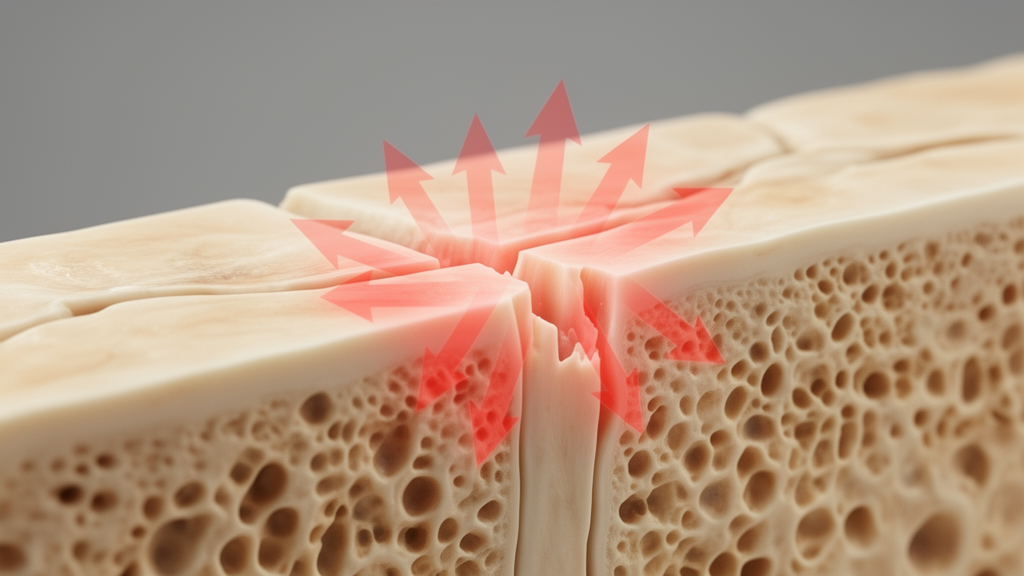
Oscillating saws are a mainstay of orthopedic surgery, but the quality of the bone surface they leave behind can determine how well an implant holds. A new study published in Annals of Biomedical Engineering reports that transient impacts generated when the saw blade reverses direction at its turning point can measurably weaken the cortical bone surface prepared for implantation, and that a modified cutting trajectory can largely prevent this damage. Researchers Han Wang, Urara Satake, and Toshiyuki Enomoto performed oscillating sawing experiments on bovine cortical bone, comparing a conventional blade trajectory with an optimized one.
Dynamic force measurements revealed that the conventional trajectory produced pronounced impact forces at each turning point, where the blade momentarily decelerates, stops, and reverses. These short-lived force spikes, the authors found, were the key events linking blade motion to surface damage. Examination of the cut surfaces by scanning electron microscopy and digital microscopy showed that the conventional trajectory left extensive cracks and breakout defects along the groove walls.
In contrast, the optimized trajectory significantly suppressed the turning-point impact forces, with the difference reaching statistical significance at p < 0.001, and preserved the integrity of the groove wall surface. The mechanical consequences were assessed at two scales. Flat-punch compression tests, which probe local material properties near the prepared surface, and conventional compression tests, which reflect the behavior of the bulk specimen, both showed reduced strength in bone cut with the conventional trajectory.
Switching to the optimized trajectory increased local compressive strength (p < 0.001) and global compressive strength (p = 0.001). Notably, the elastic modulus remained unchanged across conditions, indicating that the impacts primarily reduce failure strength by introducing localized microstructural defects rather than degrading the bulk elastic stiffness of the bone. According to the authors, these findings show that turning-point impacts compromise the biomechanical integrity of cortical bone by lowering the load-bearing capacity of implant-relevant bone surfaces.
Because implant stability depends on the quality of the bone–implant interface, suppressing such transient impacts during surgical sawing could help preserve surface integrity and potentially improve fixation outcomes. The study was conducted on bovine cortical bone in a laboratory setting, so the results are a controlled experimental model rather than a direct demonstration of clinical benefit in human patients. Nevertheless, the work provides a biomechanical basis for future real-time impact monitoring and adaptive control in surgical robotics, in which a system could detect or predict turning-point impacts and adjust blade motion to prevent impact-induced damage during operations.
Beyond its surgical implications, the research highlights a subtle engineering principle: in reciprocating cutting tools, the moments of direction reversal are not mechanically benign. By quantifying the chain from blade kinematics to impact forces, to surface defects, to local and global mechanical properties, the study offers a framework for designing sawing trajectories that protect the very tissue the procedure aims to prepare.
Subject of Research: Biomechanical effects of turning-point impact forces on cortical bone surface integrity during oscillating sawing
Article Title: Turning-Point Impact Compromises the Biomechanical Integrity of Cortical Bone During Oscillating Sawing
Article References: Wang, H., Satake, U., & Enomoto, T. (2026). Turning-Point Impact Compromises the Biomechanical Integrity of Cortical Bone During Oscillating Sawing. Annals of Biomedical Engineering. https://doi.org/10.1007/s10439-026-04429-7
Image Credits: AI Generated
DOI: 10.1007/s10439-026-04429-7
Keywords: oscillating sawing, cortical bone, turning-point impact, surface integrity, orthopedic surgery, implant stability, compressive strength, elastic modulus, surgical robotics, biomechanics, microcracks, bone-implant interface
News Source: Ophelia Keating. (October 27, 2026). Hidden Impact Forces at the Turning Point Weaken Bone Surfaces Cut by Surgical Saws. Scienmag.