Hybrid AI model finds balanced mix for marine coral concrete
A response-surface-guided neural network predicted a balanced silica-fume and nano-silica formulation for coral aggregate concrete, reducing prediction error without additional ...
A response-surface-guided neural network predicted a balanced silica-fume and nano-silica formulation for coral aggregate concrete, reducing prediction error without additional ...
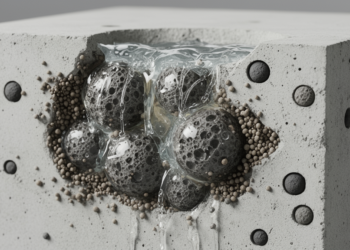
Laboratory tests found that sodium-hydroxide conditioning improved fly ash aggregate strength, concrete compressive capacity, interfacial bonding, and water resistance, while ...
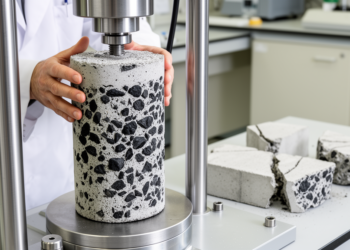
Laboratory tests and simulations found that cement- and lithium-based consolidation allowed weathered coal gangue to replace part of the aggregate ...
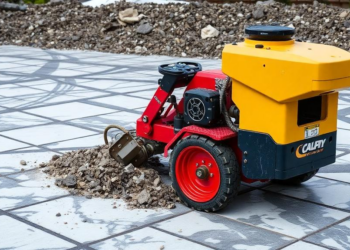
A machine learning study shows that waste marble dust can replace up to 32 percent of the cement in semi-flexible ...
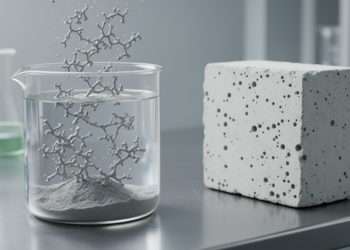
A new study links the fractal geometry of pore structures in activated red mud cementitious materials to both compressive strength ...

Researchers found that shredded watermelon vine waste can both reinforce ecological porous concrete and neutralize its alkalinity, enabling over 80 ...
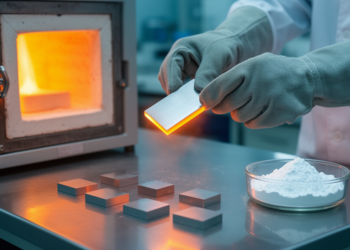
Adding zirconium oxide to yttria-strengthened tungsten refines grains and boosts compressive strength by up to 44 percent at room temperature ...
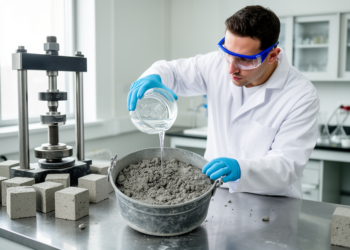
The distinction between Class C and Class F fly ash plays a central role in understanding why the mortar mixes ...
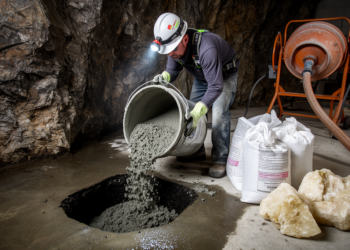
A sequential laboratory study shows that combining bentonite, metakaolin and quicklime can cut cement content in underground backfill grouts while ...
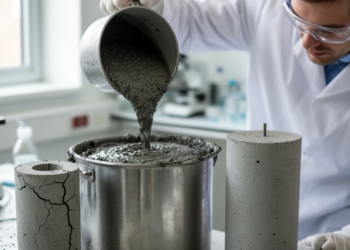
Researchers at Vellore Institute of Technology show that adding just 0.04 percent graphene oxide by weight of cement densifies the ...
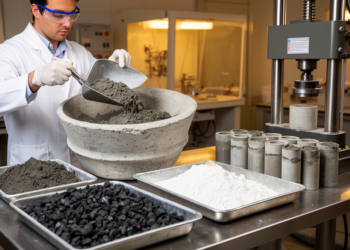
Researchers found that blending steel slag with phosphorus slag and spontaneously combusted coal gangue in a 7:1:2 ratio yields a ...
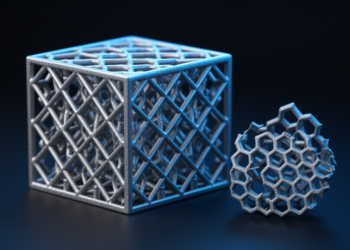
Indian researchers have combined compression testing, ANOVA, and a bird-inspired optimization algorithm to identify the Neovius lattice as the strongest ...
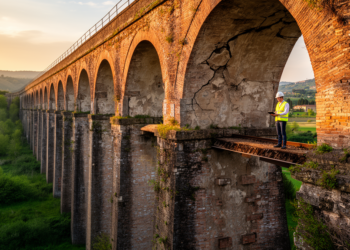
By mining over 500,000 historical concrete tests and thousands of cores from Italian motorway bridges and tunnels, researchers have built ...
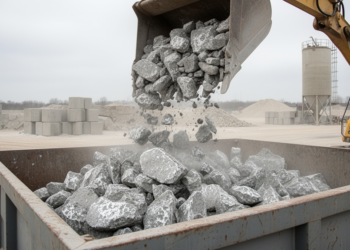
A new study shows that concrete slurry waste pressurized with supercritical CO2 can replace up to 25 percent of slag ...
New research shows that the rate at which clinker-based activators release alkalinity, rather than the total amount supplied, controls crystal ...
Researchers used Differential Evolution-optimized machine learning to predict the compressive strength of fly ash and waste glass powder geopolymers with ...
New research shows that trace doses of L-(+)-tartaric acid delay cement setting yet ultimately produce denser pore networks and significantly ...
Researchers trained an explainable XGBoost model on 1,670 field-recorded concrete mixes, achieving R-squared 0.9263 in strength prediction while using SHAP ...
Scientists combined pre-wetted shale ceramsite with limestone calcined clay cement to create a lightweight mortar that is stronger per kilogram ...
Researchers replaced fly ash in carbon-fiber-reinforced geopolymer with red mud and ore tailings, achieving up to 33.5 decibels of X-band ...