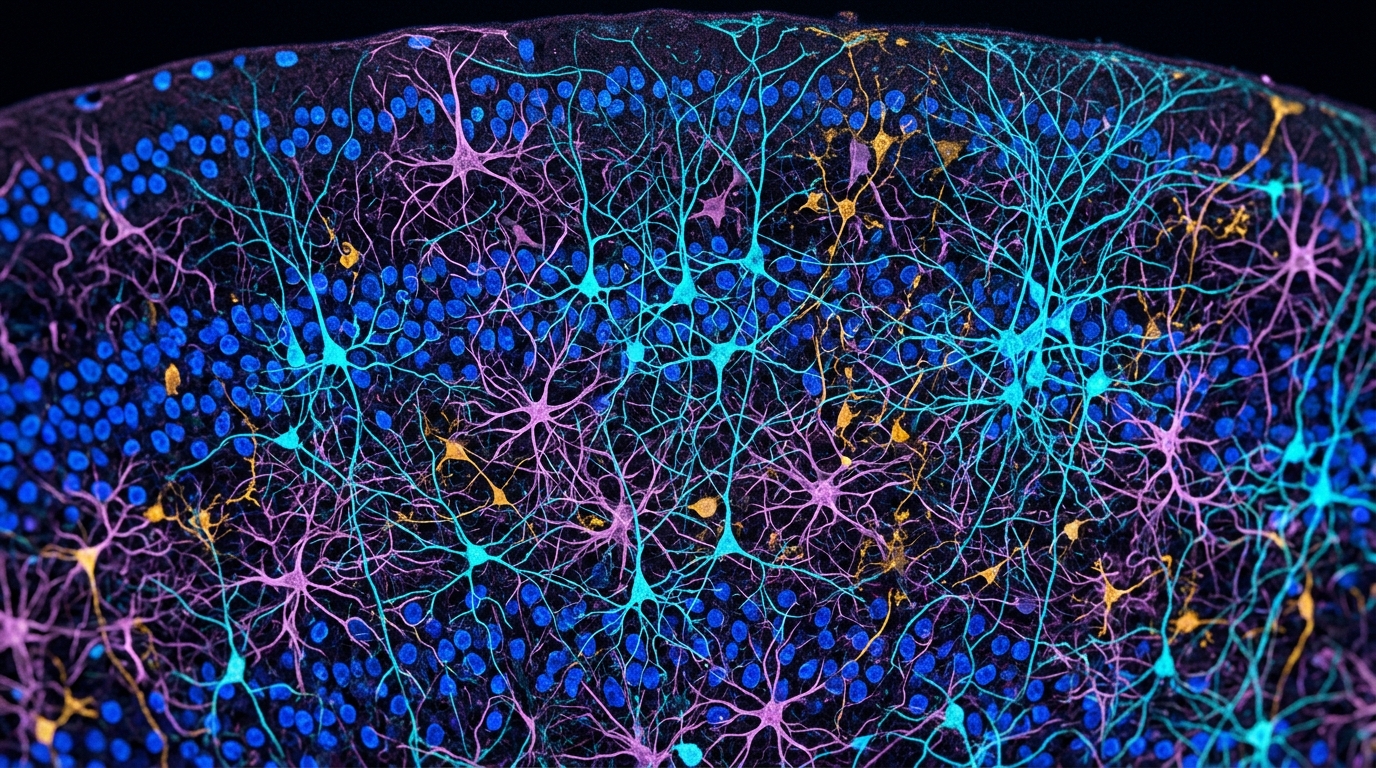
Spatial transcriptomics technology captures gene expression data while preserving the spatial context of cells within tissues. However, the resolution of these assays often means that a single spatial location contains multiple cells, making it difficult to determine the specific cell types present. To address this, researchers Peiyao Zhao, Justin A. Colacino, Ying Ma, and Xiang Zhou introduced a statistical framework named SWIMR, which stands for Spatially Weighted Integration for Multi-Reference deconvolution. The primary goal of this framework is to integrate multiple single-cell RNA sequencing references while accounting for spatial correlations, thereby enhancing the accuracy of cell-type proportion estimation in complex tissues.
Existing methods for deconvolving cell-type proportions in spatial transcriptomics typically rely on a single single-cell RNA sequencing reference. This approach can limit accuracy, particularly when the reference data are incomplete or mismatched with the tissue being analyzed. The development of SWIMR addresses these limitations by modeling each spatial location as a weighted combination of multiple references. In this model, both the cell-type proportions and the reference weights are allowed to vary across different tissue locations, leveraging spatial information to improve deconvolution results.
The researchers evaluated SWIMR across comprehensive simulations and diverse spatial transcriptomics datasets to assess its performance. The results indicated that SWIMR consistently outperformed single-reference approaches in these tests. In developing human heart tissue, the framework recovered ground-truth cell-type compositions with the highest accuracy among the methods compared. This suggests that the integration of multiple references provides a significant advantage in resolving cell-type identities in tissues where single references may be insufficient.
Applications of SWIMR in human lung and breast cancer datasets demonstrated its utility in delineating tumor, stromal, and immune compartments. The framework uncovered tumor-adjacent populations and detected cell type-specific spatially variable genes that were missed by other methods. These findings highlight the capability of SWIMR to identify subtle spatial patterns and specific gene expression variations associated with distinct cell types in cancerous tissues.
Further applications in mouse embryo and liver cancer datasets showed that SWIMR could leverage context-specific references to resolve organ-specific cell types. The framework also increased sensitivity for biologically relevant pathways in these models. By incorporating multiple references, SWIMR established itself as a robust framework for multi-reference deconvolution in spatial transcriptomics, offering a more accurate tool for analyzing complex tissue architectures.
Subject of Research: Development of SWIMR for multi-reference deconvolution in spatial transcriptomics
Article Title: Enhancing cell type deconvolution in spatial transcriptomics through incorporating multiple reference panels
Article References: Zhao, P., Colacino, J. A., Ma, Y., & Zhou, X. (2026). Enhancing cell type deconvolution in spatial transcriptomics through incorporating multiple reference panels. PLOS Genetics, 22(11), e1012345. https://doi.org/10.1371/journal.pgen.1012345
Image Credits: AI Generated
DOI: 10.1371/journal.pgen.1012345
Keywords: spatial transcriptomics, cell type deconvolution, SWIMR, single-cell RNA sequencing, statistical framework, tumor microenvironment, gene expression, bioinformatics, Enhancing, cell, type, deconvolution
News Source: Brooke Gardner. (November 8, 2026). SWIMR Improves Spatial Transcriptomics Cell Type Deconvolution. Scienmag.