A new benchmarking study has determined the best analysis tools for identifying errors in a patient’s DNA that are responsible for driving disease.
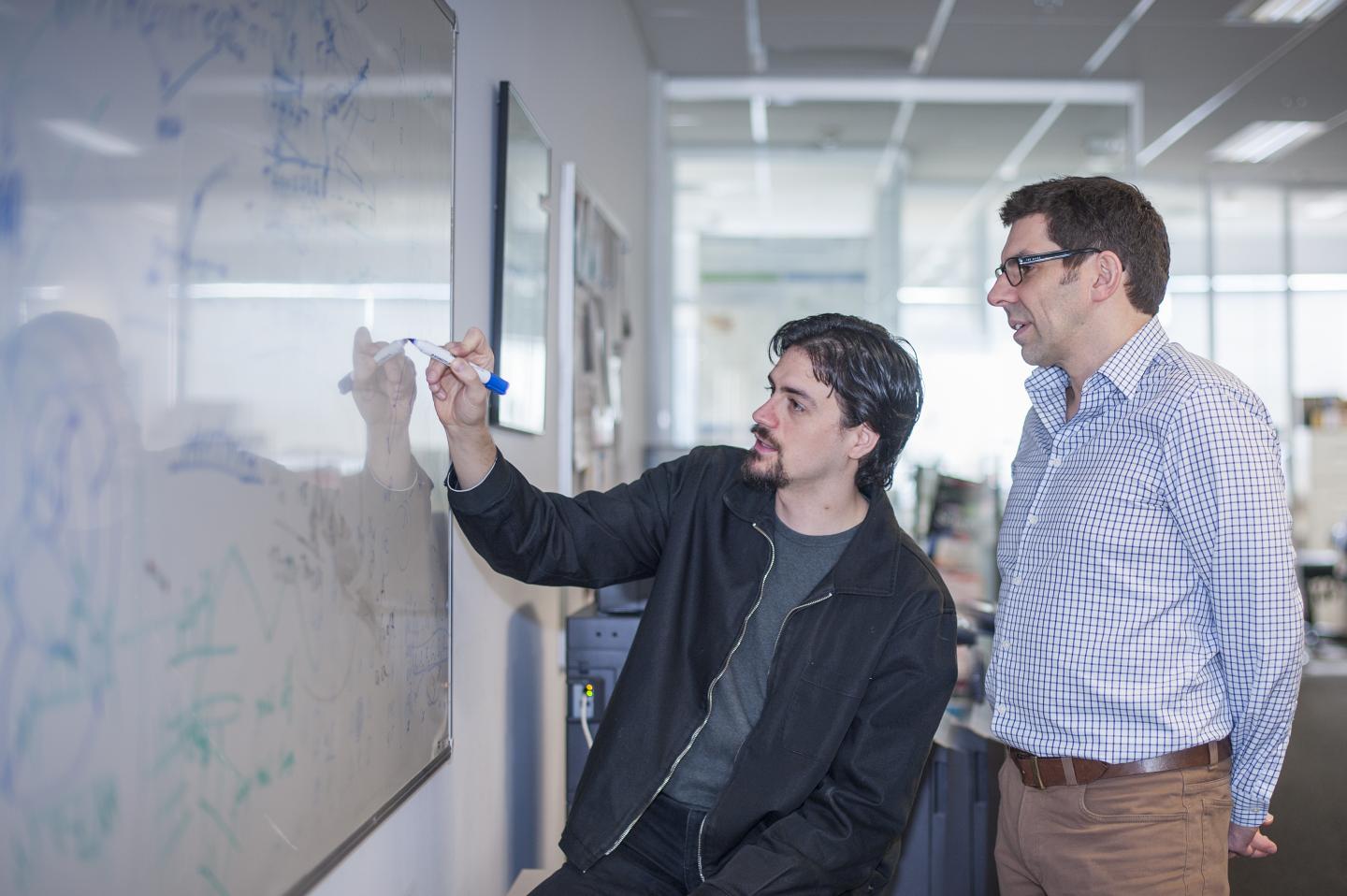
Credit: Walter and Eliza Hall Institute of Medical Research
Published in Nature Communications, the study is the largest of its kind and was led by Walter and Eliza Hall Institute computational biologists Professor Tony Papenfuss, Dr Daniel Cameron and Mr Leon Di Stefano.
The new study reveals the world’s top genomic rearrangement detection tools providing summaries on their performance and recommendations for use. Dr Cameron said the study could ultimately help clinicians determine the best treatments for their patients.
“Basically, you have to understand what is going wrong before you can work out how to fix the problem. In the context of cancer for instance, an understanding of the genetic mutations driving tumour growth could help oncologists determine the most appropriate treatment for their patients,” he said.
To determine the best genomic rearrangement detection methods, the researchers comprehensively tested 12 of the most widely used tools to see which ones could accurately identify the differences between a patient’s genetic information and the standard human reference genome. The findings revealed that a tool called GRIDSS, developed by Professor Papenfuss and Dr Cameron, was one of the best performing options, most accurately able to detect DNA rearrangements.
Dr Cameron said the study would not have been possible without the Institute’s high-performance computing resource.
“Over the course of two years, we tested 12 of the most popular genomic rearrangement detection tools, generating more than 50 terabytes of data, to determine which tools perform well, and when they perform badly. Without these computing resources, we estimate the study would have taken us more than ten years,” he said.
The Institute’s Theme Leader for Computational Biology Professor Papenfuss said computational methods were required, more than ever before, for making sense of vast and complex datasets being generated from research.
“Computational studies like this one keep the field up to date with best practice approaches for data analysis. This particular study provides a comprehensive resource for users of genomic rearrangement detection methods, as well as developers in the field. It will also help to direct the next iteration of genomic rearrangement tool development at the Institute,” he said.
As new experimental techniques and DNA sequencing machines become available, the very nature of the data they generate is changing. Professor Papenfuss said that older analysis tools, while heavily cited and widely used, could lead to erroneous interpretations if used on data produced by the latest DNA sequencing machines. “This is why it is so important for researchers to find the right match between the analysis tool and dataset at hand,” he said.
###
Computational biology is playing an increasingly important role in basic and translational research, making discoveries and enabling the development of more effective therapies through the use of the computer as the primary research tool and through the development of new algorithms. The Institute has around 100 bioinformaticians and computational biologists. With Professor Papenfuss leading this theme, the workforce will continue to grow through a mix of recruitment and training.
The study was supported by the Australian National Health and Medical Research Council, Lorenzo and Pamela Galli Charitable Trust, Victorian State Government Operational Infrastructure Support and Australian Government NHMRC Independent Research Institute Infrastructure Support.
Media Contact
Arunee Wilson
[email protected]
Original Source
https:/