A groundbreaking advancement in prostate cancer treatment has emerged from a recent study presented at the Congress of the European Society for Radiotherapy and Oncology (ESTRO 2026) in Stockholm, Sweden. The study reveals that delivering radiotherapy in just two larger doses is as safe and effective as the conventional schedule of five smaller doses. This discovery promises to radically streamline patient care protocols and reduce the burden on healthcare systems while maintaining clinical efficacy and patient quality of life.
Traditionally, radiotherapy for localized prostate cancer involves multiple sessions spread over several weeks, typically five doses, to precisely target cancerous tissue while sparing surrounding healthy organs. This standard approach prioritizes thorough treatment delivery but imposes significant logistical challenges for patients, requiring daily hospital visits that disrupt personal and professional life. The latest research challenges this paradigm by evaluating a radically condensed treatment schedule.
The HERMES study, spearheaded by Dr. Sian Cooper, a Clinical Research Fellow at The Royal Marsden NHS Foundation Trust and the Institute of Cancer Research in London, represents one of the pioneering randomized controlled trials directly comparing two-session radiotherapy to the standard five-session protocol. This trial is particularly notable for employing state-of-the-art MRI-guided radiotherapy technology, allowing unprecedented targeting precision.
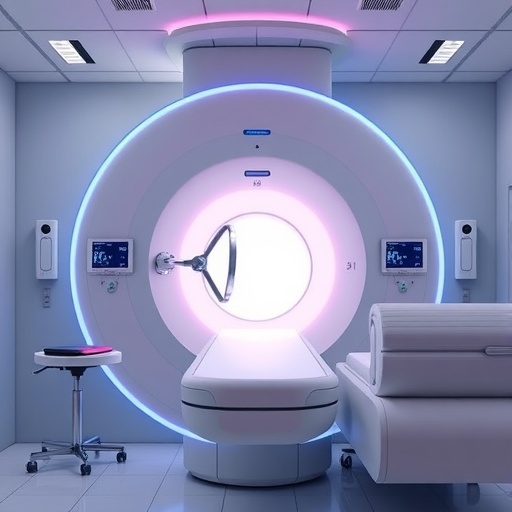
MRI-guided radiotherapy machines integrate real-time magnetic resonance imaging with radiation delivery systems, enabling clinicians to visualize the prostate and surrounding tissues with exceptional clarity during treatment. This precision minimizes radiation exposure to non-targeted areas like the bladder and rectum, thereby potentially reducing common side effects such as urinary and bowel dysfunction. Utilizing this advanced technology was critical in ensuring the safety of the condensed two-dose regimen.
The study enrolled 46 patients with localized prostate cancer, randomly assigning 24 individuals to receive the conventional five-dose treatment over two weeks, and 22 individuals to the novel two-dose treatment administered across eight days. Both groups received equivalent total radiation doses, ensuring a fair comparison regarding treatment effectiveness and toxicity profiles.
Follow-up analysis indicated that patients undergoing the two-dose radiotherapy protocol experienced side effects comparable to their counterparts receiving the standard five-dose treatments. Approximately 25% of patients in both cohorts reported moderate urinary symptoms like increased frequency or urgency between six months and two years post-treatment. Importantly, severe urinary or bowel side effects were absent, and no bowel side effects were reported in the two-session treatment group.
Patient-reported outcomes further demonstrated minimal changes in quality of life metrics after two years of follow-up, confirming that the condensed treatment did not compromise patient well-being. These findings suggest that the delivery of higher radiation doses in fewer sessions using MRI-guided radiotherapy is not only feasible but also clinically justified without elevating patient risks.
Establishing the safety profile of the two-session protocol carries profound implications for both patients and healthcare systems. For patients, reducing treatment duration from weeks to days alleviates the substantial inconvenience and psychological stress of frequent hospital visits, especially benefiting those residing far from specialized radiotherapy centers. This enhancement in convenience can improve treatment adherence and overall patient satisfaction.
For healthcare providers and hospitals, the adoption of shorter radiotherapy courses translates to increased throughput and resource efficiency. Fewer sessions per patient free up machine time and clinical staff capacity, allowing more patients to be treated and potentially reducing healthcare costs. Such operational advantages are vital in managing the increasing global demand for cancer treatments.
Professor Matthias Guckenberger, ESTRO President and radiation oncology expert at University Hospital Zurich, underscored the transformative potential of the study. He highlighted that radiotherapy remains among the most effective prostate cancer treatments due to its non-invasive nature and preservation of critical functions. This new research challenges longstanding conventions by demonstrating that a condensed regimen retains therapeutic benefits while maintaining low toxicity.
Despite the promising results, the availability of MRI-guided radiotherapy technology remains limited to specialized centers worldwide. However, the rapid expansion of these sophisticated machines suggests that broader implementation of two-dose radiotherapy protocols could soon become feasible. Ongoing and future trials will be essential to further validate these findings and facilitate the integration of this approach into standard clinical practice.
In conclusion, the HERMES study represents a milestone in oncological treatment innovation, offering a safer, faster, and potentially more accessible radiotherapy alternative for prostate cancer patients. Through harnessing advanced imaging and radiation delivery technologies, clinicians are poised to redefine care paradigms, improving patient experiences and outcomes without compromising treatment quality.
Subject of Research: People
Article Title: Not specified
News Publication Date: Not specified
Web References: Not specified
References: Not specified
Image Credits: Not specified
Keywords: Cancer, Radiation therapy, Prostate cancer, Side effects
Tags: comparison of radiotherapy dosing schedulescondensed prostate cancer treatment schedulehealthcare system efficiency in cancer careHERMES study prostate cancerlocalized prostate cancer treatment innovationMRI-guided radiotherapy technologyprostate cancer patient quality of lifeprostate cancer radiotherapy advancementsradiotherapy side effects reductionrandomized controlled trial in radiotherapystreamlined cancer treatment protocolstwo-session radiotherapy treatment