• HOME
  • NEWS
  • EXPLORE
    • CAREER
      • Companies
      • Jobs
    • EVENTS
    • iGEM
      • News
      • Team
    • PHOTOS
    • VIDEO
    • WIKI
  • BLOG
  • COMMUNITY
    • FACEBOOK
    • INSTAGRAM
    • TWITTER
Monday, May 11, 2026
BIOENGINEER.ORG
No Result
View All Result
  • Login
  • HOME
  • NEWS
  • EXPLORE
    • CAREER
      • Companies
      • Jobs
        • Lecturer
        • PhD Studentship
        • Postdoc
        • Research Assistant
    • EVENTS
    • iGEM
      • News
      • Team
    • PHOTOS
    • VIDEO
    • WIKI
  • BLOG
  • COMMUNITY
    • FACEBOOK
    • INSTAGRAM
    • TWITTER
  • HOME
  • NEWS
  • EXPLORE
    • CAREER
      • Companies
      • Jobs
        • Lecturer
        • PhD Studentship
        • Postdoc
        • Research Assistant
    • EVENTS
    • iGEM
      • News
      • Team
    • PHOTOS
    • VIDEO
    • WIKI
  • BLOG
  • COMMUNITY
    • FACEBOOK
    • INSTAGRAM
    • TWITTER
No Result
View All Result
Bioengineer.org
No Result
View All Result
Home NEWS Science News Biology

Study offers new insight into the impact of ancient migrations on the European landscape

Bioengineer by Bioengineer
April 1, 2020
in Biology
Reading Time: 3 mins read
0
IMAGE
Share on FacebookShare on TwitterShare on LinkedinShare on RedditShare on Telegram

IMAGE

Credit: Fernando Racimo

Neolithic populations have long been credited with bringing about a revolution in farming practices across Europe. However, a new study suggests it was not until the Bronze Age several millennia later that human activity led to significant changes to the continent’s landscape.

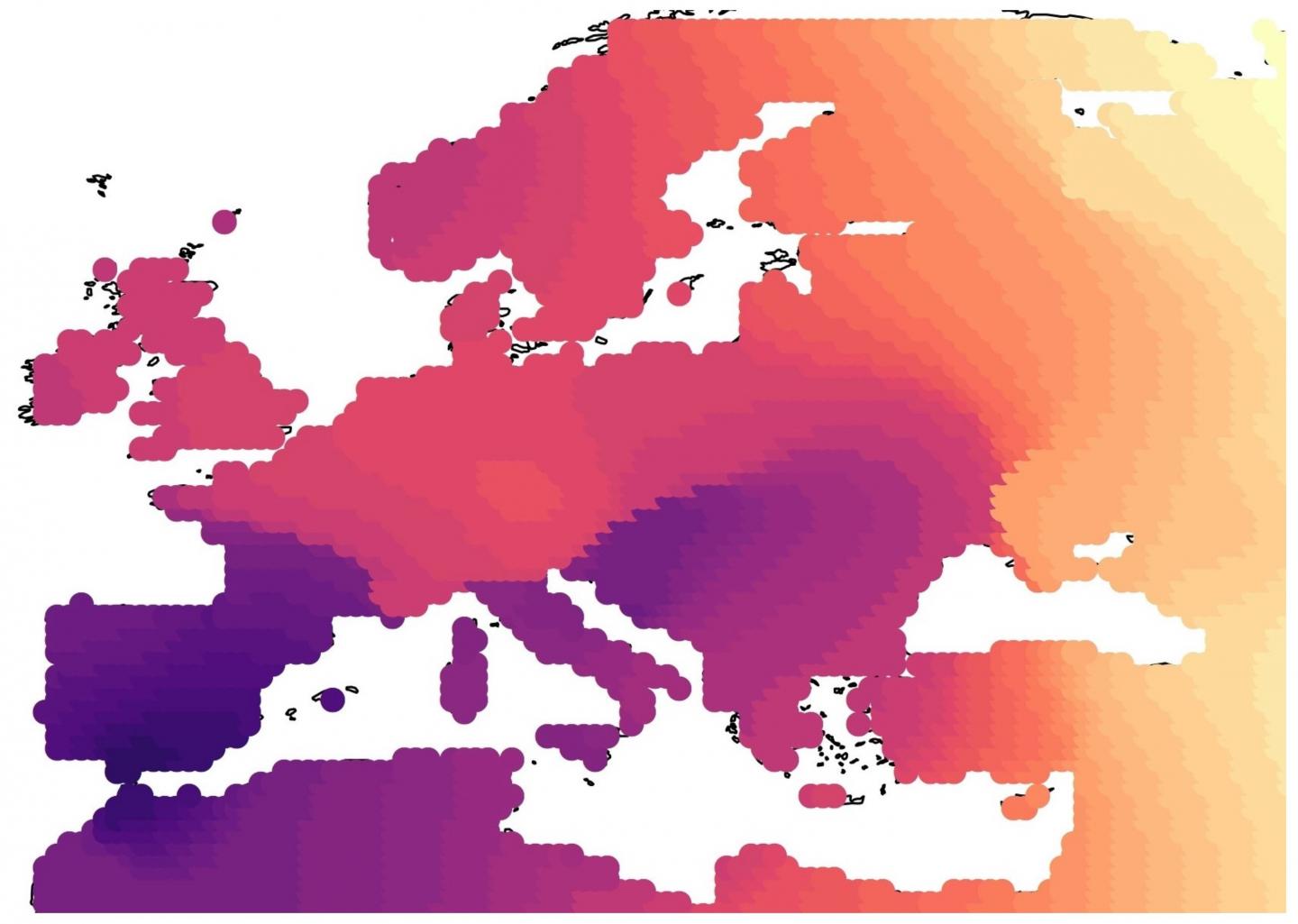
Scientists from the University of Copenhagen and the University of Plymouth led research tracing how the two major human migrations recorded in Holocene Europe – the northwestward movement of Anatolian farmer populations during the Neolithic and the westward movement of Yamnaya steppe peoples during the Bronze Age – unfolded.

In particular, they analysed how they were associated with changes in vegetation – which led to Europe’s forests being replaced with the agricultural landscape still much in evidence today.

Their results, published in PNAS, show the two migrations differ markedly in both their spread and environmental implications, with the Yamnaya expansion moving quicker and resulting in greater vegetation changes than the earlier Neolithic farmer expansion.

The study – also involving the University of Gothenburg and the University of Cambridge – used techniques commonly applied in environmental science to model climate and pollution, and applied them to instead analyse human population movements in the last 10 millennia of European history.

It showed that a decline in broad-leaf forest and an increase in pasture and natural grassland vegetation was concurrent with a decline in hunter-gatherer ancestry, and may have been associated with the fast movement of steppe peoples during the Bronze Age.

It also demonstrated that natural variations in climate patterns during this period are associated with these land cover changes.

The research is the ?rst to model the spread of ancestry in ancient genomes through time and space, and provides the ?rst framework for comparing human migrations and land cover changes, while also accounting for changes in climate.

Dr Fernando Racimo, Assistant Professor at the University of Copenhagen and the study’s lead author, said: “The movement of steppe peoples that occurred in the Bronze Age had a particularly strong impact on European vegetation. As these peoples were moving westward, we see increases in the amount of pasture lands and decreases in broad leaf forests throughout the continent. We can now also compare movements of genes to the spread of cultural packages. In the case of the Neolithic farming revolution, for example, the two track each other particularly well, in both space and time.”

The research made use of land cover maps showing vegetation change over the past 11,000 years, which were produced through the University of Plymouth’s Deforesting Europe project.

Scientists working on that project have previously shown more than half of Europe’s forests have disappeared over the past 6,000 years due to increasing demand for agricultural land and the use of wood as a source of fuel.

Dr Jessie Woodbridge, Research Fellow at the University of Plymouth and co-author on the study, added: “European landscapes have been transformed drastically over thousands of years. Knowledge of how people interacted with their environment in the past has implications for understanding the way in which people use and impact upon the world today. Collaboration with palaeo-geneticists has allowed the migration of human populations in the past to be tracked using ancient DNA, and for the first time allowed us to assess the impact of different farming populations on land-cover change, which provides new insights into past human-environment interactions.”

###

Media Contact
Alan Williams
[email protected]

Original Source

https://www.plymouth.ac.uk/news/study-offers-new-insight-into-the-impact-of-ancient-migrations-on-the-european-landscape

Related Journal Article

http://dx.doi.org/10.1073/pnas.1920051117

Tags: AgricultureClimate ChangeEarth ScienceEcology/EnvironmentGeographyPaleontology
Share13Tweet8Share2ShareShareShare2

Related Posts

Ancient Plant Populations Reveal Fresh Insights into Climate Resilience — Biology

Ancient Plant Populations Reveal Fresh Insights into Climate Resilience

May 8, 2026
Rare Brain Disorders in Children Linked to Mutations in Lesser-Known Protein Complex — Biology

Rare Brain Disorders in Children Linked to Mutations in Lesser-Known Protein Complex

May 8, 2026

From Odd Insect to Underwater Predator: The Remarkable Evolution of a Bloodthirsty Fruit Fly

May 8, 2026

SNU Professor Sangwoo Seo’s Team Develops Next-Generation CRISPR Biocontainment Technology to Control Microbial Survival Without DNA Cleavage

May 8, 2026
Please login to join discussion

POPULAR NEWS

  • Research Indicates Potential Connection Between Prenatal Medication Exposure and Elevated Autism Risk

    840 shares
    Share 336 Tweet 210
  • New Study Reveals Plants Can Detect the Sound of Rain

    727 shares
    Share 290 Tweet 181
  • Salmonella Haem Blocks Macrophages, Boosts Infection

    61 shares
    Share 24 Tweet 15
  • Breastmilk Balances E. coli and Beneficial Bacteria in Infant Gut Microbiomes

    57 shares
    Share 23 Tweet 14

About

We bring you the latest biotechnology news from best research centers and universities around the world. Check our website.

Follow us

Recent News

New Post-Hoc Analysis Explores Daily Oral Orforglipron Use in Adults Over 65 with Obesity, Regardless of Diabetes Status

Evaluating Digoxin Use in Patients with Symptomatic Rheumatic Heart Disease

Evaluating the Effectiveness and Safety of Digitalis Glycosides in Treating Heart Failure

Subscribe to Blog via Email

Enter your email address to subscribe to this blog and receive notifications of new posts by email.

Join 82 other subscribers
  • Contact Us

Bioengineer.org © Copyright 2023 All Rights Reserved.

Welcome Back!

Login to your account below

Forgotten Password?

Retrieve your password

Please enter your username or email address to reset your password.

Log In
No Result
View All Result
  • Homepages
    • Home Page 1
    • Home Page 2
  • News
  • National
  • Business
  • Health
  • Lifestyle
  • Science

Bioengineer.org © Copyright 2023 All Rights Reserved.