• HOME
  • NEWS
  • EXPLORE
    • CAREER
      • Companies
      • Jobs
    • EVENTS
    • iGEM
      • News
      • Team
    • PHOTOS
    • VIDEO
    • WIKI
  • BLOG
  • COMMUNITY
    • FACEBOOK
    • INSTAGRAM
    • TWITTER
Sunday, June 28, 2026
BIOENGINEER.ORG
No Result
View All Result
  • Login
  • HOME
  • NEWS
  • EXPLORE
    • CAREER
      • Companies
      • Jobs
        • Lecturer
        • PhD Studentship
        • Postdoc
        • Research Assistant
    • EVENTS
    • iGEM
      • News
      • Team
    • PHOTOS
    • VIDEO
    • WIKI
  • BLOG
  • COMMUNITY
    • FACEBOOK
    • INSTAGRAM
    • TWITTER
  • HOME
  • NEWS
  • EXPLORE
    • CAREER
      • Companies
      • Jobs
        • Lecturer
        • PhD Studentship
        • Postdoc
        • Research Assistant
    • EVENTS
    • iGEM
      • News
      • Team
    • PHOTOS
    • VIDEO
    • WIKI
  • BLOG
  • COMMUNITY
    • FACEBOOK
    • INSTAGRAM
    • TWITTER
No Result
View All Result
Bioengineer.org
No Result
View All Result
Home NEWS Science News Health

Stranded dolphins have amyloid plaques in their brains

Bioengineer by Bioengineer
March 26, 2019
in Health
Reading Time: 2 mins read
0
Share on FacebookShare on TwitterShare on LinkedinShare on RedditShare on Telegram

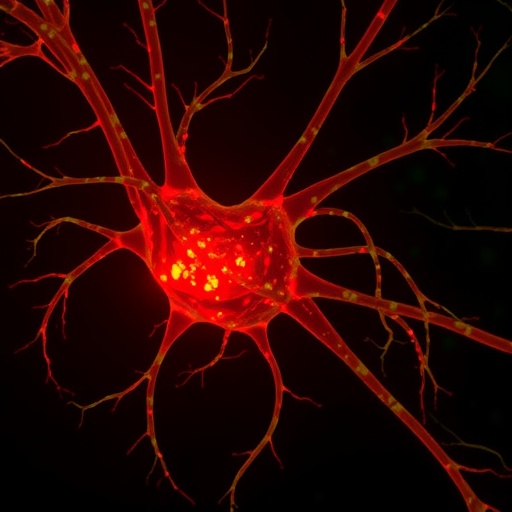
Dolphins stranded on the beaches of Florida and Massachusetts show in their brains amyloid plaques, a hallmark in human beings of Alzheimer’s disease, together with an environmental toxin produced by cyanobacterial blooms.

An international team of scientists led by neuropathologist Dr. David Davis at the University of Miami Neurology Department discovered that stranded dolphins have both β-amyloid plaques and the environmental toxin BMAA in their brains.

“We found β-amyloid plaques and damaged neurons in brain tissues from dolphins that had died on the beaches of Florida and Massachusetts,” Dr. Davis said.

“Dolphins are an excellent sentinel species for toxic exposures in the marine environment,” co-author Dr. Deborah Mash explained. “With increasing frequency and duration of cyanobacterial blooms in coastal waters, dolphins might provide early warning of toxic exposures that could impact human health.”

Scientists have previously found that chronic dietary exposure to the cyanobacterial toxin BMAA triggers β-amyloid plaques and neurofibrillary tangles, both hallmarks of Alzheimer’s disease, in laboratory animals.

Neuropathological analysis was completed at the University of Miami, while chemical analysis of the toxins was conducted by Dr. Susan Murch at the University of British Columbia.

“We cannot say for sure that chronic exposure to cyanobacterial blooms can trigger Alzheimer’s in humans but it is a risk that I personally am unwilling to take,” oceanographer Larry Brand at Rosenstiel School of Marine Atmospheric Science cautions.

Ethnobotanist Paul Alan Cox at the Brain Chemistry Labs in Jackson Hole reports that the neuropathology and brain toxins in the dolphins are similar to those found in the brains of Chamorro villagers in Guam who suffered from an Alzheimer’s-like disease.

“The $64,000 question is whether these marine mammals experienced cognitive deficits and disorientation that led to their beaching,” Cox said. “Until further research clarifies this question, people should take simple steps to avoid cyanobacterial exposure.”

The research report was published in PLOS ONE.

###

Media Contact
Marilyn Asay
[email protected]
http://dx.doi.org/10.1371/journal.pone.0213346

Tags: AlzheimerMarine/Freshwater BiologyMedicine/Healthneurobiology
Share13Tweet8Share2ShareShareShare2

Related Posts

Tracking Lanthanide-Labeled Microplastics in Plants

June 25, 2026

Neural Design Enables Zero-Shot Drug-Binding Proteins

June 25, 2026

Genomic Insights into Human Skin Fungi Diversity

June 25, 2026

Chiral Laser Gyroscopes Surpass Lock-In Limit

June 25, 2026
Please login to join discussion

POPULAR NEWS

  • Saying Goodbye to PGY-6: Pediatric Fellowship Realities

    103 shares
    Share 41 Tweet 26
  • Multi-Hospital Study Reveals Long Covid Burden Is Twice as High as Current Estimates

    92 shares
    Share 36 Tweet 23
  • Detection of EDCs in Breast Milk and Infant Urine Up to Six Months Highlights Early Exposure Risks

    77 shares
    Share 31 Tweet 19
  • New Drug Candidate Developed at McMaster Shows Potential for Treating Brain Cancer

    58 shares
    Share 23 Tweet 15

About

We bring you the latest biotechnology news from best research centers and universities around the world. Check our website.

Follow us

Recent News

Tracking Lanthanide-Labeled Microplastics in Plants

POSTECH Researchers Slash Cost of Reconstituted Cell-Free Systems by 95%

AI and Physics Collaborate to Design Advanced Hydrogen Storage Materials

Subscribe to Blog via Email

Success! An email was just sent to confirm your subscription. Please find the email now and click 'Confirm' to start subscribing.

Join 82 other subscribers
  • Contact Us

Bioengineer.org © Copyright 2023 All Rights Reserved.

Welcome Back!

Login to your account below

Forgotten Password?

Retrieve your password

Please enter your username or email address to reset your password.

Log In
No Result
View All Result
  • Homepages
    • Home Page 1
    • Home Page 2
  • News
  • National
  • Business
  • Health
  • Lifestyle
  • Science

Bioengineer.org © Copyright 2023 All Rights Reserved.