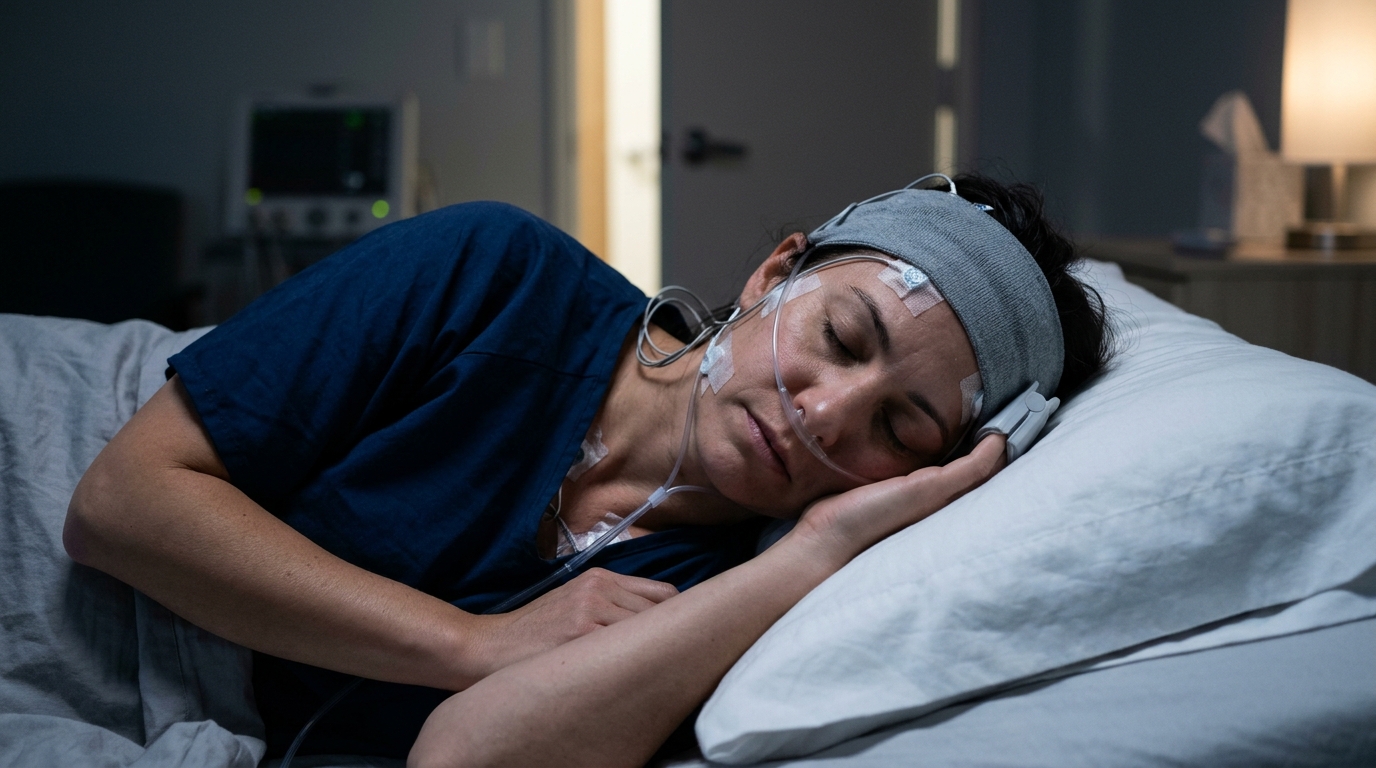
Researchers have identified a significant association between sleep-disordered breathing and markers of blood-brain barrier dysfunction across the clinical spectrum of Alzheimer’s disease. The study, published in Aging Clinical and Experimental Research, analyzed cross-sectional data from 409 participants in the Alzheimer’s Disease Neuroimaging Initiative (ADNI) cohort. By examining cerebrospinal fluid samples, the team found that individuals with sleep-disordered breathing exhibited elevated levels of specific biomarkers indicative of compromised integrity in the brain’s protective vascular barrier. This finding suggests a potential mechanistic link between respiratory disturbances during sleep and the early pathological processes underlying Alzheimer’s disease.
The research team, led by Yuming Kong and colleagues, utilized systematic text-mining of medical history records to ascertain the sleep-disordered breathing status of the participants. In this well-characterized cohort, 124 participants were classified as sleep-disordered breathing positive, while 285 were classified as negative. The study focused on four specific cerebrospinal fluid markers related to blood-brain barrier integrity: PDGFRβ, MMP10, CCL26, and CD40.
After adjusting for covariates including age, sex, body mass index, APOE ε4 status, and diagnostic category, the analysis revealed that sleep-disordered breathing was significantly associated with elevated concentrations of all four blood-brain barrier markers. The demographic profile of the sleep-disordered breathing positive group showed a higher prevalence of males, with 68.5% compared to 48.1% in the negative group, and a higher average body mass index of 29.6 kg/m² versus 26.2 kg/m².
A particularly significant finding was the interaction between sleep-disordered breathing and APOE ε4 status regarding the PDGFRβ marker. The interaction was statistically significant, indicating that pericyte-related blood-brain barrier stress was most pronounced in individuals who carried the APOE ε4 allele and also had sleep-disordered breathing.
The study also examined core Alzheimer’s disease biomarkers as secondary outcomes, specifically cerebrospinal fluid levels of amyloid beta 42 and phosphorylated tau at threonine 181. Sleep-disordered breathing was associated with higher levels of phosphorylated tau, with a beta coefficient of approximately 0.26. Additionally, an elevated ratio of phosphorylated tau to amyloid beta was observed, with a beta coefficient of approximately 0.17. However, the association between sleep-disordered breathing and amyloid beta levels alone did not reach statistical significance after adjustment, with a beta coefficient of approximately -0.05.
Further analysis revealed that PDGFRβ modestly amplified the relationship between sleep-disordered breathing and phosphorylated tau levels. This finding supports the hypothesis that vascular dysfunction serves as a bridge between sleep disturbances and neurodegenerative changes in the brain.
The authors conclude that sleep-disordered breathing, as defined by clinical history, is associated with a cerebrospinal fluid biomarker profile consistent with blood-brain barrier dysregulation. This profile includes indicators of pericyte injury and vascular inflammation, along with subtle shifts toward greater Alzheimer’s disease pathological burden. While the cross-sectional design of the study limits the ability to establish causality, the findings provide strong evidence for a plausible mechanistic link between sleep-disordered breathing and Alzheimer’s disease. The researchers emphasize the need for longitudinal studies to determine whether treating sleep-disordered breathing can attenuate blood-brain barrier-related neurodegeneration, potentially offering a new avenue for therapeutic intervention.
This study contributes to the growing body of evidence recognizing sleep-disordered breathing as a modifiable risk factor for cognitive decline and Alzheimer’s disease. By identifying specific blood-brain barrier markers associated with sleep-disordered breathing, the research provides a foundation for future investigations into the vascular mechanisms underlying Alzheimer’s pathology. As the field continues to explore the intersection of sleep, vascular health, and neurodegeneration, these results offer valuable insights into the complex pathophysiology of Alzheimer’s disease.
Subject of Research: Association between sleep-disordered breathing and blood-brain barrier biomarkers in Alzheimer's disease
Article Title: Sleep-disordered breathing is associated with Blood-brain barrier markers across the Alzheimer’s disease spectrum
Article References: Kong, Y., Zhang, D., Li, Z., Zhang, X., & Ma, R. (2026). Sleep-disordered breathing is associated with Blood-brain barrier markers across the Alzheimer’s disease spectrum. Aging Clinical and Experimental Research. https://doi.org/10.1007/s40520-026-03512-2
Image Credits: AI Generated
DOI: 10.1007/s40520-026-03512-2
Keywords: Alzheimer's disease, sleep-disordered breathing, blood-brain barrier, cerebrospinal fluid, biomarkers, ADNI, APOE ε4, neurodegeneration, vascular inflammation, pericyte injury, Sleep-disordered, breathing
News Source: Cassandra Pierce. (November 7, 2026). Sleep Breathing Issues Linked to Brain Barrier Markers. Scienmag.