• HOME
  • NEWS
  • EXPLORE
    • CAREER
      • Companies
      • Jobs
    • EVENTS
    • iGEM
      • News
      • Team
    • PHOTOS
    • VIDEO
    • WIKI
  • BLOG
  • COMMUNITY
    • FACEBOOK
    • INSTAGRAM
    • TWITTER
Friday, May 15, 2026
BIOENGINEER.ORG
No Result
View All Result
  • Login
  • HOME
  • NEWS
  • EXPLORE
    • CAREER
      • Companies
      • Jobs
        • Lecturer
        • PhD Studentship
        • Postdoc
        • Research Assistant
    • EVENTS
    • iGEM
      • News
      • Team
    • PHOTOS
    • VIDEO
    • WIKI
  • BLOG
  • COMMUNITY
    • FACEBOOK
    • INSTAGRAM
    • TWITTER
  • HOME
  • NEWS
  • EXPLORE
    • CAREER
      • Companies
      • Jobs
        • Lecturer
        • PhD Studentship
        • Postdoc
        • Research Assistant
    • EVENTS
    • iGEM
      • News
      • Team
    • PHOTOS
    • VIDEO
    • WIKI
  • BLOG
  • COMMUNITY
    • FACEBOOK
    • INSTAGRAM
    • TWITTER
No Result
View All Result
Bioengineer.org
No Result
View All Result
Home NEWS Science News Biology

Skinny cod and grey seal reveals troubling changes to food web in the Baltic Sea

Bioengineer by Bioengineer
June 11, 2019
in Biology
Reading Time: 3 mins read
0
IMAGE
Share on FacebookShare on TwitterShare on LinkedinShare on RedditShare on Telegram

IMAGE

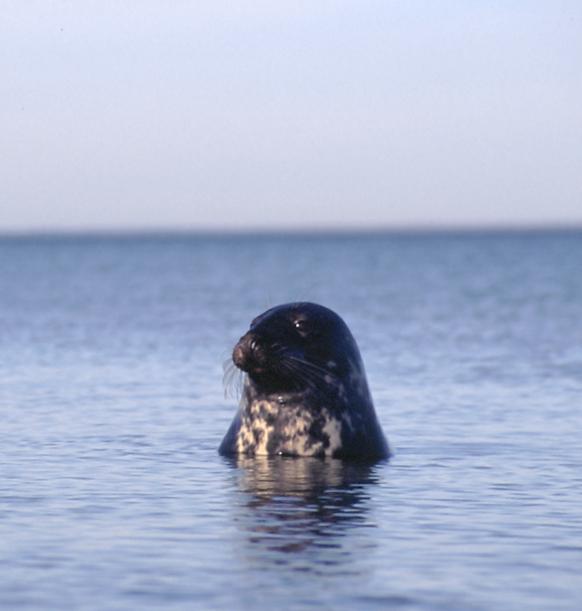
Credit: Olle Karlsson

“It is important that you understand how the food web works when managing a fishery. It is not enough to manage how the fish and fisheries are changing. The availability and quality of food is at least as important”, says Lena Bergström, researcher at the Department of Aquatic Resources at the Swedish Agricultural University.

In a collaboration between several universities, the authors of the study examined how the health and abundance of certain species has changed over two decades in the Bothnian Sea and the Baltic Proper. They investigated seal, cod, herring, sprat, isopods, amphipods and zooplankton; species that all occur at different levels in the Baltic Sea food web. The system is complex and several species can be both predators and prey. For example, herring eats zooplankton and some bottom fauna while the herring itself is eaten by cod and seal.

Shrinking habitats for bottom-living animals

The study primarily shows that there are links between the health of both cod and seal with the availability of bottom-living animals. Regarding the seals, the connection is indirect through that the herring it eats is influenced by the availability of the bottom-living animals. In both cases, there is a link to climate change and eutrophication:

“Oxygen levels in Baltic Sea have reduced since the 1990s, in big part due to eutrophication, creating vast oxygen-free areas. This leads to less living space for the bottom-living prey animals. This has, among other things, led to the fact that the isopods have become fewer and smaller, making them a poorer food choice for cod”, says Agnes Karlsson, lead author and researcher at the Department of Ecology, Environment and Plant Sciences (DEEP) at Stockholm University.

Extreme weather can degrade the situation

The fat content and the mean weight of herring in the Bothnian Sea have, according to the study, recently improved because of the supply of the bottom-living crustacean, the amphipod, has increased.

“However, the upturn is relative, because the amphipod in the Bothnian Sea collapsed in the early 2000s and what we now see are signs of a recovery”, says Agnes Karlsson.

The bottom-living crustaceans were almost eliminated after a period of extremely heavy rain that changed the water quality of the Bothnian Sea.

“With climate change it is likely that we will see similar extreme events more frequently in the future. If activities that lead to eutrophication are not reduced, oxygen shortage in the Baltic Sea will likely continue, leading to further reductions in the numbers of bottom-living animals. This can have far reaching effects for the economy, with reference to the fish species that are important commercially. To manage a fishery, we must also manage the environment and the food web”, says Lena Bergström.

###

The article “Linking consumer physiological status to food-web structure and prey food value in the Baltic Sea” is published in the scientific journal Ambio, A Journal of the Human Environment.

https://link.springer.com/article/10.1007/s13280-019-01201-1

Contact:

Lena Bergström, researcher, Department of Aquatic Resources (SLU Aqua), Swedish University of Agricultural Sciences, [email protected], +46 (0)10-478 4116

Agnes Karlsson, researcher, Department of Ecology, Environment and Plant Sciences (DEEP), Stockholm University, [email protected] +46 (0)8-16 12 46

Media Contact
Stockholm University Press Office
[email protected]

Original Source

https://link.springer.com/article/10.1007/s13280-019-01201-1

Tags: BiologyClimate ChangeEcology/EnvironmentFood/Food ScienceMarine/Freshwater BiologyNutrition/NutrientsPlant SciencesPollution/RemediationZoology/Veterinary Science
Share12Tweet8Share2ShareShareShare2

Related Posts

Supercomputer Simulations Uncover How Bacterial Enzyme Pumps Sodium Ions, Opening Doors to Novel Antibiotics — Biology

Supercomputer Simulations Uncover How Bacterial Enzyme Pumps Sodium Ions, Opening Doors to Novel Antibiotics

May 15, 2026
New Astrobiology Special Collection Highlights Emerging Evidence Supporting Land-Based Origins of Life — Biology

New Astrobiology Special Collection Highlights Emerging Evidence Supporting Land-Based Origins of Life

May 14, 2026

Revolutionizing Textiles: Engineered Protein Fibers Pave the Way for Sustainable, Recyclable Fabrics

May 14, 2026

URI Master’s Student Emilio Pedroza Lopez Awarded Prestigious NSF Graduate Research Fellowship

May 14, 2026
Please login to join discussion

POPULAR NEWS

  • Research Indicates Potential Connection Between Prenatal Medication Exposure and Elevated Autism Risk

    843 shares
    Share 337 Tweet 211
  • New Study Reveals Plants Can Detect the Sound of Rain

    729 shares
    Share 291 Tweet 182
  • Salmonella Haem Blocks Macrophages, Boosts Infection

    62 shares
    Share 25 Tweet 16
  • Breastmilk Balances E. coli and Beneficial Bacteria in Infant Gut Microbiomes

    58 shares
    Share 23 Tweet 15

About

We bring you the latest biotechnology news from best research centers and universities around the world. Check our website.

Follow us

Recent News

Scientists Create Ceramic Implants That Replicate Natural Bone Through 3D Printing

Paraprobiotics Mitigate BPA-Induced Damage to Male Fertility Linked to Plastic Exposure

Digital Health Fear Patterns in Older Cancer Patients

Subscribe to Blog via Email

Enter your email address to subscribe to this blog and receive notifications of new posts by email.

Join 82 other subscribers
  • Contact Us

Bioengineer.org © Copyright 2023 All Rights Reserved.

Welcome Back!

Login to your account below

Forgotten Password?

Retrieve your password

Please enter your username or email address to reset your password.

Log In
No Result
View All Result
  • Homepages
    • Home Page 1
    • Home Page 2
  • News
  • National
  • Business
  • Health
  • Lifestyle
  • Science

Bioengineer.org © Copyright 2023 All Rights Reserved.