The study, published in Clinical and Experimental Medicine, merges four individual single-cell RNA sequencing datasets and analyzes them with a tool called miRTalk to trace miRNA-target interactions between cell populations within the tumor microenvironment.
The analysis identified 208 miRNA-target gene pairs significantly associated with patient prognosis. Of these, 51 pairs were classified as tumor-suppressive, while 157 were identified as tumor-progressive. The prognostic evaluation drew on bulk transcriptomic data from the TCGA-LIHC cohort, with survival and Cox proportional hazards analysis used to link the predicted miRNA-target interactions to clinical outcomes.
Among the specific regulatory relationships uncovered, hsa-miR-1539 was predicted to be transferred from T or NK cells and to regulate the gene ETV5 in epithelial cells.
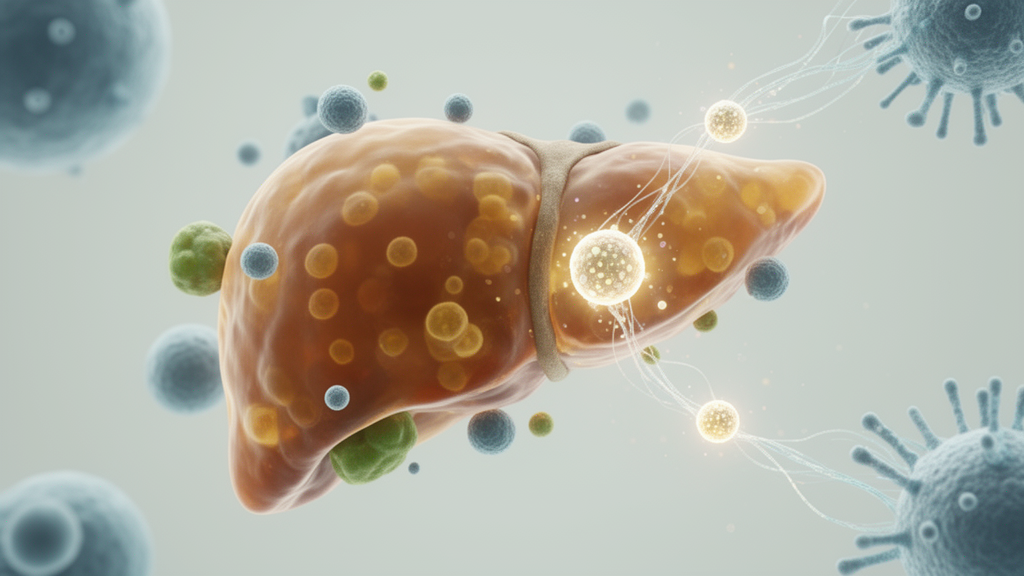
The study’s central nomination is hsa-miR-3180-5p, a microRNA that epithelial cells package into extracellular vesicles. According to the analysis, this miRNA plays a key role in regulating tumor-related genes including AGO3 and FSCN1 in fibroblasts and endothelial cells, respectively. It was also found to regulate a broader set of genes—ALG8, ARL5B, EIF6, FADS1, KIF5B, MOB3A, MTRF1L, PTPRF, and RPF2—together forming a pro-tumor gene network. On this basis, the authors position hsa-miR-3180-5p as a potential central regulator of oncogenic networks within the HCC microenvironment.
In the tumor microenvironment, this form of intercellular communication is thought to influence how cancer cells, immune cells, fibroblasts and endothelial cells interact. The authors note that despite growing interest, the mechanisms of intercellular communication in HCC mediated by EV-derived miRNA have remained poorly understood, which motivated the systematic, dataset-driven approach taken here.
The work is explicitly framed as a mapping and hypothesis-generating effort rather than a demonstration of therapeutic efficacy. Signaling pathway predictions were computational, and the prognostic associations were derived from retrospective analysis of existing transcriptomic cohorts. The authors state that the findings offer new insights into HCC progression and potential therapeutic targets, and that they provide a foundation for future research into EV-based interventions in HCC management—directions that would require dedicated experimental and clinical validation before any application in patient care.
Subject of Research: Extracellular vesicle-derived microRNA regulatory networks in the hepatocellular carcinoma tumor microenvironment
Article Title: Evaluating the regulatory network of EV-derived miRNA in the microenvironment of hepatocellular carcinoma
Article References: Chan, C. L., & Sun, H. (2026). Evaluating the regulatory network of EV-derived miRNA in the microenvironment of hepatocellular carcinoma. Clinical and Experimental Medicine. https://doi.org/10.1007/s10238-026-02277-2
Image Credits: AI Generated
DOI: 10.1007/s10238-026-02277-2
Keywords: hepatocellular carcinoma, extracellular vesicles, microRNA, tumor microenvironment, single-cell RNA sequencing, miRTalk, TCGA-LIHC, miRNA-target interactions, hsa-miR-3180-5p, prognosis, bioinformatics, Evaluating
News Source: Nathaniel Bowman. (October 28, 2026). Single-cell map reveals how EV-derived miRNAs shape the liver cancer microenvironment. Scienmag.