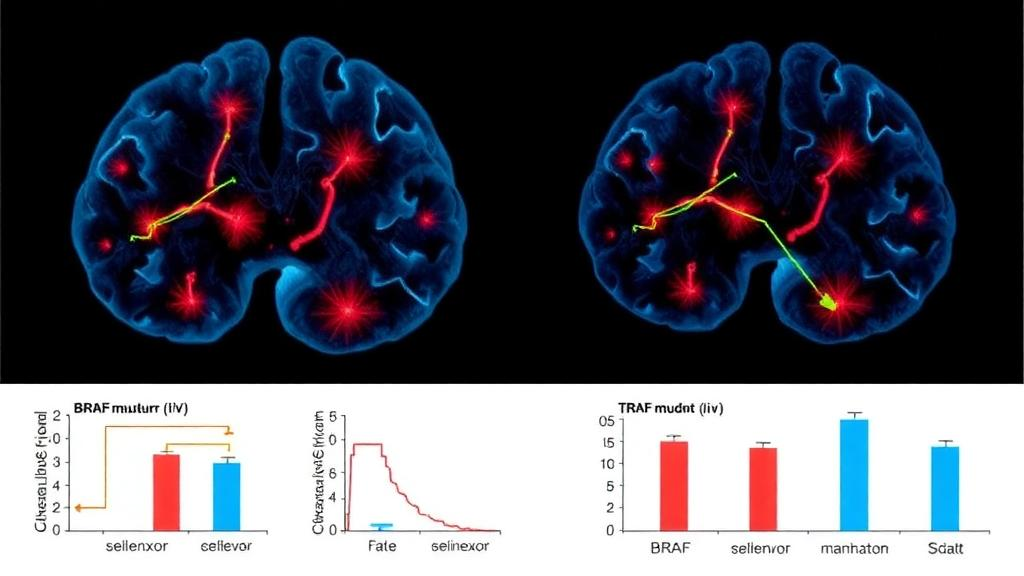
An FDA-approved cancer drug already used against blood malignancies has emerged as a surprising candidate for one of the most common brain tumors of childhood. In a study published in Acta Neuropathologica Communications, researchers report that selinexor, a selective inhibitor of the nuclear export protein XPO1, killed lab-grown pediatric low-grade glioma cells carrying the BRAFV600E mutation. When paired with a MEK inhibitor, the combination reduced viable three-dimensional culture area by more than 30 percent and suppressed regrowth for at least ten days, even after the treatment medium was replaced. The work, conducted on 3D multicellular aggregates, patient-derived spheroids and fresh tumor tissue cultures, does not yet constitute a therapy, but it identifies a vulnerability that the authors argue warrants further preclinical evaluation.
Pediatric low-grade gliomas, or pLGGs, are the most common primary brain tumors in children, accounting for 30 to 40 percent of all primary central nervous system tumors in children aged 0 to 14 years. They are classified as grade 1 or 2 tumors under the 2021 WHO classification of central nervous system tumors, and most carry activating alterations in the RAS/MAPK signaling pathway, including the KIAA1549::BRAF fusion, the BRAFV600E point mutation, NF1 mutations and FGFR1 alterations. The current standard of care relies on maximal safe surgical resection, which yields a favorable overall survival of 82 percent after 20 years, but progression-free survival in children who require postsurgical adjuvant chemotherapy remains comparatively low at 58 percent, and many children experience long-term morbidity.
The molecular driver of these tumors has long pointed toward targeted drugs. MEK inhibitors such as trametinib and binimetinib robustly shut down the MAPK pathway and have shown clinical activity, and in 2023 the combination of dabrafenib and trametinib was approved as first-line adjuvant therapy for BRAFV600E-mutant pLGG after outperforming chemotherapy in a randomized trial. Yet responses are often incomplete, and tumors commonly regrow once treatment stops, a phenomenon the researchers link to adaptive MAPK reactivation and to oncogene-induced senescence, a state in which cells stop proliferating but remain alive. Because senescent cells do not respond to anti-proliferative treatments, the team sought drug combinations that would actively kill tumor cells rather than merely arrest their growth.
To find such combinations systematically, the researchers screened 87 clinically relevant drugs, most of them approved by the European Medicines Agency or the US Food and Drug Administration or in late-stage clinical development, in BRAFV600E-mutant BT40 cells grown as three-dimensional multicellular aggregates. Each drug was tested alone and in combination with a fixed concentration of a MEK inhibitor. Rather than relying on bulk metabolic assays, which cannot distinguish a cytostatic drug from a cytotoxic one, the team used high-content fluorescence imaging of TMRE, a non-toxic dye that stains only viable cells, allowing the same well to be tracked over time. They applied RECIST-like thresholds, adapted from oncology response criteria, to classify changes in viable culture area, defining partial response as at least a 30 percent reduction.
The screen identified 25 and 28 top hits for binimetinib and trametinib respectively, with 21 overlapping compounds spanning seven drug classes, including histone deacetylase inhibitors, topoisomerase inhibitors, vinca alkaloids, and agents targeting BCL-2 family members, BRAF and mTOR. Among these, one combination partner stood out as previously undescribed: the XPO1 inhibitor selinexor. The prioritized strategy was then validated in patient-derived DKFZ-BT314 spheroids, a model that can be switched between a proliferative state and an oncogene-induced senescent state, allowing the team to test whether the drug effect extended to both actively dividing and senescent tumor cells. Selinexor showed activity at clinically achievable concentrations, with a reported maximum blood concentration of 1071 nanomolar, and the combination with binimetinib maintained or enhanced this effect.
Crucially, the reduction in viable culture area reflected actual cell death rather than simply slowed metabolism. In BT40 aggregates and in senescent DKFZ-BT314_OFF spheroids, selinexor alone and in combination with MEK inhibition increased DRAQ7 positivity, a marker of membrane-compromised dead cells, and caspase-3/7 activation, a hallmark of apoptosis. Complementary two-dimensional assays showed PARP cleavage, nuclear fragmentation and caspase activation, and a BLISS synergy analysis indicated synergistic interaction between MEK inhibitors and selinexor. In durability experiments designed to mimic clinical treatment pauses, trametinib-treated cultures tended to regrow once the drug was withdrawn, whereas selinexor-treated cultures, alone or in combination, maintained their reduced size for up to 12 days across all three models, even after medium was refreshed without re-dosing.
The mechanistic thread connecting these observations is MCL-1, an anti-apoptotic member of the BCL-2 protein family. XPO1 exports a wide range of cargo proteins from the nucleus, including tumor suppressors such as p53 and FOXO3, and interacts with mRNA-export factors such as eIF4E that facilitate translation of oncogenic transcripts including MCL-1. Gene expression analyses of pleomorphic xanthoastrocytoma patient samples and BRAFV600E-induced senescence models revealed upregulation of MAPK, TGFβ, TP53 and FOXO pathway genes alongside anti-apoptotic BCL2 family members. Selinexor treatment reduced MCL-1 protein levels in BT40 and DKFZ-BT314_OFF cells, and combining selinexor with binimetinib produced a significantly greater reduction, to 0.1-fold in BT40 and 0.01-fold in DKFZ-BT314_OFF cells relative to untreated controls, consistent with disruption of a survival signal that senescent tumor cells depend on.
The team also tested the drug against fresh tumor tissue rather than established cell lines. Ex vivo drug sensitivity profiling of fresh pLGG tissue cultures from 20 patients, obtained through the LOGGIC Core BioClinical Data Bank, demonstrated sensitivity to XPO1 inhibition at clinically achievable concentrations. Marked inhibition exceeding 50 percent at the respective maximum blood concentration was observed for selinexor in 5 of the 20 samples, making it the second most potent drug tested after navitoclax, a BCL-XL-targeting agent, and the responses to the two drugs correlated strongly. An additional tumoroid culture derived from a BRAFV600E-mutant low-grade glioma sample collected through the INFORM precision oncology program confirmed approximately 50 percent inhibition at the clinically achievable concentration of selinexor.
An exploratory zebrafish embryo xenograft experiment provided an early, though inconclusive, in vivo signal. Fluorescently labeled BT40 cells were transplanted into zebrafish embryos and treated for 48 hours with solvent, selinexor, trametinib or the combination. Progression was observed in 31 of 37 tumors in the solvent control group but only 7 of 15 tumors in the combination group, a numerical attenuation of growth corresponding to a disease control rate of 53 percent. However, the difference did not reach statistical significance, with an ANOVA p-value of 0.058, and the authors themselves describe the findings as descriptive and hypothesis-generating rather than proof of efficacy in a living organism. The brief 48-hour exposure, shorter than the six-day interval after which the strongest culture effects appeared, may not capture effects requiring longer treatment.
Selinexor is not an untested compound. Approved by the FDA in 2019 for refractory multiple myeloma and in 2020 for relapsed or refractory diffuse large B-cell lymphoma, it has shown blood-brain barrier penetration in a phase 2 study of recurrent glioblastoma, and a pediatric phase I trial in children and adolescents with recurrent central nervous system tumors established a recommended weekly dose of 35 milligrams per square meter of body surface area, with prolonged disease stabilization in a subset of patients though no objective responses. A cross-sectional analysis of 40 clinical trials has also documented toxicity, underscoring the need for rational combinations that improve the therapeutic index. The authors caution that only a small number of established pLGG 3D models exist and that BT40 forms irregular aggregates rather than compact spheroids, so additional genetically and histologically diverse models will be needed to confirm generalizability. Longer-term, adequately powered animal studies, they conclude, are required before any clinical translation can be considered.
Subject of Research: Preclinical testing of the XPO1 inhibitor selinexor, alone and with MEK inhibitors, in 3D and ex vivo models of BRAFV600E-driven pediatric low-grade glioma.
Article Title: Cytotoxic activity of selinexor in BRAFV600E-driven pediatric low-grade glioma 3D cultures
Article References: Zeiser, C., Emperador, M., Herter, S., Sigaud, L., Stroh-Dege, A., Loboda, A., Kolodziejczak, A., Zeuner, S., Digel, L. J., Frese, K., Chilian, B., Freitas, M., Kelm, J. M., Ǿra, I., Vogl, D., Schuhmann, M. U., Peterziel, H., Sigaud, R., Selt, F., … Oehme, I. (2026). Cytotoxic activity of selinexor in BRAFV600E-driven pediatric low-grade glioma 3D cultures. Acta Neuropathologica Communications, 14(1), Article 220. https://doi.org/10.1186/s40478-026-02461-1
Image Credits: AI Generated
DOI: 10.1186/s40478-026-02461-1
Keywords: selinexor, XPO1 inhibitor, pediatric low-grade glioma, BRAFV600E, MEK inhibitors, 3D cell cultures, oncogene-induced senescence, MCL-1, drug screening, ex vivo drug sensitivity, zebrafish xenograft, MAPK pathway
News Source: Harold Sullivan. (October 29, 2026). Selinexor shows cytotoxic activity against BRAF-mutant pediatric glioma in 3D cultures. Scienmag.