• HOME
  • NEWS
  • EXPLORE
    • CAREER
      • Companies
      • Jobs
    • EVENTS
    • iGEM
      • News
      • Team
    • PHOTOS
    • VIDEO
    • WIKI
  • BLOG
  • COMMUNITY
    • FACEBOOK
    • INSTAGRAM
    • TWITTER
Tuesday, October 27, 2026
BIOENGINEER.ORG
No Result
View All Result
  • Login
  • HOME
  • NEWS
  • EXPLORE
    • CAREER
      • Companies
      • Jobs
        • Lecturer
        • PhD Studentship
        • Postdoc
        • Research Assistant
    • EVENTS
    • iGEM
      • News
      • Team
    • PHOTOS
    • VIDEO
    • WIKI
  • BLOG
  • COMMUNITY
    • FACEBOOK
    • INSTAGRAM
    • TWITTER
No Result
View All Result
Bioengineer.org
No Result
View All Result
Home NEWS Science News Chemistry

Self-regenerating platinum catalyst keeps ammonia hydrogen production running for 500 hours

by
October 27, 2026
in Chemistry
Reading Time: 2 mins read
0
Self-regenerating platinum catalyst keeps ammonia hydrogen production running for 500 hours

Self-regenerating platinum catalyst keeps ammonia hydrogen production running for 500 hours

Share on FacebookShare on TwitterShare on LinkedinShare on RedditShare on Telegram

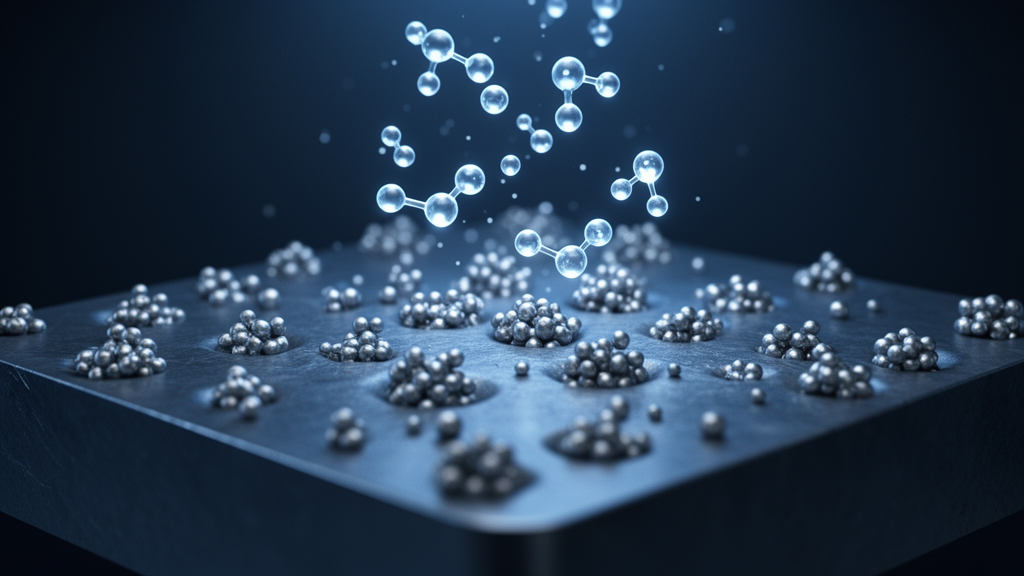
Ammonia is an attractive carrier for hydrogen because it is easy to store and transport, and electrochemical cracking of ammonia could offer a sustainable route to decentralized hydrogen production. In practice, however, platinum-based catalysts used for the anodic ammonia oxidation reaction tend to lose activity through two deactivation pathways: oxidation of the platinum itself and poisoning by nitrogen species that bind to active sites.

The material consists of platinum nanoparticles supported on nitrogen-doped carbon that contains atomically dispersed iron sites. In tests, this Pt/Fe-NC catalyst achieved an ammonia oxidation mass activity of 733 A per gram of platinum. According to the authors, electron transfer from the support suppresses the oxidation of platinum while also accelerating the rate-determining dehydrogenation step of the ammonia oxidation reaction, addressing the activity side of the problem.

The more striking feature is the catalyst’s capacity for in situ regeneration. The iron-nitrogen-carbon substrate promotes a water-assisted pathway in which poisonous adsorbed nitrogen species are hydrogenated back into reactive NH-containing intermediates, which can then dimerize and leave the surface. This regeneration chemistry, the researchers report, allows the catalyst to keep operating where conventional platinum catalysts would steadily choke on accumulated nitrogen.

Combining the catalyst with pulsed electrolysis, intermittent acid washing and ammonia replenishment, the team sustained hydrogen production for more than 2,000 hours at 10 mA cm−2 and for 500 hours at 1.5 A cm−2, the high current density highlighted in the study. The work is presented as a demonstration of an integrated design for managing platinum poisoning in electrocatalytic ammonia cracking, with characterization spanning catalyst structure, poisoning mechanisms, the role of the platinum oxidation state, and operando spectroscopy of the regeneration pathway.

If the durability figures can be reproduced outside the laboratory, the approach could matter for the emerging hydrogen economy, where ammonia is increasingly viewed as a shippable vector for renewable energy. The study’s reported performance figures and mechanistic claims come from the authors’ own electrochemical and spectroscopic measurements, and the article is available behind a subscription paywall, so independent replication will be needed to establish how the catalyst performs in practical electrolyzer hardware over longer timescales.

Subject of Research: Electrocatalytic ammonia cracking for hydrogen production using a self-regenerating platinum catalyst

Article Title: Catalyst regeneration enables durable electrochemical ammonia cracking for H2 production

Article References: Jiang, R., Yao, Y., Fan, L., Da, Y., Luo, J., Wu, Y., Chen, G., Ji, C., Jin, H., Chen, X., Wang, Q., Zhu, T., Xi, S., Zhao, M., Lum, Y., He, Q., Ou, P., & Chen, W. (2026). Catalyst regeneration enables durable electrochemical ammonia cracking for H2 production. Nature Synthesis. https://doi.org/10.1038/s44160-026-01201-6

Image Credits: AI Generated

DOI: 10.1038/s44160-026-01201-6

Keywords: ammonia cracking, hydrogen production, electrocatalysis, platinum catalyst, nitrogen-doped carbon, catalyst regeneration, nitrogen poisoning, ammonia oxidation reaction, durability, Nature Synthesis, Catalyst, regeneration

News Source: Bethany Barker. (October 27, 2026). Self-regenerating platinum catalyst keeps ammonia hydrogen production running for 500 hours. Scienmag.

Tags: ammonia crackingammonia oxidation reactioncatalystcatalyst regenerationdurabilityelectrocatalysisHydrogen productionNature Synthesisnitrogen poisoningNitrogen-doped carbonplatinum catalystregeneration
Share12Tweet7Share2ShareShareShare1

Related Posts

Stable Free Oxoboranes Isolated via CO-Triggered Transformation of Heterocumulenes

Stable Free Oxoboranes Isolated via CO-Triggered Transformation of Heterocumulenes

October 27, 2026
Nickel catalyst pairs anionic and neutral ligands to steer cyclohexane stereochemistry

Nickel catalyst pairs anionic and neutral ligands to steer cyclohexane stereochemistry

October 27, 2026

Seed-confined alloying unlocks immiscible W–Bi–Pt catalysts for methanol oxidation

October 27, 2026

Paris plume study shows aerosols change as they drift downwind

October 27, 2026

POPULAR NEWS

  • Nurses with higher empathy show more positive attitudes toward older adults

    Nurses with higher empathy show more positive attitudes toward older adults

    29 shares
    Share 12 Tweet 7
  • Amygdala neurons that fire early decide which images become lasting memories

    29 shares
    Share 12 Tweet 7
  • CAR-T Cytokine Release Syndrome Shows Distinct Symptom Profiles by Timing, Severity and Duration

    29 shares
    Share 12 Tweet 7
  • Hippocampus encodes experience as disentangled variables in cell assemblies

    29 shares
    Share 12 Tweet 7

About

We bring you the latest biotechnology news from best research centers and universities around the world. Check our website.

Follow us

Recent News

Nurses with higher empathy show more positive attitudes toward older adults

Amygdala neurons that fire early decide which images become lasting memories

CAR-T Cytokine Release Syndrome Shows Distinct Symptom Profiles by Timing, Severity and Duration

Subscribe to Blog via Email

Enter your email address to subscribe to this blog and receive notifications of new posts by email.

Join 85 other subscribers
  • Contact Us

Bioengineer.org © Copyright 2023 All Rights Reserved.

Welcome Back!

Login to your account below

Forgotten Password?

Retrieve your password

Please enter your username or email address to reset your password.

Log In
No Result
View All Result
  • Homepages
    • Home Page 1
    • Home Page 2
  • News
  • National
  • Business
  • Health
  • Lifestyle
  • Science

Bioengineer.org © Copyright 2023 All Rights Reserved.