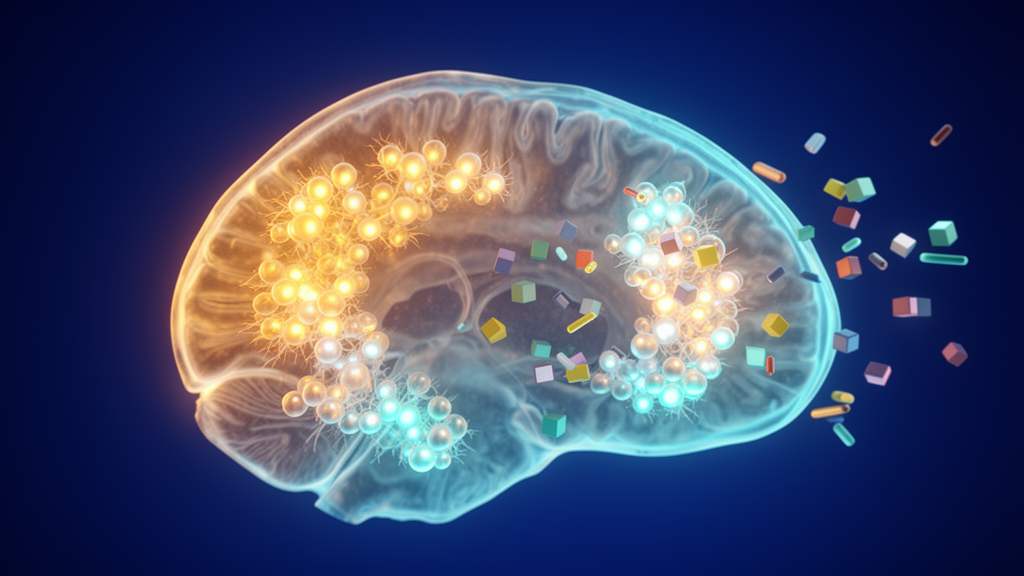
The hippocampus does not encode experience as a single tangled stream of information, according to a new study published in Nature Neuroscience on 27 October 2026. Instead, it appears to break experience apart into separate, disentangled variables that are carried by the coordinated activity of groups of neurons known as cell assemblies.
Wenbo Tang, Antonio Fernandez-Ruiz and colleagues, working with behaving mice, analyzed hippocampal population dynamics to uncover a structured organization underlying the diversity of single-neuron responses. Their findings offer what the authors describe as a unifying geometric principle of population coding that supports flexible memory representations and enables rapid generalization of prior knowledge to new situations.
Neurons in the hippocampus are famously tuned to spatial location, but their activity is also modulated by many external and internal variables and appears to drift randomly over time. This has long made it difficult to link hippocampal computations to behavior. The new work suggests that this apparent randomness is, in fact, structured.
The study reports that the temporal and contextual components of these representations are governed by distinct circuit mechanisms. According to the abstract, the temporal component is controlled by local inhibitory interactions, while the contextual component is driven by input-driven cell–assembly dynamics.
Figure-level findings reported with the article support this division of labor. Perturbing feedforward inputs in a CA1 model induced a manifold rotation but did not affect temporal drift, and perturbing CA3 and medial entorhinal cortex inputs induced global remapping in CA1 without affecting temporal drift either. By contrast, local inhibition by CA1 PV interneurons was found to promote representational drift.
Other reported results concern how population geometry reflects the acquisition of task structure, and how a coherent population representation of shared task structure appears across different mazes. The authors also report coherent remapping across environments in CA3–CA1 assemblies, suggesting that related representations remain linked when animals move between settings.
The study is a mouse experiment analyzing hippocampal population dynamics, and the published abstract is the available summary of the findings; the full article is behind a subscription preview. The conclusions therefore concern circuit mechanisms observed in this experimental system rather than direct clinical implications.
If the reported organization holds, it would provide a circuit basis for how the hippocampus keeps different aspects of experience separable while still allowing flexible memory representations and rapid generalization of prior knowledge to new situations.
Subject of Research: Hippocampal circuit mechanisms underlying disentangled representations and generalization in mice
Article Title: Circuit mechanisms for disentangled representations and generalization in the hippocampus
Article References: Tang, W., Chang, H., Liu, C., Perez-Hernandez, S., Zheng, W. Y., Park, J., Karaba, L. A., Oliva, A., & Fernandez-Ruiz, A. (2026). Circuit mechanisms for disentangled representations and generalization in the hippocampus. Nature Neuroscience. https://doi.org/10.1038/s41593-026-02491-x
Image Credits: AI Generated
DOI: 10.1038/s41593-026-02491-x
Keywords: hippocampus, cell assemblies, population dynamics, representational drift, CA1, CA3, PV interneurons, remapping, memory, neural coding, mice, Nature Neuroscience
News Source: Cassandra Pierce. (October 27, 2026). Hippocampus encodes experience as disentangled variables in cell assemblies. Scienmag.