• HOME
  • NEWS
  • EXPLORE
    • CAREER
      • Companies
      • Jobs
    • EVENTS
    • iGEM
      • News
      • Team
    • PHOTOS
    • VIDEO
    • WIKI
  • BLOG
  • COMMUNITY
    • FACEBOOK
    • INSTAGRAM
    • TWITTER
Tuesday, October 27, 2026
BIOENGINEER.ORG
No Result
View All Result
  • Login
  • HOME
  • NEWS
  • EXPLORE
    • CAREER
      • Companies
      • Jobs
        • Lecturer
        • PhD Studentship
        • Postdoc
        • Research Assistant
    • EVENTS
    • iGEM
      • News
      • Team
    • PHOTOS
    • VIDEO
    • WIKI
  • BLOG
  • COMMUNITY
    • FACEBOOK
    • INSTAGRAM
    • TWITTER
No Result
View All Result
Bioengineer.org
No Result
View All Result
Home NEWS Science News Health

Mitofusin-blocking peptides shrink heart attack damage in mice

by
October 27, 2026
in Health
Reading Time: 2 mins read
0
Mitofusin-blocking peptides shrink heart attack damage in mice

Mitofusin-blocking peptides shrink heart attack damage in mice

Share on FacebookShare on TwitterShare on LinkedinShare on RedditShare on Telegram

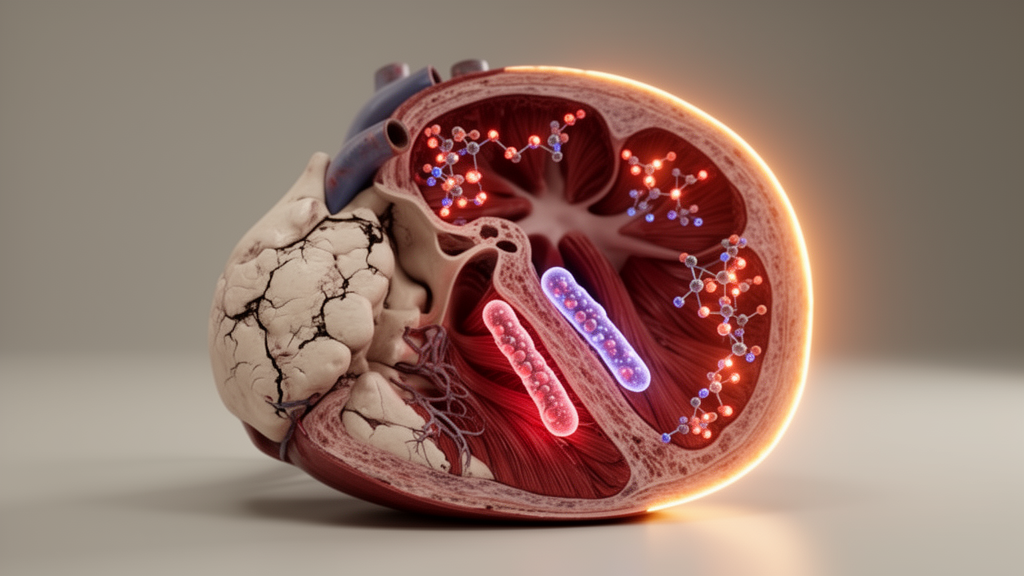
Acute pharmacological modulation of mitofusins — large outer mitochondrial membrane GTPases that govern contacts between the endoplasmic reticulum and mitochondria — can markedly change the size of a heart attack in mice, according to a study published in Nature Cardiovascular Research. The work, led by Joshua L. Axelrod, Zuzana Nichtová and colleagues under senior authors György Csordás, John W. Calvert and Richard N. Kitsis, shows that cell-permeable peptides which perturb mitofusin conformations regulate myocardial infarct size by altering ER/SR–mitochondria interactions and calcium transfer, independently of any change in mitochondrial fusion.

Mitofusin 1 and mitofusin 2 (MFN1 and MFN2) are best known for mediating mitochondrial fusion through dimerization on adjacent mitochondria. MFN2, but not MFN1, also resides at the endoplasmic reticulum — or sarcoplasmic reticulum in cardiomyocytes — where dimerization of mitofusins on the ER/SR and mitochondrial membranes tethers the two organelles together. These contact sites are the routes through which calcium passes from the ER/SR into mitochondria, a flow carried out by the mitochondrial calcium uniporter, which transports Ca2+ into the mitochondrial matrix.

The researchers found that MFN activators increase ER/SR–mitochondria proximity, promote ER/SR-to-mitochondria calcium transfer and exacerbate infarct size in mice. These effects depended on MFN2 but not MFN1, and on the mitochondrial calcium uniporter, tying the damage directly to enhanced calcium delivery into mitochondria during ischemia-reperfusion injury.

Conversely, MFN inhibitors reduced mitochondrial calcium transfer and infarct size. Notably, although ER/SR–mitochondria proximity was not affected by the inhibitors, their protection persisted even when administration was delayed until the initiation of reperfusion, as shown in the study’s in vivo experiments.

The authors conclude that these findings demonstrate the feasibility of acutely modulating ER/SR–mitochondria interactions and calcium dynamics, and suggest that pharmacological MFN inhibition may provide a new therapeutic strategy to limit cardiac damage during reperfused myocardial infarction. The evidence so far comes from mouse models and cultured cells, including cardiomyocyte-specific Mfn1 and Mfn2 knockout mice and cardiomyocyte-specific Mcu deletion experiments, so translation to human patients remains to be established.

Subject of Research: Pharmacological modulation of mitofusins and ER/SR–mitochondria calcium transfer in mouse myocardial infarction

Article Title: Manipulation of ER–mitochondria interactions with mitofusin modulators reduces cardiac damage during myocardial infarction in mice

Article References: Axelrod, J. L., Nichtová, Z., Schneider, T., Lee, J., Pekson, R., Qin, D., Ghazi, M., Kumar, V., Margulets, V., Kirshenbaum, L. A., Santulli, G., Csordás, G., Calvert, J. W., & Kitsis, R. N. (2026). Manipulation of ER–mitochondria interactions with mitofusin modulators reduces cardiac damage during myocardial infarction in mice. Nature Cardiovascular Research. https://doi.org/10.1038/s44161-026-00903-6

Image Credits: AI Generated

DOI: 10.1038/s44161-026-00903-6

Keywords: mitofusin, MFN2, mitochondria, endoplasmic reticulum, calcium transfer, myocardial infarction, ischemia-reperfusion, mitochondrial calcium uniporter, cardiomyocytes, infarct size, therapeutic strategy, mice

News Source: Ophelia Keating. (October 27, 2026). Mitofusin-blocking peptides shrink heart attack damage in mice. Scienmag.


Tags: calcium transfercardiomyocytesendoplasmic reticuluminfarct sizeischemia-reperfusionMFN2micemitochondriamitochondrial calcium uniportermitofusinMyocardial InfarctionTherapeutic strategy
Share12Tweet7Share2ShareShareShare1

Related Posts

Mystery Cases bring skin disease and diagnostic uncertainty to preclinical medical students

Mystery Cases bring skin disease and diagnostic uncertainty to preclinical medical students

October 27, 2026
Earbuds that read the brain: review maps the rise of in-ear EEG

Earbuds that read the brain: review maps the rise of in-ear EEG

October 27, 2026

Chronic Kidney Disease Burden in China Shifts as Diabetes and Hypertension Overtake Glomerulonephritis

October 27, 2026

Non-optimal temperatures and rainfall linked to 1.7 million child diarrhoea cases in Ghana

October 27, 2026

POPULAR NEWS

  • Climate model gains first coupled simulation of ocean oxygen's triple isotope signature

    Climate model gains first coupled simulation of ocean oxygen’s triple isotope signature

    29 shares
    Share 12 Tweet 7
  • Mystery Cases bring skin disease and diagnostic uncertainty to preclinical medical students

    29 shares
    Share 12 Tweet 7
  • Frog Species Previously Known Only from Vietnam Discovered in Southern China

    29 shares
    Share 12 Tweet 7
  • Earbuds that read the brain: review maps the rise of in-ear EEG

    29 shares
    Share 12 Tweet 7

About

We bring you the latest biotechnology news from best research centers and universities around the world. Check our website.

Follow us

Recent News

Climate model gains first coupled simulation of ocean oxygen’s triple isotope signature

Mystery Cases bring skin disease and diagnostic uncertainty to preclinical medical students

Frog Species Previously Known Only from Vietnam Discovered in Southern China

Subscribe to Blog via Email

Enter your email address to subscribe to this blog and receive notifications of new posts by email.

Join 85 other subscribers
  • Contact Us

Bioengineer.org © Copyright 2023 All Rights Reserved.

Welcome Back!

Login to your account below

Forgotten Password?

Retrieve your password

Please enter your username or email address to reset your password.

Log In
No Result
View All Result
  • Homepages
    • Home Page 1
    • Home Page 2
  • News
  • National
  • Business
  • Health
  • Lifestyle
  • Science

Bioengineer.org © Copyright 2023 All Rights Reserved.