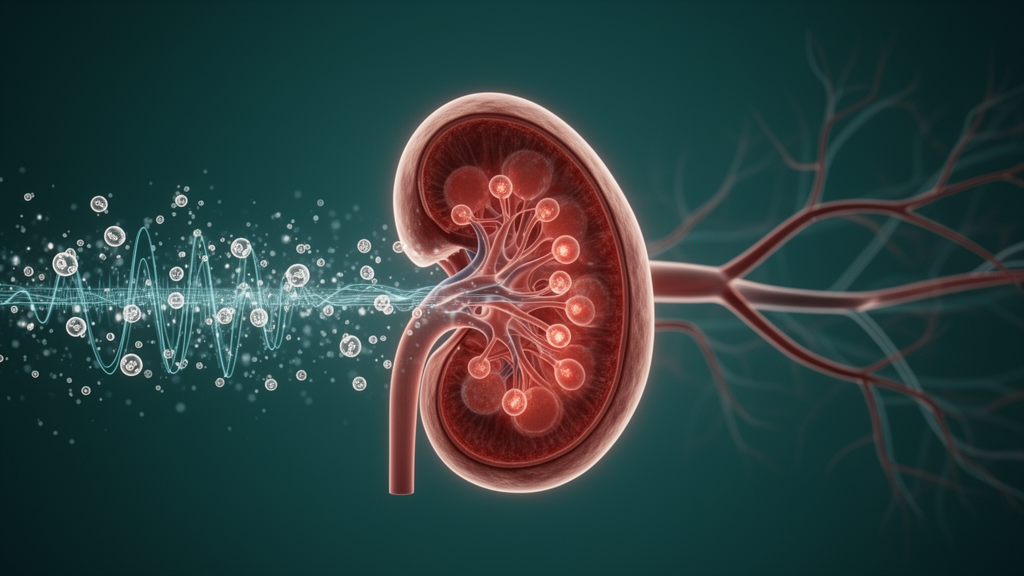
Chronic kidney disease has quietly become one of China’s most consequential public-health problems, and a new nationwide analysis now quantifies just how heavy that burden has grown. Drawing on the Global Burden of Disease (GBD) 2023 dataset, researchers led by Professor Luxia Zhang of Peking University First Hospital, with Dr. Jinwei Wang as first author, systematically analysed CKD-related incidence, mortality and disability-adjusted life-years (DALYs) across China. The study was made available online on June 26, 2026, and published in Chinese Medical Journal in Volume 139, Issue 15 on August 5, 2026.
The headline estimate is striking: in 2023, roughly 156 million Chinese people were estimated to be living with chronic kidney disease. Type-2 diabetes and hypertension emerged as the leading etiological contributors to the disease burden. The figure underscores how a condition that often progresses silently in its early and middle stages can accumulate enormous scale at the population level, particularly when low public awareness delays diagnosis and treatment and raises the risks of cardiovascular complications, end-stage renal disease, dialysis or kidney transplantation.
The temporal trends the team uncovered reveal a subtle but important dynamic. From 1990 to 2023, crude CKD incidence increased at an annual rate of 1.67 percent, while crude DALYs and mortality remained relatively stable. However, once the figures were adjusted for age, incidence, DALYs and mortality all demonstrated downward trends. This pattern indicates that population ageing, rather than a genuine deterioration in age-specific risk, largely pushed up the observed crude burden of disease across the country.
Beneath those aggregate numbers, the causes of kidney failure have shifted dramatically over three decades. Glomerulonephritis once dominated CKD-attributable DALYs and mortality in China. After 2006, type-2 diabetes became the top driver, and around 2015 it was in turn overtaken by hypertension-related kidney disease. The researchers note that these transformations mirror the rising national prevalence of hypertension and type-2 diabetes in China, tying the changing face of kidney disease directly to the country’s broader metabolic health transition.
When the team compared age-standardized DALY estimates between 2010 and 2023, the top five risk factors for CKD were high fasting plasma glucose, high systolic blood pressure, dietary risks, high body-mass index (BMI) and non-optimal ambient temperature.
One risk factor, however, stubbornly refused to follow the downward trend. The contribution of high BMI remained stable, with a slight increase of 4.88 percent, signalling that obesity is an inadequately mitigated risk factor for CKD-related disability and death. The authors highlight this as an unresolved modifiable threat, suggesting that public-health interventions targeting metabolic risk factors, especially obesity, should be strengthened alongside strategies for coping with population ageing in order to ease China’s CKD burden.
The analysis also revealed a notable gender disparity. Men showed lower CKD incidence and prevalence than women, yet suffered higher DALY and mortality burdens from the disease. The researchers flag this sex-specific pattern as deserving clinical attention, since it suggests that men who do develop kidney disease face disproportionately severe outcomes even as they are less likely to be counted among the affected.
Professor Zhang’s team has long focused on CKD burden, risk factors and integrated prevention and control strategies, leveraging big-health-data approaches. Their new findings emphasize that population ageing impedes further reductions of CKD-caused disability and death, while hypertension, diabetes and unhealthy lifestyles continue to generate substantial CKD burden across the population. In other words, even as age-standardized rates improve, the sheer demographic momentum of an ageing society works against further progress at the national level.
The study arrives at a moment of heightened global attention to kidney disease. Chronic kidney disease was formally listed as a priority non-communicable disease by the World Health Organization in 2025, reflecting its growing status as a worldwide public-health threat. Characterized by kidney damage or sustained reduced glomerular filtration, the disease often escapes notice until complications arise, making population-level surveillance and risk-factor control central to any credible response.
For China, the message of the GBD 2023 analysis is twofold. First, the etiological shift from glomerulonephritis toward diabetes- and hypertension-related kidney disease means that the changing face of kidney disease in China is tied directly to the country's broader metabolic health transition.
Subject of Research: Trends, causes and risk factors of chronic kidney disease burden in China based on GBD 2023 data
Article Title: Burden of chronic kidney disease in China: trends, etiological shifts and key risk factors based on GBD 2023 data
Article References: Burden of chronic kidney disease in China: trends, etiological shifts and key risk factors based on GBD 2023 data. Original publication (Bibliographic details unavailable.)
Image Credits: AI Generated
DOI: Not provided
Keywords: chronic kidney disease, China, GBD 2023, DALYs, type 2 diabetes, hypertension, obesity, population ageing, risk factors, Peking University, Chinese Medical Journal, public health
News Source: Jerry Hayes. (October 27, 2026). Chronic Kidney Disease Burden in China Shifts as Diabetes and Hypertension Overtake Glomerulonephritis. Scienmag.