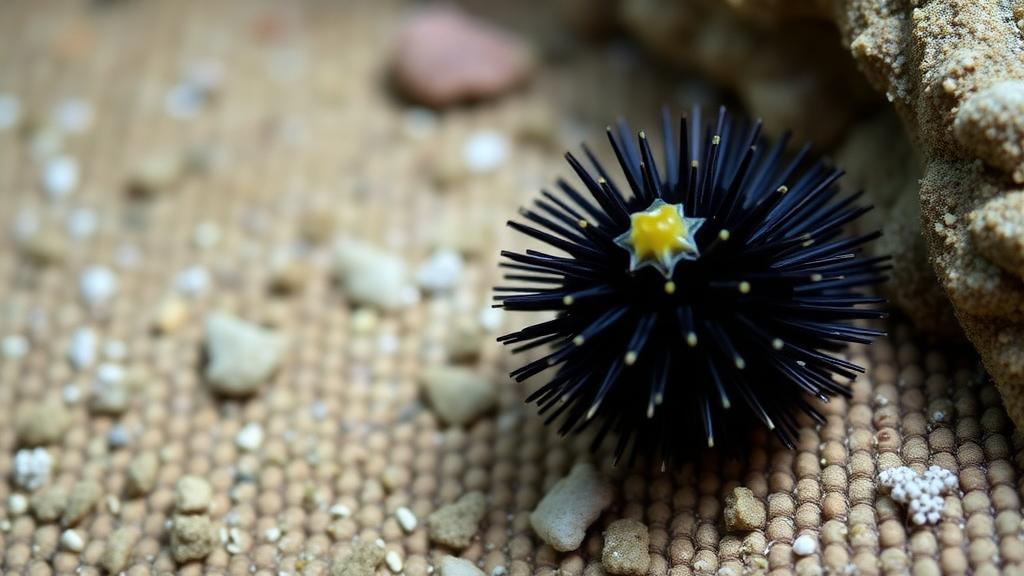
Sea urchins, spiny echinoderms prized across Asia and the Mediterranean for their edible gonads, remain almost entirely unexploited in Bangladesh despite the country’s long coastline and productive Bay of Bengal waters. That is the central conclusion of a review published in Aquaculture Science and Management, which synthesizes global evidence on sea urchin biology, ecology, nutrition and aquaculture to assess whether the resource could become a new frontier for the nation’s blue economy. The authors argue that the biological groundwork exists, but that Bangladesh lacks nearly every practical ingredient needed to realize it.
The review, conducted as a synthesis of literature published between 2010 and 2025 in databases including Scopus, Web of Science, Google Scholar, ScienceDirect and PubMed, frames sea urchins as a keystone group in reef ecosystems. By grazing on macroalgae, they prevent algal overgrowth that would otherwise smother corals and reshape community structure. The authors cite the Caribbean as a cautionary example: when the urchin Diadema antillarum disappeared, reef communities shifted from coral to algal dominance, reducing habitat complexity and undermining fisheries productivity and coastal protection. Sea urchins also engineer microhabitats through their movement and feeding, and their populations respond sensitively to ocean acidification, pollution and temperature fluctuations, making them useful bioindicators of reef health.
Globally, sea urchin capture production peaked at 117,039 tonnes between 1950 and 1995, then declined gradually from 93,122 tonnes in 2000 to 71,186 tonnes in 2020, a trajectory the review attributes to unregulated exploitation of wild stocks. Chile was the largest producer in 2020, harvesting 37,464 tonnes. Roughly 75,000 tonnes are consumed each year, mainly in Japan, Chile, New Zealand, the Philippines and Mediterranean countries such as Italy, France and Spain. Market demand is estimated at 60,000 to 70,000 tonnes annually, with aquaculture supplying less than 1 percent. The global sea urchin market, valued at approximately 500 million dollars in 2025, is forecast to grow at a compound annual rate of 7 percent, reaching a projected 900 million dollars by 2033.
The commercial appeal rests largely on the gonads, or roe, a nutrient-dense product containing essential fatty acids, minerals and substantial protein. Reported figures include roughly 13.8 to 13.9 grams of protein per 100 grams of roe, and fat content ranging from 6.3 grams per 100 grams in Strongylocentrotus nudus to 7.3 grams in S. intermedius, with omega-3 fatty acids such as EPA and DHA constituting about 12 to 13.56 percent of total fatty acids. Japan accounts for over 80 percent of global roe consumption, with retail prices reported as high as 450 Australian dollars per kilogram. In Europe, Paracentrotus lividus is the most harvested species, and Portuguese production rose from 3 tonnes in 2010 to 324 tonnes in 2020, valued at an estimated 843,000 euros.
Beyond nutrition, the review catalogs bioactive compounds with documented laboratory activity. Polyhydroxylated naphthoquinones such as spinochromes from Evechinus chloroticus show anti-inflammatory and antioxidant effects in experimental systems; sulfated glycans from Lytechinus variegatus and Echinometra lucunter prolong activated partial thromboplastin time, suggesting anticoagulant potential; and a 2-sulfated galactan from E. lucunter inhibited platelet aggregation by roughly 30 percent at 150 micrograms per milliliter and achieved 50 percent thrombus inhibition at 0.25 milligrams per kilogram in animal models. Echinochromes from P. lividus normalized lipid profiles in rodents, and gonad consumption reduced body and liver weight in mice fed a high-fat diet. The authors stress that these are preclinical findings and that human studies are needed to confirm any health effects.
Bangladesh’s starting point is sparse. Scientific investigation of echinoid fauna in its waters is minimal, though sea urchin occurrences have been documented, particularly around Saint Martin’s Island and along the Bay of Bengal coast. Preliminary surveys and incidental observations suggest species from families such as Diadematidae, including Diadema setosum, and Echinometridae, including Echinometra mathaei, common in Indo-Pacific reef environments. A comprehensive taxonomic inventory is lacking. The country does hold sovereign rights over 118,813 square kilometers of waters following the settlement of its maritime boundary, including a 200-nautical-mile exclusive economic zone, and its fisheries sector contributes approximately 3.57 percent of national GDP, with total production of 4.91 million metric tons in 2022 to 2023.
On the technical side, the review identifies hatchery protocols that could plausibly be adapted. A recently established natural seawater-based seed production method for Heliocidaris crassispina in Hong Kong, developed under conditions of roughly 24 degrees Celsius, 32 practical salinity units and pH 8.15, is highlighted as compatible with Bangladesh’s coastal environment. The protocol involves broodstock acclimatization, spawning induced by potassium chloride injection, larval rearing on the microalga Chaetoceros gracilis, settlement around day 20 and full metamorphosis by day 30. Similar techniques have produced adult urchins with harvestable gonads after two years of captive rearing for Diadema setosum and Salmacis sphaeroides. Because Bay of Bengal conditions of 24 to 28 degrees Celsius and salinity of 30 to 34 practical salinity units broadly match these requirements, the authors judge transferability technically feasible, though dependent on targeted adaptations in broodstock collection, feeding and water quality management.
The proposed pathway includes integrated multi-trophic aquaculture, in which sea urchins graze on biofilms, detritus and macroalgae, recycling nutrients within the system. One cited example of co-culturing Paracentrotus lividus with the sea cucumber Holothuria tubulosa reduced organic waste by 76 percent. Bangladesh’s emerging seaweed and green mussel mariculture, its established export channels for mud crab, shrimp and prawn, and recent successes in large-scale seed production of mud crab and sea bass are presented as platforms on which pilot-scale sea urchin hatcheries could be built, potentially with international collaboration with Japan, Hong Kong and Taiwan.
The obstacles, however, are substantial and the review is candid about them. Bangladesh has no dedicated sea urchin hatcheries, no established farming permit system, no environmental impact assessment requirement and no marine zoning framework for echinoderms. Aquaculture policy targets finfish, crustaceans and mollusks. Baseline data on native species, habitat ranges, breeding cycles and ecological roles are essentially absent, which the authors note makes hatchery protocols speculative until seasonal gonad maturation and larval ecology are understood. Echinoderm hatcheries demand fine control of larval handling, microalgal feed culture and water quality, and the larval phase is particularly sensitive to fluctuations in salinity, pH and trace metals. Skilled invertebrate aquaculturists are in short supply.
Ecological and climatic risks compound the institutional gaps. Bangladesh lacks commercially valuable edible species such as Strongylocentrotus purpuratus or P. lividus, so introducing exotic species without rigorous ecological risk assessment could threaten local biodiversity, a pattern documented elsewhere. Unregulated harvesting, if demand rises before farming systems exist, could drive over-extraction from natural populations and damage coral and rocky reef habitats, as has occurred in other regions. The country is also among the world’s most climate-vulnerable, exposed to cyclones, storm surges, salinity fluctuations, sea level rise and erosion, all of which threaten infrastructure, stocks and water quality. The authors conclude that realizing sea urchin aquaculture will require baseline ecological research, selection of appropriate native species, capacity development, licensing and habitat conservation policy, and market and value chain development before the sector can contribute meaningfully to food security, livelihood diversification and blue economic growth.
Subject of Research: Sea urchin aquaculture potential and challenges for sustainable blue growth in Bangladesh
Article Title: Toward a Marine bioeconomy: evaluating sea urchin aquaculture for sustainable blue growth in a developing nation
Article References: Islam, S., Acharjee, M. R., Masum, Z., & Arifuzzaman, M. (2026). Toward a Marine bioeconomy: evaluating sea urchin aquaculture for sustainable blue growth in a developing nation. Aquaculture Science and Management, 3(1), Article 6. https://doi.org/10.1186/s44365-026-00035-9
Image Credits: AI Generated
DOI: 10.1186/s44365-026-00035-9
Keywords: sea urchin aquaculture, Bangladesh, blue economy, mariculture, Bay of Bengal, echinoderms, sea urchin roe, bioactive compounds, integrated multi-trophic aquaculture, Saint Martin's Island, hatchery protocols, marine biodiversity
News Source: Violet Maxwell. (October 29, 2026). Sea urchins could anchor Bangladesh’s marine bioeconomy, review finds. Scienmag.