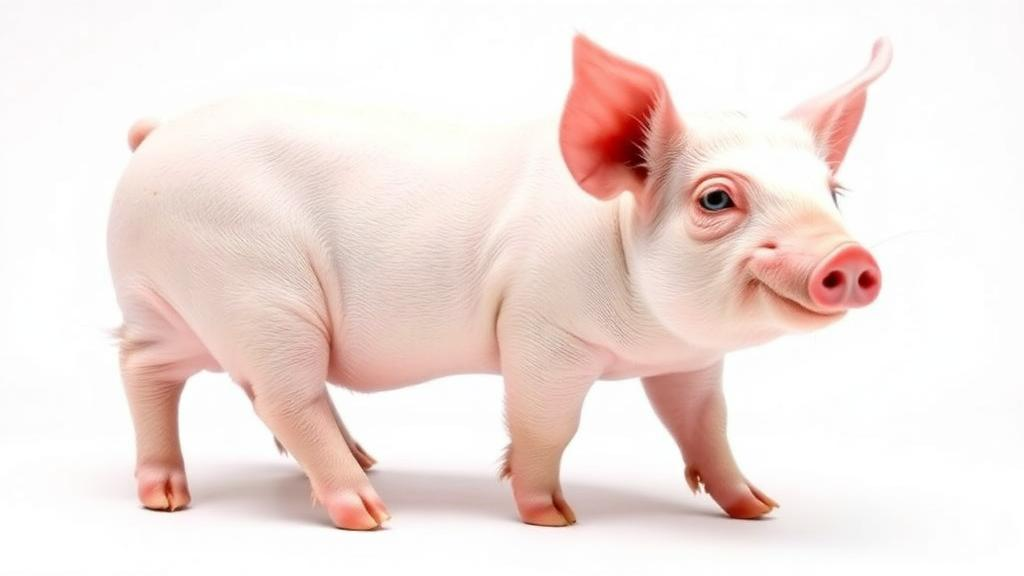
Researchers have developed and validated a protocol for continuously infusing low doses of the contrast agent iohexol into anesthetized pigs, allowing glomerular filtration rate to be measured accurately and precisely over several hours.
The pig is considered a suitable animal model for studying human acute kidney injury, but precise methods for determining glomerular filtration rate are rarely applied in dynamic physiological conditions. Iohexol is already a preferred marker for precise filtration measurement in humans and has been validated in pigs. The idea behind the new approach, called continuous infusion of low dose iohexol, or CILDI, is that after an initial equilibration period, a steady infusion can be used to monitor changes in filtration rate as conditions change. Before it could be used in dynamic experiments, however, a protocol first had to be established under stable conditions.
To build that protocol, the team first studied iohexol pharmacokinetics in three anesthetized pigs and used the resulting data to tailor dosing. In the main experiment, nine anesthetized pigs of both sexes, weighing between 29.5 and 37 kilograms, were surgically instrumented and then given iohexol as a bolus dose of 1.16 milliliters followed by a continuous infusion of 0.4 milliliters per hour of Omnipaque 300 mg I/mL. Blood and urine samples were collected over eight hours, and iohexol concentrations were analyzed by LC/MS-MS. Time to plateau was estimated both by nonlinear fitting of concentration-time profiles and by visual assessment of decay curves.
The results showed that a plateau plasma concentration was achieved within 120 minutes. Plasma iohexol clearance, which served as the measured filtration rate, averaged 53.7 ± 7.5 mL/min. When the researchers compared plasma clearance with renal iohexol clearance, the direct measure of how much iohexol the kidneys actually excreted, they found no significant difference between the two, with a bias of only 2.15 mL/min. Accuracy for the method was defined in advance as a mean difference of less than 10 percent between plasma and renal clearance, a threshold the protocol met.
The comparison with creatinine was less flattering to the traditional marker. Creatinine clearance was significantly higher than plasma iohexol clearance, with a bias of 13.29 mL/min and a p-value of 0.004, indicating that creatinine overestimates filtration in this setting. Precision also favored iohexol. The mean coefficient of variation for plasma iohexol clearance was 2.3 percent, while the mean coefficient of variation for serum creatinine was 5.6 percent, a mean difference of −3.3 percent that was statistically significant.
Perhaps the most consequential finding for future experiments concerns sensitivity to change. Within individual animals, changes in mean arterial pressure were positively associated with iohexol plasma clearance, with a p-value of 0.003, but showed no significant association with creatinine, which had a p-value of 0.107.
The authors conclude that the tailored CILDI protocol achieved plateau plasma concentrations by 120 minutes in pigs with normal renal function and provided accurate and precise measurement of filtration rate thereafter.
For the research community working with pig models of kidney injury, the practical significance is straightforward. The protocol offers a way to follow filtration rate continuously in anesthetized animals with a small bolus and a modest infusion rate, using a marker already trusted in human nephrology, and with far less noise than serum creatinine.
Subject of Research: A continuous low-dose iohexol infusion protocol for measuring glomerular filtration rate in anesthetized pigs
Article Title: Continuous infusion of low dose iohexol as an accurate and precise method for determining glomerular filtration rate in pigs
Article References: Jakobsen, K., Backmann, H. J., Kildal, A. B., Fuskevåg, O.-M., Nordhus, K. C., Haug, B. H., Forsdahl, G., & Ytrebø, L. M. (2026). Continuous infusion of low dose iohexol as an accurate and precise method for determining glomerular filtration rate in pigs. BMC Nephrology. https://doi.org/10.1186/s12882-026-05452-5
Image Credits: AI Generated
DOI: 10.1186/s12882-026-05452-5
Keywords: iohexol, glomerular filtration rate, pigs, acute kidney injury, pharmacokinetics, creatinine clearance, LC-MS/MS, renal clearance, animal model, nephrology, Continuous, infusion
News Source: Jerry Hayes. (October 30, 2026). Low-Dose Iohexol Infusion Tracks Kidney Filtration in Pigs. Scienmag.