


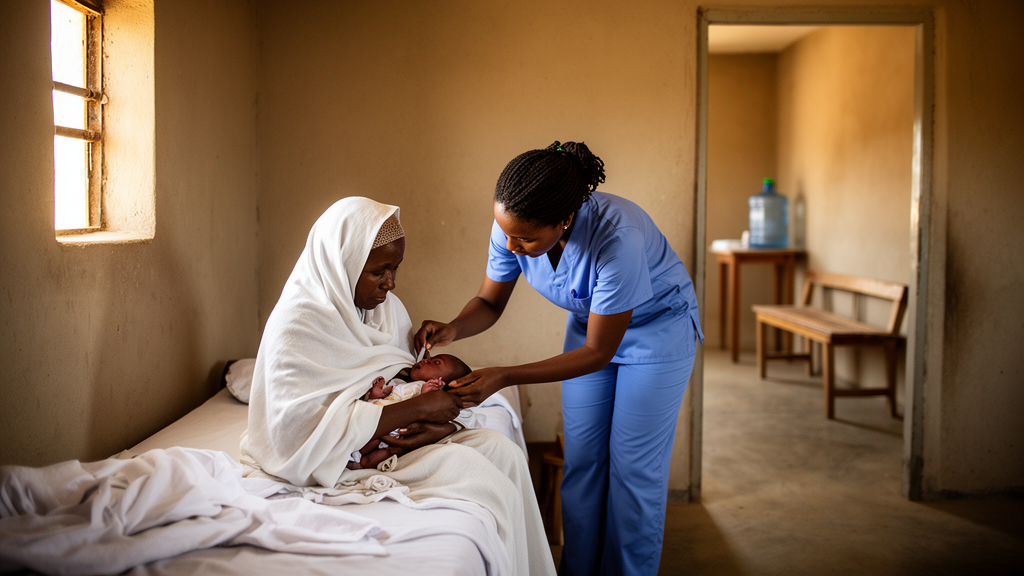
Fewer than two in five mothers in Ethiopia receive antenatal care that meets quality standards, and the picture deteriorates sharply along the rest of the maternity pathway, according to a population-based study published in BMC Health Services Research. Using data from an end-line implementation survey, researchers assessed quality-adjusted care across the continuum of services that women and newborns are meant to receive from pregnancy through delivery and the postnatal period.
The analysis found that 39.1 percent of mothers received quality-adjusted antenatal care, while only 18.9 percent received quality-adjusted peripartum care around the time of birth. Postnatal care fared worst of all: just 0.3 percent of mothers and 0.8 percent of babies received quality-adjusted postnatal care. These figures indicate that even where women make service contacts, the components of care they receive often fall short of recommended standards.
The study team, led by Wassie Negash Mekonnen, Gizachew Tadele Tiruneh, Adugnaw Berhane and Wubegzier Mekonnen, used count data modeling to identify predictors of receiving care across the continuum. Statistical significance was assessed with adjusted incidence rate ratios, treating associations as significant at p-values below 0.05 with 95 percent confidence intervals that excluded the null value.
Wealth emerged as a consistent factor. Richer women had higher rates of quality antenatal care, with an adjusted incidence rate ratio of 1.06 (95 percent CI: 1.01–1.11), and quality peripartum care showed a stronger wealth gradient, with an adjusted incidence rate ratio of 1.17 (95 percent CI: 1.10–1.24). The authors note that poor quality care is a major contributor to neonatal and maternal deaths, and that high and equitable service coverage must be accompanied by good-quality care delivery.
Contact with the health system itself predicted better quality. Women who received home visits had higher rates of quality antenatal care (aIRR = 1.07; 95 percent CI: 1.01–1.12), as did those in areas with a ready referral system (aIRR = 1.02; 95 percent CI: 1.01–1.03). Referral system readiness was also associated with postnatal care quality, with an incidence rate ratio of 1.1 (95 percent CI: 1.11–1.15).
Antenatal care attendance was linked to better care at birth. Attending four or more antenatal visits was positively associated with quality peripartum care (aIRR = 1.10; 95 percent CI: 1.04–1.16), and using antenatal care at all raised the rate further (aIRR = 1.13; 95 percent CI: 1.06–1.20). These are cross-sectional associations from survey data, so they describe which women received better care rather than proving that one factor causes another.
Postnatal care quality showed its own set of predictors. The use of SFD was positively associated with the quality of postnatal care for babies (aIRR = 1.4; 95 percent CI: 1.24–1.54) and for mothers (aIRR = 1.21; 95 percent CI: 1.09–1.34). Alongside referral readiness, these findings point to system-level supports, rather than only individual behavior, as correlates of whether recommended postnatal care components reach mothers and newborns.
The steep drop-off between antenatal and postnatal stages is the study’s central quantitative message. While roughly four in ten mothers cleared the quality threshold for pregnancy care, fewer than one in five did so for care around birth, and effectively almost none did for postnatal care of either mother or baby. Because the study analyzed an end-line implementation survey at the community level, its figures reflect the quality of care actually experienced by women in the population, not only what facilities report providing.
The authors conclude that quality-adjusted coverage along the continuum of care was low, and that efforts should focus on improving the quality of maternal health care across pregnancy, birth and the postnatal period. The published version is open access, with the record noting it was shared early as citable, peer-reviewed accepted research subject to further editorial edits before the final version of record.
Subject of Research: Quality-adjusted maternal and newborn care across the continuum of care in Ethiopia and its associated factors
Article Title: Quality of maternal and newborn care across the continuum in Ethiopia: the assessment of service contacts, care components, and associated factors
Article References: Mekonnen, W. N., Tiruneh, G. T., Berhane, A., & Mekonnen, W. (2026). Quality of maternal and newborn care across the continuum in Ethiopia: the assessment of service contacts, care components, and associated factors. BMC Health Services Research. https://doi.org/10.1186/s12913-026-15995-w
Image Credits: AI Generated
DOI: 10.1186/s12913-026-15995-w
Keywords: maternal health, newborn care, Ethiopia, antenatal care, postnatal care, quality of care, continuum of care, health services research, health equity, referral system, Quality, maternal
News Source: Harold Sullivan. (October 30, 2026). Few Ethiopian Mothers Receive Quality Care Across Maternity Continuum. Scienmag.



