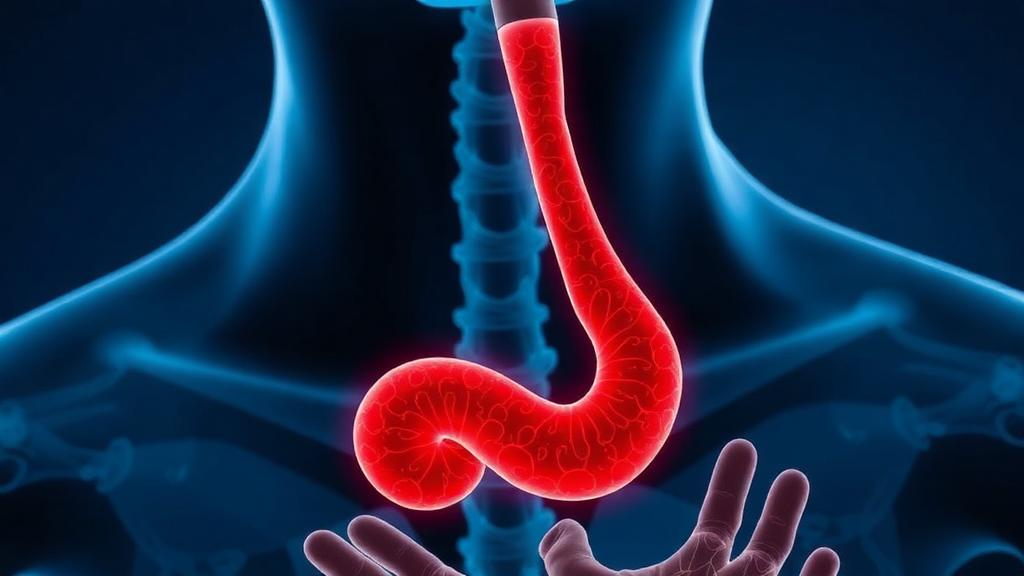
Esophageal squamous cell carcinoma, the dominant form of esophageal cancer in China and one of the most lethal malignancies worldwide, has long frustrated oncologists with its tendency to advance silently and resist standard chemotherapy. Now a team of researchers at Shanghai East Hospital, School of Medicine, Tongji University, has identified a previously underappreciated molecular culprit: an enzyme called UDP-glycosyltransferase 8, or UGT8, whose elevated activity appears to help esophageal tumor cells proliferate, invade, and shrug off cisplatin, the backbone drug used against the disease. The findings, published in the Journal of Translational Medicine, trace a complete regulatory circuit from a transcription factor at the top of the cascade down to the lipid molecules that determine whether a cancer cell lives or dies.
The significance of the discovery lies in the enzyme’s day job. UGT8 is the sole enzyme known to catalyze the conversion of ceramide to galactosylceramide, a reaction that sits at a critical junction of sphingolipid metabolism. That junction matters enormously in cancer biology, because ceramide is not merely a structural lipid; it is a potent pro-apoptotic second messenger that cells mobilize when they need to trigger their own destruction. By converting ceramide into galactosylceramide, UGT8 effectively disarms one of the body’s built-in tumor-suppressing weapons. The Tongji University team reasoned that if esophageal cancer cells were pumping out extra UGT8, they might be systematically draining their ceramide pools and thereby insulating themselves from the apoptotic signals that chemotherapy is designed to deliver.
To test that hypothesis, the investigators assembled a multi-pronged evidence base. They mined public genomic databases to compare UGT8 expression between tumor and normal tissue, then validated the pattern in actual patient tumor samples and tissue microarrays collected under ethical approval from Shanghai East Hospital. The clinical signal was striking: UGT8 was significantly upregulated in esophageal squamous cell carcinoma, and higher expression correlated with advanced tumor stage, the presence of metastasis, and poorer patient survival. In other words, the enzyme was not a passive bystander in the tumor’s molecular landscape but a marker that tracked with the disease’s most dangerous behaviors.
With the clinical association established, the researchers moved into functional experiments to determine whether UGT8 actively drives malignancy or merely accompanies it. In laboratory cultures of esophageal cancer cells, manipulating UGT8 levels produced clear consequences. Cells with elevated UGT8 showed enhanced proliferation, migration, and invasion, while resisting apoptosis, the programmed self-destruction that normally eliminates damaged or abnormal cells. Conversely, when the team suppressed UGT8, either genetically or pharmacologically, the malignant phenotypes receded. The pattern held up in animal models as well: tumors with diminished UGT8 activity grew more slowly and metastasized less aggressively than their enzyme-rich counterparts, providing in vivo confirmation that the enzyme contributes causally to cancer progression.
The mechanistic heart of the study concerns what happens to cellular lipids when UGT8 is removed from the equation. Using ELISA assays to quantify ceramide levels and flow cytometry to track apoptosis and surface galactosylceramide expression, the researchers documented a coherent metabolic shift. Inhibiting UGT8 disrupted sphingolipid homeostasis in a characteristic way: ceramide accumulated in the cells while production of galactosylceramide fell. That accumulation proved decisive. Deprived of the enzyme that disposes of their ceramide, the cancer cells became markedly more prone to apoptosis, and tumor growth in preclinical models was suppressed. The results paint a picture in which UGT8 functions as a metabolic shield, continuously converting a death-signaling lipid into a benign storage form.
Perhaps the most clinically consequential finding emerged when the team combined UGT8 inhibition with cisplatin, the platinum-based chemotherapy that remains a first-line treatment for esophageal squamous cell carcinoma despite frequent and frustrating insensitivity. In preclinical models, a pharmacological inhibitor known as UGT8-IN-1 enhanced the antitumor activity of cisplatin, suggesting that the enzyme’s ceramide-draining activity is one of the mechanisms by which esophageal tumors blunt the drug’s killing power. The logic is biochemically elegant: cisplatin damages DNA and pushes cells toward ceramide-mediated apoptosis, but a tumor cell flush with UGT8 can metabolize that ceramide away before it reaches lethal concentrations. Remove the enzyme, and the apoptotic signal delivered by chemotherapy finally lands with full force.
The study did not stop at the enzyme itself; it also traced the circuit upward to identify who is giving the orders. Through chromatin immunoprecipitation assays, which allow researchers to detect which proteins bind to which stretches of DNA, the team showed that the transcription factor ELF4 directly binds regulatory elements of the UGT8 gene and transcriptionally activates it. ELF4, a member of the ETS family of transcription factors, thereby emerges as the upstream conductor of the ceramide metabolic remodeling that characterizes aggressive esophageal cancer. This regulatory relationship matters for drug development, because it identifies a second potential intervention point: blocking ELF4’s grip on the UGT8 promoter could, in principle, achieve the same metabolic re-sensitization as inhibiting the enzyme directly.
For patients, the stakes are considerable. Esophageal squamous cell carcinoma accounts for roughly ninety percent of esophageal cancers in China, where the disease burden is among the highest in the world, and five-year survival remains poor even with modern combinations of surgery, radiation, and chemotherapy. Cisplatin insensitivity is a major obstacle to improving outcomes, and the field has struggled to find reliable biomarkers that predict which patients will benefit from treatment. The new work suggests that UGT8 expression could serve as both a prognostic indicator, given its correlation with stage, metastasis, and survival, and a predictive one, flagging tumors whose lipid metabolism makes them intrinsically prone to chemotherapy resistance.
The translational path from these findings to the clinic will require the usual sequence of validation. The combination data come from preclinical models, and human tumors are notoriously more heterogeneous than cell lines and xenografts. Questions remain about the optimal way to inhibit UGT8 in patients, whether UGT8-IN-1 or related compounds can achieve sufficient selectivity and tolerability, and whether ELF4 can be drugged directly. There are also biological nuances to untangle, since sphingolipid metabolism intersects with membrane structure, cell signaling, and immune recognition in ways that could produce effects beyond apoptosis. Still, the completeness of the evidence chain, from patient tissue microarrays through mechanistic biochemistry to combination therapy in animal models, gives the work unusual coherence for a translational study.
What makes the research resonate beyond esophageal oncology is its illustration of a broader theme in modern cancer biology: tumors do not only corrupt genes and growth factors, they corrupt metabolism, hijacking the enzymes that manage cellular lipids to survive stresses that would kill a normal cell. By identifying ELF4 as the transcriptional driver and UGT8 as the metabolic executor of ceramide depletion in esophageal squamous cell carcinoma, the Shanghai team has added a well-defined node to the growing map of cancer’s metabolic vulnerabilities. If ongoing and future studies confirm that targeting this node sensitizes human tumors to cisplatin, the humble enzyme that converts ceramide to galactosylceramide may become an unexpected ally in one of oncology’s hardest fights.
Subject of Research: ELF4-driven transcriptional regulation of UGT8 and sphingolipid metabolic remodeling in esophageal squamous cell carcinoma
Article Title: Transcriptional regulation of UGT8 by ELF4 drives esophageal squamous cell carcinoma progression
Article References: Sun, M., Zhao, M., Du, C., Wang, X., Li, Z., Feng, A., Zhang, L., Chen, T., & Xu, M. (2026). Transcriptional regulation of UGT8 by ELF4 drives esophageal squamous cell carcinoma progression. Journal of Translational Medicine. https://doi.org/10.1186/s12967-026-08924-2
Image Credits: AI Generated
DOI: 10.1186/s12967-026-08924-2
Keywords: UGT8, ELF4, esophageal squamous cell carcinoma, sphingolipid metabolism, ceramide, galactosylceramide, cisplatin resistance, UGT8-IN-1, transcriptional regulation, apoptosis, cancer metabolism, Journal of Translational Medicine
News Source: Nathaniel Bowman. (October 6, 2026). Scientists Uncover a Fat-Metabolism Switch That Fuels Esophageal Cancer and Blunts Chemotherapy. Scienmag.