Every cell in the human body runs on a delicate balancing act involving iron. The metal is indispensable for making DNA and powering mitochondria, yet in its free form it catalyzes the destructive chain reactions that shred cellular membranes. A new review published in the Journal of Translational Medicine argues that the master control point for this dangerous equilibrium is a specialized recycling process called ferritinophagy, and that drugs able to dial this process up or down could open an entirely new front in medicine, from cancer therapy to protection of the brain and injured organs.
Ferritinophagy is a subtype of selective autophagy, the cellular housekeeping system that delivers cargo to lysosomes for destruction. In this case the cargo is ferritin, the hollow protein shell that stores the bulk of a cell’s iron reserve. The process is orchestrated by a cargo receptor known as Nuclear Receptor Coactivator 4, or NCOA4, which physically grabs ferritin and escorts it into the lysosomal degradation machinery. When ferritin is broken down, the iron locked inside is released into the so-called labile iron pool, the small but metabolically active fraction of intracellular iron that fuels both normal physiology and, under the wrong conditions, catastrophic cell death.
That catastrophic death pathway is ferroptosis, a form of regulated cell death discovered barely a decade ago and defined by iron-dependent lipid peroxidation. When free iron reacts with hydrogen peroxide through Fenton chemistry, it generates hydroxyl radicals that attack the polyunsaturated fatty acids in cellular membranes. Once lipid peroxides accumulate beyond the capacity of cellular antioxidant defenses, particularly the glutathione-dependent enzyme GPX4, the membrane disintegrates and the cell dies in a distinctive inflammatory fashion. Because ferroptosis is iron-dependent, the size of the labile iron pool is a critical determinant of how vulnerable any given cell is to this form of death, and NCOA4-mediated ferritinophagy sits directly upstream of that pool, acting as the tap that controls how much stored iron is poured into it.
The review, led by Jiawei Zhang and Xiaoxiang Sun with corresponding authors Xiaoli Ding and Bin Deng of Huazhong University of Science and Technology, synthesizes recent structural biology work that has transformed the field’s understanding of how this tap is operated. Researchers have now mapped the molecular interface through which NCOA4 binds FTH1, the ferritin heavy chain subunit that carries the ferroxidase activity essential for iron uptake and release. They have also elucidated an elegant iron-sensing mechanism: intracellular iron levels are monitored through iron-sulfur cluster-dependent signals that govern the stability of the NCOA4 protein itself. When iron is scarce, NCOA4 is stabilized and ferritinophagy proceeds, liberating stored iron. When iron is abundant, the E3 ubiquitin ligase HERC2 tags NCOA4 for destruction by the ubiquitin-proteasome system, shutting the recycling pathway down. This feedback loop ensures that iron mobilization is matched precisely to cellular demand.
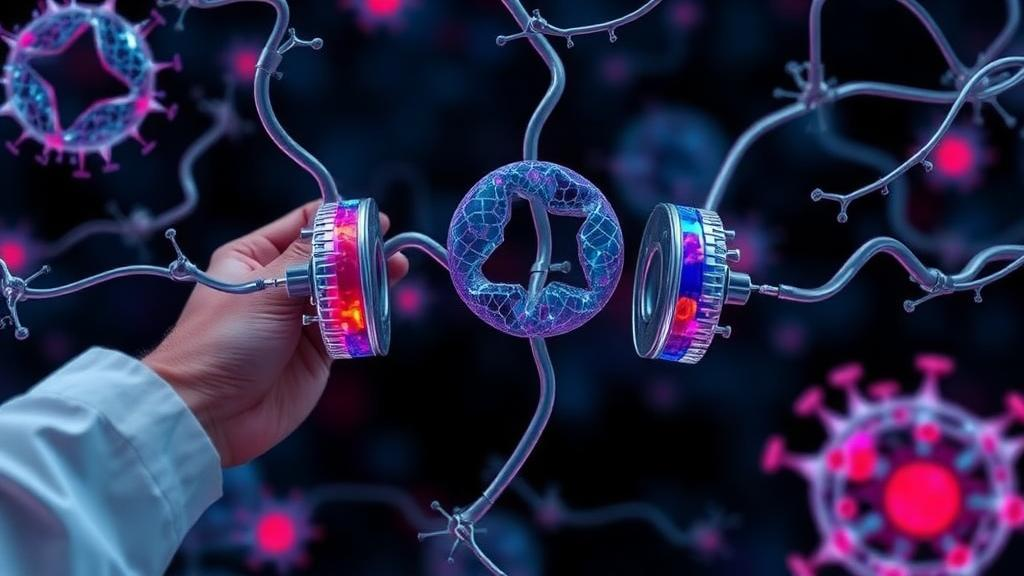
What makes this mechanistic picture so exciting from a drug development standpoint is that each node in the circuit represents a potential point of pharmacological intervention. The review organizes the growing arsenal of small-molecule modulators into two conceptually opposite strategies. The first comprises ferritinophagy activators, compounds that promote ferritin degradation and iron release, thereby flooding tumor cells with the raw material for ferroptosis. The second comprises ferritinophagy inhibitors, agents that block iron mobilization and thereby shield healthy cells from iron-catalyzed damage. In principle, the same molecular switch could be flipped in opposite directions depending on the clinical goal: killing a cancer cell or protecting a neuron.
The oncology applications are the most mature conceptually. Many cancer cells, particularly those with activated RAS signaling or high metabolic demand, exhibit elevated iron storage and heightened sensitivity to ferroptosis induction. Combining ferritinophagy activators with established ferroptosis inducers, such as inhibitors of the system xc- cystine importer or direct GPX4 inhibitors, could lower the barrier to tumor cell death and overcome the resistance that has limited ferroptosis-based therapies in clinical trials. The review grades the pre-clinical evidence for candidate agents in this space, noting that most remain investigational tools or repurposed drugs rather than purpose-built ferritinophagy modulators.
On the protective side of the ledger, the therapeutic logic runs in reverse. In neurodegenerative diseases such as Parkinson’s and Alzheimer’s, and in organ injuries including ischemia-reperfusion damage to the heart and kidney, excess iron release and ferroptotic death of vulnerable cells are increasingly recognized as central pathological events. Ferritinophagy inhibitors, by preventing NCOA4 from delivering ferritin to lysosomes, could keep iron safely sequestered and blunt the oxidative cascade. Encouragingly, a small subset of relevant molecules already has clinical pedigree: the iron chelators deferiprone and deferoxamine are approved for unrelated primary indications, principally iron overload disorders, and their established pharmacology offers a starting point for repurposing studies aimed at ferritinophagy-related endpoints.
Yet the review is notably candid about the distance between laboratory promise and clinical deployment. Most candidate agents described in the literature were never designed to hit the ferritinophagy pathway and lack dedicated clinical validation for iron-mobilization endpoints. Pharmacokinetic limitations, including poor bioavailability and rapid clearance, plague many autophagy modulators. Specificity is an even deeper problem: because ferritinophagy intersects with general autophagy machinery and iron homeostasis touches virtually every tissue, systemically administered modulators risk unintended effects on erythropoiesis, immune function, and iron handling in the liver and spleen. Biomarkers that can reliably report on ferritinophagy flux in patients are still lacking, making dose optimization and pharmacodynamic monitoring difficult.
The authors propose that overcoming these bottlenecks will require integrated research approaches rather than isolated compound screening. Structural insights into the NCOA4-FTH1 interface and the HERC2 degradation circuit should be exploited for structure-guided drug design, producing molecules that engage the pathway with high selectivity. At the same time, disease-relevant models that capture the tissue-specific role of iron recycling are needed to predict where activation or inhibition will help and where it will harm. The review’s framing of ferritinophagy as a graded, druggable rheostat rather than a simple on-off switch reflects a maturing field that has moved from discovery to engineering.
If that engineering succeeds, the implications could be far-reaching. A validated ferritinophagy activator would give oncologists a way to sensitize tumors to an entire class of ferroptosis-inducing drugs currently hampered by resistance. A validated inhibitor would offer neurologists and intensivists a cytoprotective strategy against iron-driven tissue destruction, complementing or extending the modest benefits seen with existing chelation therapy. The iron recycling switch inside every cell has been identified and, increasingly, understood in atomic detail. The task now, as this comprehensive review makes clear, is to build the drugs that can turn it safely in either direction.
Subject of Research: NCOA4-mediated ferritinophagy as a regulatory node of ferroptosis and target for small-molecule therapeutics
Article Title: Targeting ferritinophagy to regulate ferroptosis: small molecule strategies and therapeutic opportunities
Article References: Zhang, J., Sun, X., Huang, Y., Zhang, H., Ding, X., & Deng, B. (2026). Targeting ferritinophagy to regulate ferroptosis: small molecule strategies and therapeutic opportunities. Journal of Translational Medicine. https://doi.org/10.1186/s12967-026-08955-9
Image Credits: AI Generated
DOI: 10.1186/s12967-026-08955-9
Keywords: ferritinophagy, ferroptosis, NCOA4, ferritin, iron metabolism, autophagy, small-molecule modulators, cancer therapy, neurodegeneration, iron chelators, HERC2, lipid peroxidation
News Source: Ophelia Keating. (October 4, 2026). Scientists Map the Iron Recycling Switch That Decides Whether Cells Live or Die. Scienmag.