Findings reported in The American Journal of Pathology suggest that an enzymatic precursor may be toxic to retinal cells in diabetic patients
Credit: The American Journal of Pathology
Philadelphia, September 19, 2019 – About one in three diabetic patients develops diabetic retinopathy (DR), which can impair vision and lead to blindness. A new study in The American Journal of Pathology, published by Elsevier, provides clear evidence that high glucose increases the levels of enzymatic precursor–lysyl oxidase propeptide (LOX-PP)–that promotes cell death, which was verified in an animal model of diabetes. These findings may help develop novel DR treatments by targeting LOX-PP or its metabolites.
‘We found that hyperglycemic and diabetic conditions increased LOX-PP levels,” explained lead investigator Sayon Roy, PhD, of the Departments of Medicine and Ophthalmology at Boston University School of Medicine, Boston, MA, USA. “LOX-PP may induce cell death by compromising a cell survival pathway, and in retinas of diabetic rats, increased LOX-PP contributed to retinal vascular cell death associated with DR. Administration of recombinant LOX-PP alone was sufficient to induce cell death. This report shows novel functionality of LOX-PP in mediating cell death under high glucose condition in retinal endothelial cells as well as in diabetic animals.”
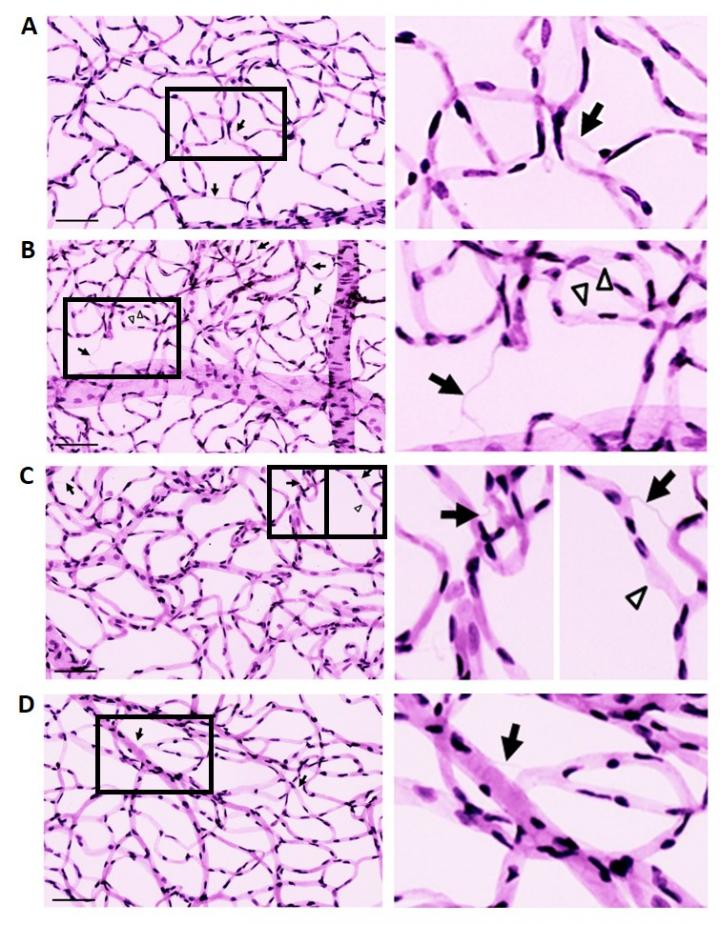
Studies in pancreatic and breast cancer cells suggest that LOX-PP overexpression may trigger cell death. The researchers therefore studied the role of LOX-PP in the retinal tissue. The retinal blood vessels of normal and diabetic rats and normal rats administered artificially synthesized LOX-PP (recombinant LOX-PP, rLOX-PP) directly into the eye, were examined. Changes associated with DR such as swelling, blood vessel leakage, blockage or thickening of vascular walls, and histologic indicators such as acellular capillaries (AC) and pericyte loss (PL) were studied.
More AC and PL were observed in the retinas of diabetic rats compared to controls. In non-diabetic rats, injection of rLOX-PP directly into the eye also increased the number of ACs and PLs compared to rats receiving a control injection.
The effect of high glucose on retinal endothelial cells grown in culture was also studied. Adding glucose to the cell cultures up-regulated LOX-PP expression and reduced AKT (protein kinase B) activation. Cells exposed to rLOX-PP alone exhibited increased cell death along with decreased AKT phosphorylation. The present study provides clear evidence that high glucose increases LOX-PP levels, which in turn promotes cell death. Furthermore, LOX-PP appears to induce cell death by compromising a pathway involved in cell survival.
“DR is the leading cause of blindness in the working age population,” noted Dr. Roy. “Unfortunately, there is no cure for this devastating ocular complication. Our findings suggest a novel mechanism for high glucose-induced cell death involving LOX-PP, which may be a therapeutic target in preventing retinal vascular cell loss associated with DR.”
LOX is an extracellular enzyme responsible for cross-linking collagen and elastin molecules to form a stable extracellular matrix. The role of the LOX propeptide, LOX-PP, is less understood, although it may play a role in keeping LOX in an inactive state.
###
Media Contact
Eileen Leahy
[email protected]
Original Source
https:/
Related Journal Article
http://dx.