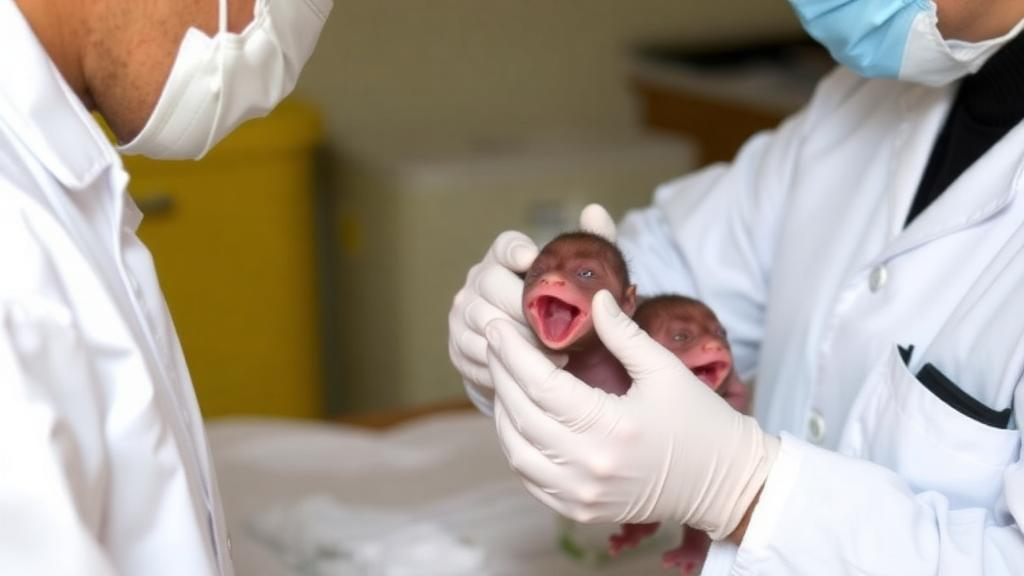
The dramatic re-emergence of Oropouche virus in Brazil during 2024 has raised an urgent and unsettling question in virology: can this mosquito-borne pathogen, long considered a cause of debilitating but self-limiting febrile illness, also threaten the health of unborn children? A team of Brazilian and international researchers, writing in BMC Infectious Diseases, has now laid out a detailed framework of experimental and epidemiological approaches designed to answer that question rigorously. Their commentary arrives at a critical moment, as reports of vertical transmission and adverse fetal outcomes have accumulated faster than the scientific evidence needed to confirm or refute a causal link.
The 2024 Oropouche epidemic attracted worldwide attention for several reasons. The virus expanded geographically into regions where it had never before been detected, the number of reported cases rose substantially, and the first globally documented Oropouche-associated fatalities occurred. In parallel, several studies provided evidence of vertical transmission and raised concerns about the potential impact of maternal infection on fetal development and survival. Notably, pregnancy losses among Oropouche-infected women were reported in Brazil as far back as the 1980s, predating the current wave of warnings by decades. What has been missing, the authors argue, is a systematic strategy to move from suggestive case reports to robust causal inference.
The evidence that currently fuels concern comes largely from individual case reports. Researchers have described Oropouche virus RNA or antigens in placental and fetal tissues, and anti-Oropouche IgM antibodies have been detected in microcephalic newborns. These findings support the plausibility of vertical transmission, but they fall short of demonstrating that the virus actively replicates in fetal tissue, which would substantially strengthen the biological case for fetal injury. The authors emphasize that viral infections can damage tissue indirectly, for example through immune imbalance, yet direct evidence of replication remains the gold standard for establishing pathogenicity.
To close that gap, the framework proposes molecular techniques capable of detecting positive-sense viral RNA, the form of viral genetic material produced during active replication. Strand-specific reverse transcription PCR assays, designed to target complementary RNA and viral messenger RNA rather than the negative-sense genomic RNA packaged in virions, could provide evidence consistent with active Oropouche replication in placental or fetal samples. Complementing this, signal-amplified in situ hybridization methods such as RNAscope coupled with confocal microscopy, or PrimeFlow RNA assays combined with flow cytometry, could localize viral replication within tissues and identify which specific cell populations harbor replicating virus. Histopathological and immunohistochemical analyses using antibodies against non-structural viral proteins expressed only during replication could further link viral activity to tissue damage.
Animal models form the second pillar of the proposed framework. Previous studies have demonstrated vertical transmission of Oropouche virus and fetal impairment in mice, including infection with an ancestral viral strain. However, these results were consistently observed only in animals with impaired type I interferon signaling, suggesting that vertical transmission in this setting is context-dependent and limiting extrapolation to natural human infection. The authors point instead to golden hamsters, which have been proposed as a model for Oropouche pathogenesis and may represent a promising in vivo system for investigating fetal effects without genetic or immunological manipulation. They also suggest examining SJL mice, a strain likely more susceptible to viral infection, which gained attention during the Zika epidemic for their permissiveness to viral teratogenicity studies.
Non-human primates offer a third experimental avenue. These animals have been used successfully to investigate virus-associated fetal outcomes for other pathogens, including Zika virus and congenital cytomegalovirus, and could prove suitable for Oropouche studies. Intrauterine infection of immunocompetent animals would provide a proof-of-concept approach to evaluate the direct fetal consequences of Oropouche infection, a strategy previously applied to teratogenic viruses including Zika and Cache Valley virus, an orthobunyavirus in the same genus as Oropouche. Intracranial inoculation in neonatal animal models and embryonated chicken eggs could also be employed, as these approaches were previously used to characterize the teratogenic potential of other orthobunyaviruses such as Aino, Akabane and Cache Valley viruses.
The authors stress that any such experiments should use both historical and recently circulating Oropouche strains to detect possible differences in fetal effects between lineages, and should employ minimally passaged viruses to avoid adaptive mutations that would distort the wild-type phenotype. Testing at different stages of gestation would further clarify whether particular windows of pregnancy carry heightened risk, a question of direct clinical relevance for counseling pregnant women in endemic areas.
Viral reverse genetics represents a particularly promising tool within the framework, especially for probing the role of the type I interferon response. Because in vivo studies have shown possible vertical transmission only in animals lacking an adequate interferon response, and because interferon antagonism is an established pathogenicity mechanism of orthobunyaviruses, including the teratogenic Schmallenberg virus, the Oropouche NSs gene, which encodes a known type I interferon antagonist, becomes a prime suspect. Reverse genetics could be used to manipulate this gene, identify the residues and domains involved in interferon antagonism, and test whether these functions contribute to adverse fetal outcomes. Such findings could also inform genomic surveillance by identifying molecular signatures in circulating strains that are potentially associated with fetal injury.
On the epidemiological side, the framework calls for well-designed case-control studies, modeled on those conducted during the Zika epidemic, to estimate the likelihood of miscarriage or developmental abnormalities among Oropouche-infected pregnant women and to identify other risk factors, such as the most vulnerable gestational period. Prospective postnatal follow-up of exposed newborns would be timely for investigating potential later neurodevelopmental effects, including those occurring in the absence of microcephaly, a pattern documented in congenital Zika infection. Close immunological monitoring of infected pregnant women, focusing on type I and type III interferons and interferon-stimulated genes such as IFIT1, could reveal host factors that modulate vertical transmission. The authors acknowledge real obstacles: infections outside outbreak periods are rarely reported, outbreaks have historically been concentrated in remote areas, and the recent decline in transmission across several affected regions may limit participant recruitment. Multicenter studies and prospective surveillance strategies, they argue, are the practical answer.
The overarching message is one of scientific caution paired with methodological ambition. Despite recent advances in understanding Oropouche virus, its potential for vertical transmission and adverse fetal outcomes remains unproven, and establishing causality will require the deliberate integration of molecular virology, animal modeling, reverse genetics and epidemiology. The authors contend that such efforts are essential not only for resolving a pressing scientific uncertainty but also for improving surveillance strategies, guiding clinical management of pregnancies in endemic regions, and mitigating whatever impact Oropouche infection may ultimately prove to have on fetal health. As the virus continues to expand its footprint in the Americas, the framework offers a roadmap for converting alarming anecdotes into actionable evidence.
Subject of Research: Assessment of potential Oropouche virus-associated adverse fetal outcomes through experimental and epidemiological approaches
Article Title: A framework for assessing potential Oropouche virus-associated adverse fetal outcomes
Article References: Tanaka, L. F., Dutra, N. B. D. M., Lopes, T. R. R., Carmo, R. F., Oliveira-Filho, E. F. D., Gil, L. H. V. G., & Silva Júnior, J. V. J. (2026). A framework for assessing potential Oropouche virus-associated adverse fetal outcomes. BMC Infectious Diseases, 26(1), Article 1739. https://doi.org/10.1186/s12879-026-14420-1
Image Credits: AI Generated
DOI: 10.1186/s12879-026-14420-1
Keywords: Oropouche virus, vertical transmission, adverse fetal outcomes, microcephaly, pregnancy, orthobunyavirus, type I interferon, reverse genetics, animal models, case-control studies, placental infection, neurodevelopment
News Source: Kristina Jarvis. (October 4, 2026). Scientists Propose Framework to Test Whether Oropouche Virus Harms Fetuses. Scienmag.