• HOME
  • NEWS
  • EXPLORE
    • CAREER
      • Companies
      • Jobs
    • EVENTS
    • iGEM
      • News
      • Team
    • PHOTOS
    • VIDEO
    • WIKI
  • BLOG
  • COMMUNITY
    • FACEBOOK
    • INSTAGRAM
    • TWITTER
Wednesday, May 13, 2026
BIOENGINEER.ORG
No Result
View All Result
  • Login
  • HOME
  • NEWS
  • EXPLORE
    • CAREER
      • Companies
      • Jobs
        • Lecturer
        • PhD Studentship
        • Postdoc
        • Research Assistant
    • EVENTS
    • iGEM
      • News
      • Team
    • PHOTOS
    • VIDEO
    • WIKI
  • BLOG
  • COMMUNITY
    • FACEBOOK
    • INSTAGRAM
    • TWITTER
  • HOME
  • NEWS
  • EXPLORE
    • CAREER
      • Companies
      • Jobs
        • Lecturer
        • PhD Studentship
        • Postdoc
        • Research Assistant
    • EVENTS
    • iGEM
      • News
      • Team
    • PHOTOS
    • VIDEO
    • WIKI
  • BLOG
  • COMMUNITY
    • FACEBOOK
    • INSTAGRAM
    • TWITTER
No Result
View All Result
Bioengineer.org
No Result
View All Result
Home NEWS Science News Chemistry

Scientists have spotted new compounds with herbicidal potential from sea fungus

Bioengineer by Bioengineer
December 6, 2019
in Chemistry
Reading Time: 2 mins read
0
IMAGE
Share on FacebookShare on TwitterShare on LinkedinShare on RedditShare on Telegram

IMAGE

Credit: FEFU press office


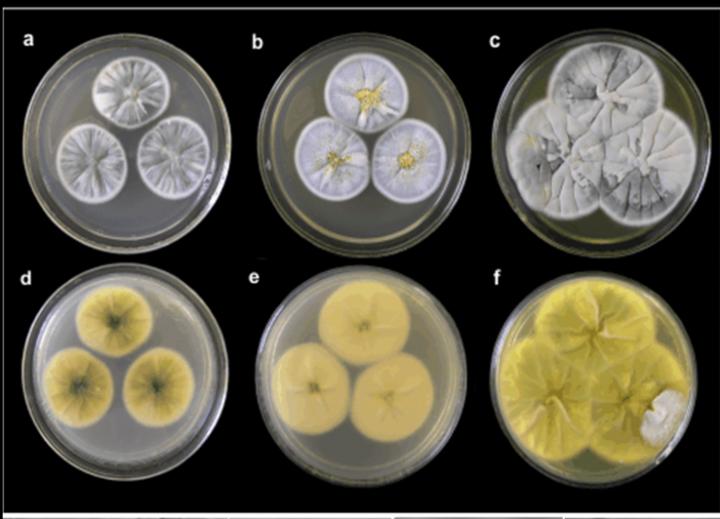
Scientists of Far Eastern Federal University (FEFU) and the G.B. Elyakov Pacific Institute of Bioorganic Chemistry (FEB RAS) together with German colleagues spotted six new and three already known biologically active compounds in a new strain of the fungus Penicillium piltunense first time isolated. One compound has a pronounced anti-inflammatory activity, others have herbicidal potential, i.e., possibly, can become components of new chemicals for weed control. A related study is published in Marine Drugs.

The spotted compounds are the derivatives of aspterric acid which herbicidal activity was previously highlighted in a scientific report published in Nature journal. The authors of the report noted that the acid has a mediocre ability to inhibit plant growth, suggested its analogs promise to be more effective.

“We believe that the compounds isolated could potentially have herbicidal activity since they are the very analogs of aspterric acid, which our foreign colleagues wrote about in Nature. We have not yet been able to check how strongly these properties are expressed in the substances found, but we plan to find it out further. Worth noting, the new herbicidal compounds have not been introduced onto the market for about 30 years”, said Olesya Zhuravleva, Ph.D., Head of the Laboratory of Biologically Active Compounds, FEFU School of Natural Sciences.

The scientist went on that one of the compounds has a pronounced anti-inflammatory activity confirmed by an experiment on macrophage cell lines of mice. In the future, new substances can be useful to the developing of anti-inflammatory drugs.

Scientists are also planning to test all the compounds obtained for antimicrobial activity. If it confirms, the compounds will also become candidates for the development of new antibiotics.

Fungi of the genus Penicillium are one of the most common fungus species on our planet. They grow both on land and in the ocean, where they are associated with seagrass, algae, soil, vertebrate and invertebrate animals.

The previously unknown strain of the fungus Penicillium piltunense KMM4648 was isolated from sea soil collected near the northeast shelf of the Sakhalin Island, The Sea of Okhotsk during a marine expedition on the “Akademik Oparin” research vessel. The strain was described by mycologists of the Laboratory of Microbiology PIBOC FEB RAS, Dr. Mikhail V. Pivkin and Dr. Natalya Kirichuk.

Subsequently, the fungal strain was investigated by researchers of the Laboratory of Biologically Active Compounds of the FEFU School of Natural Sciences, together with colleagues from the Laboratory of Microbial Metabolites of the PIBOC FEB RAS.

###

The study was supported by a grant from the Russian Science Foundation No. 19-74-10014 (“Micromycetes marine fungus are a promising source of bioactive molecules”, managed by Olesya Zhuravleva, Ph.D.)

Media Contact
Alexander Zverev
[email protected]

Related Journal Article

http://dx.doi.org/10.3390/md17110647

Tags: BiochemistryBiodiversityBiologyBiotechnologyCell BiologyMarine/Freshwater BiologyMedicine/HealthMolecular BiologyMycology
Share12Tweet8Share2ShareShareShare2

Related Posts

Gravitational Wave Detectors Now Feature Automatic Signal Tuning — Chemistry

Gravitational Wave Detectors Now Feature Automatic Signal Tuning

May 13, 2026
Harnessing Neural Networks for Advances in Nonlinear Optics — Chemistry

Harnessing Neural Networks for Advances in Nonlinear Optics

May 12, 2026

Innovative Method Unveiled to Detect Signs of Dark Matter

May 12, 2026

Illuminating the Science Behind Historical Featherwork Art

May 12, 2026
Please login to join discussion

POPULAR NEWS

  • Research Indicates Potential Connection Between Prenatal Medication Exposure and Elevated Autism Risk

    842 shares
    Share 337 Tweet 211
  • New Study Reveals Plants Can Detect the Sound of Rain

    728 shares
    Share 290 Tweet 182
  • Salmonella Haem Blocks Macrophages, Boosts Infection

    62 shares
    Share 25 Tweet 16
  • Breastmilk Balances E. coli and Beneficial Bacteria in Infant Gut Microbiomes

    57 shares
    Share 23 Tweet 14

About

We bring you the latest biotechnology news from best research centers and universities around the world. Check our website.

Follow us

Recent News

Older Adults’ Views on Medication After Hospital Discharge

Flexible Carbon Nanotube Transistors Surpass 100 GHz

Glycocalyx Exchange Powers Liquid Biopsies of Endothelium

Subscribe to Blog via Email

Enter your email address to subscribe to this blog and receive notifications of new posts by email.

Join 82 other subscribers
  • Contact Us

Bioengineer.org © Copyright 2023 All Rights Reserved.

Welcome Back!

Login to your account below

Forgotten Password?

Retrieve your password

Please enter your username or email address to reset your password.

Log In
No Result
View All Result
  • Homepages
    • Home Page 1
    • Home Page 2
  • News
  • National
  • Business
  • Health
  • Lifestyle
  • Science

Bioengineer.org © Copyright 2023 All Rights Reserved.