Serum protein measurements collected before treatment or early during therapy predicted clinical benefit and overall survival in 38 patients with advanced HPV16-positive malignancies receiving a three-drug combination immunotherapy, according to a retrospective analysis of a clinical trial. Models using baseline concentrations of interleukin-6 (IL-6) and heme oxygenase 1, alone or together with an early change in granzyme B, identified patient groups more likely to benefit from treatment and to have longer overall survival. Because the findings come from retrospective data, the researchers said the models require prospective validation before they can be evaluated as clinical prediction tools.
The trial regimen combined PDS0101, an HPV16 therapeutic peptide cancer vaccine intended to initiate an immune response; PDS01ADC, a tumor-targeting interleukin-12 immunocytokine intended to potentiate that response; and bintrafusp alfa, a bifunctional agent designed to block both programmed cell death ligand 1 (PD-L1) and transforming growth factor beta (TGF-beta). A prior report from trial NCT04287868 described promising clinical activity in patients with advanced HPV16-associated malignancies. The updated analysis examined peripheral immune and serum proteomic measurements in an attempt to identify correlates of clinical response to the combination.
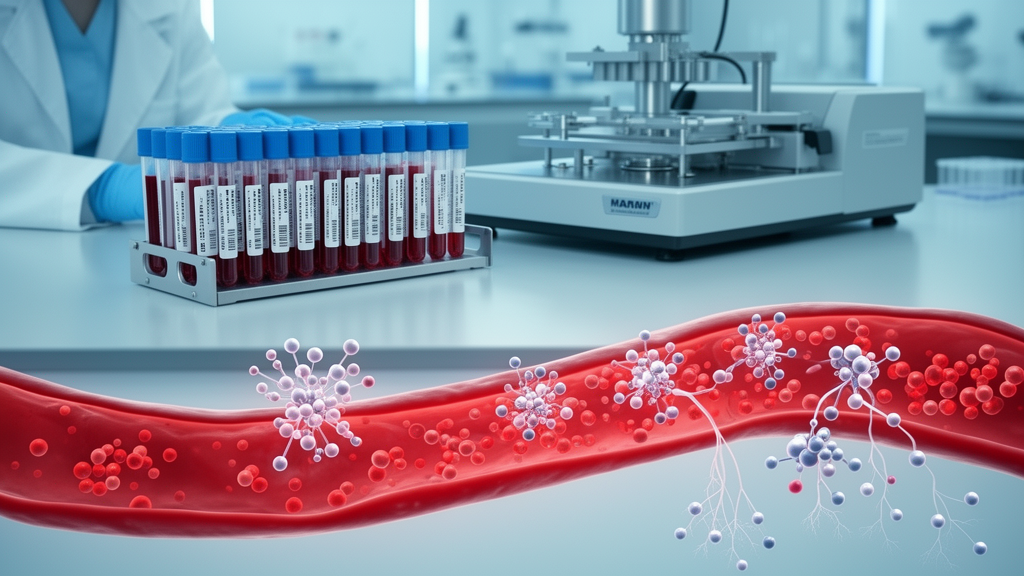
For the proteomic analysis, the investigators surveyed serum proteins and built machine-learning models using data available before therapy or early in the regimen. The reported predictive signals were baseline IL-6 and heme oxygenase 1 concentrations, either used alone or combined with an early change in granzyme B. These models were designed to predict both clinical benefit and the duration of overall survival. Their results show that molecular patterns measured in blood contained outcome-related information in this cohort, but they do not establish that the proteins caused the observed differences in response or survival.
The researchers also conducted a broader survey of the peripheral immunome. Among patients who benefited from treatment, they identified a persistent skewing toward increased ratios of peripheral CD8-positive T cells to myeloid cells. The analysis did not determine whether this cellular pattern produced the better outcomes. It also found a positive association between the frequencies of monocytes and myeloid-derived suppressor cells and serum concentrations of inhibitory biomarkers. According to the authors, that association supplies biological context for the serum-based prediction models by linking measurements of particular circulating cell populations with inhibitory molecular signals.
These findings come from a retrospective study in a cohort of 38 patients with HPV16-positive tumors, and the investigators explicitly called for prospective validation in future clinical studies. The scope of the work was therefore outcome prediction within an already treated trial population, rather than a prospective test of whether clinicians could use serum measurements to select treatment or estimate an individual patient’s survival. The study instead supports further evaluation of minimally invasive molecular measurements obtained before or early in the regimen. Whether the models retain their predictive performance in independent prospective cohorts remains to be determined.
Subject of Research: Serum proteomic prediction of response to combination immunotherapy in advanced HPV16-positive malignancies
Article Title: Baseline and early changes in serum proteomic profiles predict anti-tumor activity in patients with advanced HPV-associated malignancies treated with novel combination immunotherapy
Article References: Goswami, M., Lynch, M. T., Floudas, C. S., Strauss, J., Tsai, Y.-T., Marté, J. L., Gulley, J. L., Schlom, J., & Donahue, R. N. (2026). Baseline and early changes in serum proteomic profiles predict anti-tumor activity in patients with advanced HPV-associated malignancies treated with novel combination immunotherapy. Journal of Experimental & Clinical Cancer Research. https://doi.org/10.1186/s13046-026-03847-8
Image Credits: AI Generated
DOI: 10.1186/s13046-026-03847-8
Keywords: HPV16, cancer immunotherapy, serum proteomics, IL-6, heme oxygenase 1, granzyme B, CD8 T cells, myeloid-derived suppressor cells, bintrafusp alfa, PDS0101, Baseline, early
News Source: Nathaniel Bowman. (October 21, 2026). Retrospective blood protein models predict outcomes in 38 HPV16 cancer patients. Scienmag.