• HOME
  • NEWS
  • EXPLORE
    • CAREER
      • Companies
      • Jobs
    • EVENTS
    • iGEM
      • News
      • Team
    • PHOTOS
    • VIDEO
    • WIKI
  • BLOG
  • COMMUNITY
    • FACEBOOK
    • INSTAGRAM
    • TWITTER
Wednesday, October 21, 2026
BIOENGINEER.ORG
No Result
View All Result
  • Login
  • HOME
  • NEWS
  • EXPLORE
    • CAREER
      • Companies
      • Jobs
        • Lecturer
        • PhD Studentship
        • Postdoc
        • Research Assistant
    • EVENTS
    • iGEM
      • News
      • Team
    • PHOTOS
    • VIDEO
    • WIKI
  • BLOG
  • COMMUNITY
    • FACEBOOK
    • INSTAGRAM
    • TWITTER
No Result
View All Result
Bioengineer.org
No Result
View All Result
Home NEWS Science News Biology

Epidemiological profile of HPV infection, associations with cervical lesions and vaginal microecological disorders, and nine-valent vaccine coverage in Northwest China: a 6-year retrospective study of 57,035 women

by
October 21, 2026
in Biology
Reading Time: 2 mins read
0
Epidemiological profile of HPV infection, associations with cervical lesions and vaginal microecological disorders, and nine-valent vaccine coverage in Northwest China: a 6-year retrospective study of 57,035 women

Epidemiological profile of HPV infection, associations with cervical lesions and vaginal microecological disorders, and nine-valent vaccine coverage in Northwest China: a 6-year retrospective study of 57,035 women

Share on FacebookShare on TwitterShare on LinkedinShare on RedditShare on Telegram

A six-year retrospective study of 57,035 female outpatients at a tertiary hospital in Shaanxi Province found that 28.77% were positive for human papillomavirus (HPV), with isolated high-risk HPV infections and single-genotype patterns dominating the results. The analysis, reported in Virology Journal, also examined persistent infections, associations between particular HPV genotypes and cervical lesions, relationships with vaginal microecological disorders, and the prevalence of genotypes covered by the nine-valent HPV vaccine.

The hospital-based study included female outpatients who underwent HPV genotyping from 2016 through 2021. HPV prevalence followed a bimodal age distribution, reaching its highest level among participants aged 26–30 years and showing a secondary peak among those aged 61 years or older. HPV16 was the most prevalent high-risk genotype, followed by HPV52, HPV58, HPV53 and HPV51. Because the study recruited patients at one tertiary hospital, the findings characterize the women included in the clinical sample rather than establishing population-representative HPV prevalence across Northwest China.

Persistent infection was assessed in 3,542 patients who returned for follow-up. Of these, 33.75% had persistent HPV infection, with the highest persistence rate recorded among people with mixed high-risk and low-risk HPV infections. HPV positivity was correlated with elevated abnormal rates on thin-prep cytology tests, and nine high-risk HPV genotypes were significantly associated with cytological abnormalities. In the cervical cancer cases included in the analysis, HPV16 accounted for 69.7%. These findings describe statistical associations in the retrospective cohort; they do not establish that a particular HPV genotype caused an individual cervical lesion or cancer.

The study also evaluated associations between HPV infection and bacterial vaginosis, aerobic vaginitis, trichomonal vaginitis, vulvovaginal candidiasis and mixed vaginitis. HPV positivity was positively associated with bacterial vaginosis, trichomoniasis and mixed vaginitis but inversely associated with vulvovaginal candidiasis. The strength and direction of these relationships varied by HPV subtype, indicating that the results differed among viral types. The supplied findings document associations within the analyzed patients and do not show that HPV caused a vaginal disorder or that any vaginal disorder increased HPV risk. Similarly, the reported increase in the proportion of nine-valent-vaccine-covered genotypes with increasing cervical lesion severity describes the distribution of viral genotypes in the cohort, not vaccination uptake or the vaccine’s protective effect.

Subject of Research: HPV epidemiology, cervical lesions and vaginal microecological disorders among female outpatients in Shaanxi Province

Article Title: Epidemiological profile of HPV infection, associations with cervical lesions and vaginal microecological disorders, and nine-valent vaccine coverage in Northwest China: a 6-year retrospective study of 57,035 women

Article References: Li, X., Li, R., Jia, X., Wei, L., Yang, Z., Zhang, T., Li, J., Zhang, Q., Feng, H., Tan, F., Chen, Y., Zeng, L., Pan, Y., Pei, M., & Li, N. (2026). Epidemiological profile of HPV infection, associations with cervical lesions and vaginal microecological disorders, and nine-valent vaccine coverage in Northwest China: a 6-year retrospective study of 57,035 women. Virology Journal. https://doi.org/10.1186/s12985-026-03341-9

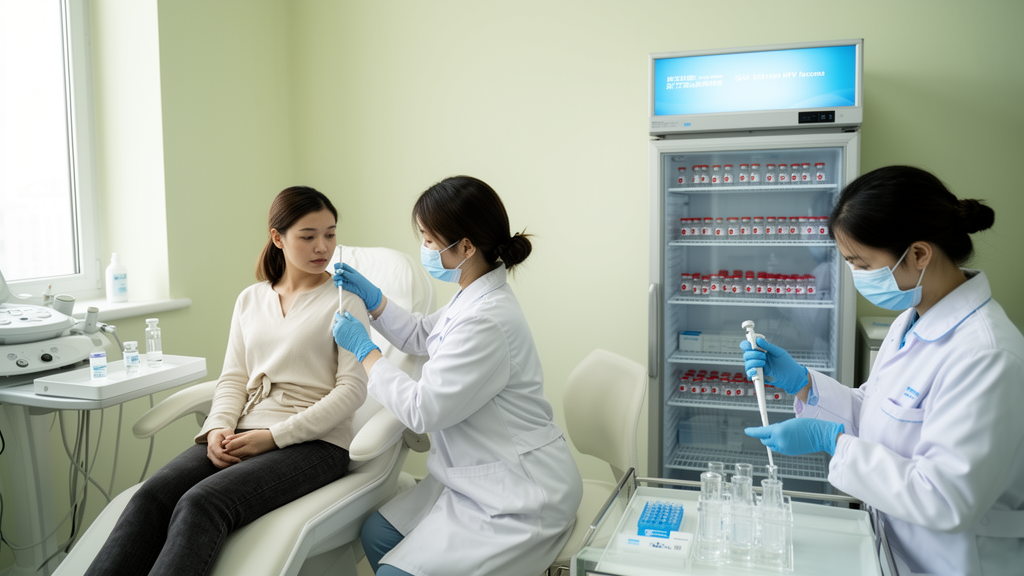
Image Credits: AI Generated

DOI: 10.1186/s12985-026-03341-9

Keywords: human papillomavirus, HPV16, cervical lesions, persistent infection, cervical cancer, bacterial vaginosis, trichomoniasis, vulvovaginal candidiasis, nine-valent HPV vaccine, Shaanxi Province, Epidemiological, profile

News Source: Kristina Jarvis. (October 21, 2026). Epidemiological profile of HPV infection, associations with cervical lesions and vaginal microecological disorders, and nine-valent vaccine coverage in Northwest China: a 6-year retrospective study of 57,035 women. Scienmag.

Tags: bacterial vaginosisCervical cancercervical lesionsepidemiologicalHPV16human papillomavirusnine-valent HPV vaccinepersistent infectionprofileShaanxi Provincetrichomoniasisvulvovaginal candidiasis
Share12Tweet7Share2ShareShareShare1

Related Posts

MSIPep prioritizes tumor peptides in leukemia and solid-tumor datasets

MSIPep prioritizes tumor peptides in leukemia and solid-tumor datasets

October 21, 2026
GLIS3 regulates astrocyte differentiation in human stem cells

GLIS3 regulates astrocyte differentiation in human stem cells

October 21, 2026

Fungal parasite selects against larger yellow dung flies

October 21, 2026

BioSIFTR infers gut microbiome functions from shallow sequencing

October 21, 2026

POPULAR NEWS

  • Research report: Translational Barriers and AI‐Driven Challenges of Microfluidics‐Enabled Wearables and Implantable Systems in Personalized Medicine

    Research report: Translational Barriers and AI‐Driven Challenges of Microfluidics‐Enabled Wearables and Implantable Systems in Personalized Medicine

    29 shares
    Share 12 Tweet 7
  • SynthSR supports group MRI analysis but overestimates hippocampal volume

    29 shares
    Share 12 Tweet 7
  • Epidemiological profile of HPV infection, associations with cervical lesions and vaginal microecological disorders, and nine-valent vaccine coverage in Northwest China: a 6-year retrospective study of 57,035 women

    29 shares
    Share 12 Tweet 7
  • Retrospective blood protein models predict outcomes in 38 HPV16 cancer patients

    29 shares
    Share 12 Tweet 7

About

We bring you the latest biotechnology news from best research centers and universities around the world. Check our website.

Follow us

Recent News

Research report: Translational Barriers and AI‐Driven Challenges of Microfluidics‐Enabled Wearables and Implantable Systems in Personalized Medicine

SynthSR supports group MRI analysis but overestimates hippocampal volume

Epidemiological profile of HPV infection, associations with cervical lesions and vaginal microecological disorders, and nine-valent vaccine coverage in Northwest China: a 6-year retrospective study of 57,035 women

Subscribe to Blog via Email

Enter your email address to subscribe to this blog and receive notifications of new posts by email.

Join 85 other subscribers
  • Contact Us

Bioengineer.org © Copyright 2023 All Rights Reserved.

Welcome Back!

Login to your account below

Forgotten Password?

Retrieve your password

Please enter your username or email address to reset your password.

Log In
No Result
View All Result
  • Homepages
    • Home Page 1
    • Home Page 2
  • News
  • National
  • Business
  • Health
  • Lifestyle
  • Science

Bioengineer.org © Copyright 2023 All Rights Reserved.