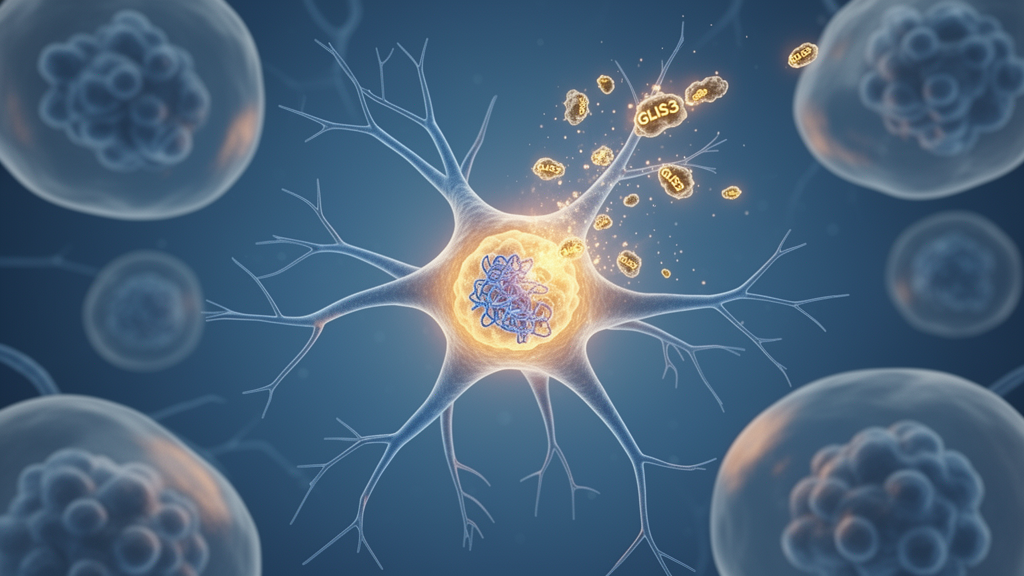
GLIS3 is a critical transcriptional regulator of astrocyte differentiation, according to research using mouse-derived astrocytes and human embryonic stem cells. The study found that disabling GLIS3 markedly impaired astrocyte differentiation, while restoring the factor rescued the induction of astrocyte-specific genes.
The findings place GLIS3 upstream of a core astrocyte transcriptional program in the experimental systems examined. Beyond controlling established differentiation markers, the factor influenced genes associated with glutamate and potassium homeostasis, synaptic transmission and synapse formation, linking astrocyte identity with several cellular processes important to brain function.
The researchers first assessed GLIS3 expression in mouse-derived astrocytes using reverse-transcription quantitative polymerase chain reaction and immunofluorescence. Both methods showed robust expression, establishing that the transcription factor is present in the cells used to investigate its relationship with astrocyte biology.
They then generated GLIS3-knockout human embryonic stem cells and examined the effects on astrocyte differentiation. Loss of GLIS3 markedly reduced the expression of canonical astrocyte markers. This result connected the molecular perturbation to a broad failure to induce astrocyte characteristics rather than to a change involving only one measured marker.
The investigators also tested whether restoring GLIS3 could reverse the differentiation defect. Introducing exogenous GLIS3 restored induction of astrocyte-specific genes, providing experimental evidence that GLIS3 is required for the astrocyte lineage program in this human stem-cell system.
Integrative transcriptomic and cistromic analyses indicated that GLIS3 directly controls part of the core astrocyte transcriptional program, including GFAP, SLC1A2, NFIA and ATF3. The analyses also showed that GLIS3 acts together with lineage-determining factors such as STAT3, NFIA and SOX9, placing the factor within a broader network of gene regulation.
Pathway analysis identified additional GLIS3-dependent genes, including SLC1A2, GRIA4, GRIA2, SLC38A2 and KCNJ10. The researchers associated these genes with glutamate and potassium homeostasis, synaptic transmission and synapse formation. These findings indicate that GLIS3 regulates astrocyte differentiation alongside genes involved in several neural signaling processes, although the experiments do not establish effects on neurological disease in patients.
The study is mechanistic and was conducted in mouse-derived astrocytes and human embryonic stem cells. It supports the conclusion that GLIS3 regulates astrocyte differentiation and gene expression in these systems, but it does not demonstrate that changing GLIS3 activity can prevent or reverse neurodegenerative disease in people. The authors identify GLIS3 as a potential therapeutic target for astrocyte-associated neurological disorders, a prospect that would require further validation.
Subject of Research: Experimental regulation of astrocyte differentiation and gene expression by GLIS3 in mouse-derived astrocytes and human embryonic stem cells.
Article Title: GLIS3 is a key transcriptional regulator of astrocyte differentiation in human neural stem cells
Article References: Pradhan, T., Kang, H. S., Jeon, K., Grimm, S. A., Park, K.-Y., Gruzdev, A., & Jetten, A. M. (2026). GLIS3 is a key transcriptional regulator of astrocyte differentiation in human neural stem cells. Cellular and Molecular Life Sciences. https://doi.org/10.1007/s00018-026-06482-w
Image Credits: AI Generated
DOI: 10.1007/s00018-026-06482-w
Keywords: GLIS3, astrocyte differentiation, human embryonic stem cells, transcription factor, gene regulation, neural homeostasis, glutamate homeostasis, potassium homeostasis, synaptic transmission, neurodegenerative disease, transcriptional, regulator
News Source: Juliet Wilcox. (October 21, 2026). GLIS3 regulates astrocyte differentiation in human stem cells. Scienmag.