


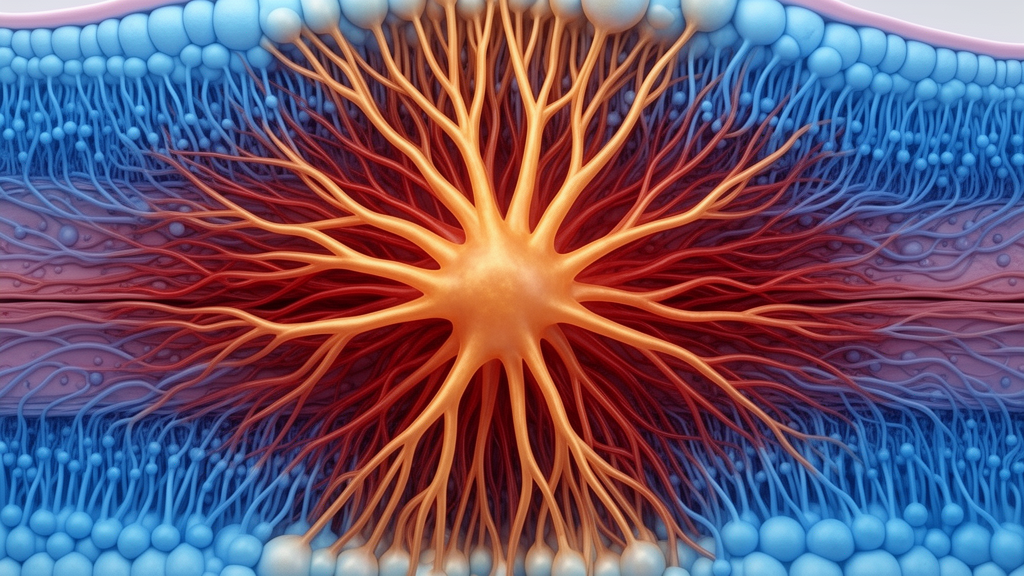
Deep in the back of the eye, a single class of cells spans nearly the entire thickness of the retina, touching photoreceptors, neurons, and blood vessels all at once. These cells, called Müller glia, have long been treated as quiet housekeepers of vision. A new review published in Frontiers in Cell and Developmental Biology argues that they deserve far more attention, positioning them as active regulators of retinal health whose shifting states may help determine whether the eye stays healthy or slides into degeneration.
The review, written by researchers at the University of California, Berkeley, synthesizes evidence that Müller glia are the principal macroglia of the retina, making up roughly ninety percent of its glial population. Unlike astrocytes, which enter the retina through the optic nerve during development, and microglia, which arrive from outside the neuroepithelium, Müller glia arise from the same retinal progenitor cells that produce retinal neurons. They differentiate late in retinogenesis, alongside rod photoreceptors and bipolar cells, maturing within an already organized neural circuit rather than building one.
That timing shapes their role. Rather than scaffolding the developing retina, Müller glia stabilize it. Radially oriented cells whose processes extend across the synaptic and nuclear layers, they contact photoreceptor inner segments at the outer limiting membrane, house their cell bodies in the inner nuclear layer, and extend fine processes through the plexiform layers to reach neuronal synapses. At the vitreal surface, their endfeet ensheathe neurons and retinal vessels, an anatomical arrangement that underpins neurovascular signaling and contributes to the organization of the blood–retinal barrier.
The review details how these cells manage the retina’s daily chemistry. They clear glutamate, the retina’s primary excitatory neurotransmitter, through high-affinity transporters known as EAAT1/GLAST, then convert it to glutamine via glutamine synthetase and return it to neurons to sustain the glutamate–glutamine cycle. They also take up GABA to maintain inhibitory tone and prevent neurotransmitter spillover between synapses. Disrupting this pathway, the authors note, can limit substrate availability for bipolar and ganglion cells and allow extracellular glutamate to accumulate, promoting excitotoxic stress. Müller glia further regulate ion and water balance through inwardly rectifying potassium channels such as Kir4.1 and the water channel aquaporin-4, both enriched in specialized membrane domains. Experimental disruption of Kir4.1 alters potassium handling and changes electroretinogram responses, while dysregulation of AQP4 and Kir4.1 has been linked to retinal edema and impaired function in stress models.
The review then turns to what happens when stress strikes. Following injury, Müller glia are among the earliest responders, shifting from homeostatic support toward reactive states in a process broadly termed gliosis. In its early stages, gliosis can be adaptive, stabilizing the extracellular environment, limiting damage spread, and supporting neuronal survival. But when reactive programs are sustained or excessive, the authors write, gliosis becomes maladaptive, contributing to chronic neuroinflammation, synaptic dysfunction, and progressive neurodegeneration. A common hallmark of this reactivity is the induction of intermediate filament proteins, particularly glial fibrillary acidic protein, vimentin, and nestin, sometimes accompanied by hypertrophy of glial processes and, in severe contexts, scar formation.
The drivers of this activation fall into three interconnected categories. Mechanical forces, including elevated intraocular pressure, tissue stretch, and cell swelling, are sensed through mechanosensitive channels such as TRPV4 and Piezo channels and through integrin-mediated adhesion signaling, triggering calcium influx that engages kinase programs driving gliosis and remodeling. Metabolic and oxidative stress, from hypoxia, reactive oxygen species, and mitochondrial dysfunction, can reduce Müller glial respiration and impair glutamate transport. Inflammatory signaling, particularly cytokines such as TNFα and IL-6 family ligands, activates pathways including NFκB and the gp130–JAK–STAT3 axis, which promotes induction of gliosis-associated intermediate filament proteins. The review emphasizes that these pathways converge: microglia release signals that activate Müller glia, which in turn release cytokines that propagate inflammation across retinal layers.
From there, the review maps how sustained Müller glial dysfunction manifests across three major diseases. In glaucoma, where progressive retinal ganglion cell loss is shaped by mechanical strain, metabolic stress, and neuroinflammation, Müller glial gliosis in models such as the DBA/2J mouse occurs early, may persist after intraocular pressure normalizes, and scales with disease severity. Persistent gliosis is thought to compromise glutamate clearance and potassium buffering, potentially increasing excitotoxic stress on ganglion cells. The authors are careful to note that whether Müller glial activation drives ganglion cell injury or responds to early neuronal stress remains unresolved, with evidence favoring bidirectional communication.
In diabetic retinopathy, historically viewed as a vascular disease, Müller glia are increasingly implicated in early neuronal dysfunction. Diabetes and oxidative stress impair GLAST/EAAT1-dependent glutamate transport, while reduced Kir4.1 expression and altered aquaporin-4 function are associated with Müller glial swelling and retinal edema. Müller glia are also a major retinal source of vascular endothelial growth factor under diabetic conditions, and conditional Müller glial VEGF knockouts show reduced leukostasis, tight junction loss, and vascular leakage relative to diabetic controls. In age-related macular degeneration, where Müller glia are less studied, their specialized macular organization and single-cell datasets implicating them in vascular signaling, extracellular matrix remodeling, and immune- and lipid-associated genes such as APOE and CFI suggest they are important modulators of disease.
Perhaps the most forward-looking section concerns therapy. The review outlines strategies aimed not at suppressing gliosis wholesale but at shifting Müller glia toward more homeostatic states. These include pharmacological modulation of lipid signaling, restoration of ion and metabolic homeostasis, gene-based targeting, and regenerative reprogramming. Specialized pro-resolving mediators, endogenous bioactive lipids including lipoxins, resolvins, protectins, and maresins, have anti-inflammatory actions and promote tissue repair. The lipoxin B4 pathway has emerged as a candidate link between neuroprotective signaling and Müller glial activation state: in mouse ocular hypertension, amplifying retinal LXB4 signaling was associated with lower gliosis markers such as GFAP and reduced inflammatory outputs. Pharmacologic inhibition of TRPV4 in retinal explants improves ganglion cell survival, and statins suppress TRPV4-associated inflammatory signaling in Müller glia. On the gene therapy front, engineered capsids such as ShH10 enable efficient intravitreal transduction of Müller glia in rats, and a macroglia-targeted AAV construct delivering a therapeutic enzyme that amplifies lipoxin formation protects against ocular hypertension–associated neurodegeneration in animal models.
The authors temper this promise with caution. Most evidence for lipid-based and ion-channel strategies remains preclinical and model-dependent, and capsid tropism and promoter performance differ across species, meaning approaches that work in rodents may not generalize to primate or human retina. Müller glial reprogramming, meanwhile, remains most clearly demonstrated in zebrafish, where these cells regenerate multiple retinal neuron types after injury; in adult mammals, endogenous reprogramming stays limited, and reprogrammed cells must integrate into circuits and survive in degenerative environments to be therapeutically meaningful. The review closes by arguing that single-cell, spatial, and multi-omic approaches now allow researchers to define distinct layers of Müller glial state, from transcriptional to metabolic to spatial, and that defining when and how these cells shift from adaptive to maladaptive states will be critical for developing therapies that restore retinal homeostasis and limit neurodegeneration. For a cell long dismissed as passive scaffolding, Müller glia are finally being recognized as active participants in the story of sight and its loss.
Subject of Research: The role of Müller glia in retinal homeostasis and neurodegenerative eye disease
Article Title: From homeostasis to neurodegeneration: Müller glia in retinal disease
Article References: Kumar, M., Karnam, S., Flanagan, J. G., & Gronert, K. (2026). From homeostasis to neurodegeneration: Müller glia in retinal disease. Frontiers in Cell and Developmental Biology, 14, Article 1980008. https://doi.org/10.3389/fcell.2026.1980008
Image Credits: AI Generated
DOI: 10.3389/fcell.2026.1980008
Keywords: Müller glia, retina, glaucoma, diabetic retinopathy, age-related macular degeneration, gliosis, neuroinflammation, neurodegeneration, blood-retinal barrier, VEGF, lipoxin B4, gene therapy
News Source: Drew Townsend. (October 30, 2026). Retina’s Master Support Cells Take Center Stage in Blinding Disease. Scienmag.



