A controlled 21-day experiment in male rats found that repeated formaldehyde exposure was associated with metabolic abnormalities, impaired sperm measures, testicular damage, oxidative stress, and activation of inflammatory signaling involving NF-κB and the NLRP3 inflammasome. Rats given quercetin alongside formaldehyde showed improvement in many of the measured outcomes, with the greatest amelioration generally reported at the highest tested dose of 100 mg/kg. The findings are preclinical and do not establish quercetin as a treatment for exposed people.
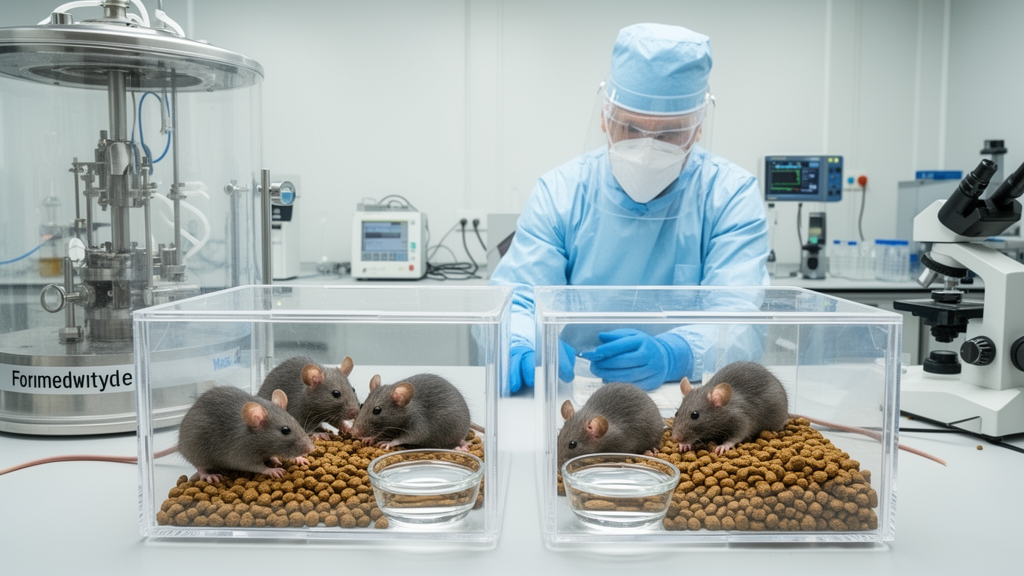
The investigators administered 3% formaldehyde by intraperitoneal injection at 15 mg/kg body weight for 21 days to a male rat model that included eight animals. Other groups received oral quercetin dissolved in 5% dimethyl sulfoxide in distilled water at doses of 25, 50, or 100 mg/kg, while a normal control group was also included. After treatment, the researchers assessed metabolic profiles, sperm characteristics, reproductive hormone concentrations, testicular histology, oxidative stress, and molecular markers associated with inflammation and steroid production.
Normality was assessed with the Shapiro–Wilk test, followed by one-way analysis of variance and Tukey’s post hoc comparisons, with statistical significance set at p ≤ 0.05. Formaldehyde-treated animals developed signs of metabolic dysfunction, including elevated fasting blood glucose and glycated hemoglobin and reduced insulin concentrations. These observations indicate disturbed glucose regulation in the experimental model.
Reproductive measures also changed after formaldehyde treatment. Sperm count, viability, and motility decreased, as did concentrations of testosterone, luteinizing hormone, and follicle-stimulating hormone. Histological analysis identified testicular damage accompanied by fibrosis and apoptosis.
Together, the findings connect formaldehyde exposure with impaired sperm characteristics, altered hormonal signals, and tissue injury in the treated rats. The experiment does not establish whether endocrine changes preceded the testicular lesions, resulted from them, or arose as part of linked processes. Molecular analyses indicated that formaldehyde was associated with damage-associated molecular pattern signaling and sterile inflammation.
The study reported changes involving tumor necrosis factor-alpha and Toll-like receptor 4, together with activation of NF-κB and the NLRP3 inflammasome. Steroidogenic gene expression was also repressed, providing a potential molecular link between the inflammatory response and altered reproductive hormone production. These results support the involvement of the NF-κB/NLRP3 pathway in the rat model, but they do not by themselves prove the precise sequence or causal role of each molecular component.
Oxidative imbalance occurred alongside the metabolic, reproductive, and inflammatory changes. Formaldehyde-treated rats had increased pro-oxidant measures and intracellular reactive oxygen species, together with reduced levels of endogenous antioxidants. The study also detected fibrosis and apoptosis in testicular tissue.
These parallel findings support an association among oxidative stress, inflammatory signaling, and organ injury in the experiment, although the measurements alone do not establish the order in which those processes unfolded or demonstrate that oxidative stress initiated the cascade. Quercetin co-treatment reduced many of the changes associated with formaldehyde. Across the three tested doses, the degree of improvement was generally associated with dose, and the 100 mg/kg group showed the strongest amelioration of the measured metabolic, reproductive, oxidative, inflammatory, and histological abnormalities.
It also did not test whether quercetin could prevent formaldehyde-related harm in people without formaldehyde exposure. Molecular docking provided an additional, computational line of evidence. The results suggested that quercetin might bind TNF, TLR4, NF-κB, and NLRP3 with higher affinity than formaldehyde.
Such calculations can identify plausible molecular interactions, but docking does not confirm that binding occurred under biological conditions or caused the improvements observed in the rats. Overall, the small animal sample, injected exposure, short treatment period, and specific dose range limit generalization. The study supports further investigation of quercetin as a possible modulator of multiple pathways involved in aldehyde-associated injury, but it does not demonstrate clinical safety or efficacy in humans.
Subject of Research: Quercetin modulation of formaldehyde-associated metabolic, reproductive, and inflammatory changes in male rats
Article Title: NF-κB/NLRP3 inflammasome is associated with formaldehyde-induced reproductive and metabolic dysfunction: protective role of quercetin in rats
Article References: Banerjee, A., Roy, J., Banerjee, A., Banerjee, A., Datta, P., Das, D., Paul, R., Sarkar, D., Halder, A., Manna, K., Mukherjee, S., & Maji, B. K. (2026). NF-κB/NLRP3 inflammasome is associated with formaldehyde-induced reproductive and metabolic dysfunction: protective role of quercetin in rats. Molecular Biology Reports, 53(1), Article 1486. https://doi.org/10.1007/s11033-026-12596-y
Image Credits: AI Generated
DOI: 10.1007/s11033-026-12596-y
Keywords: formaldehyde exposure, quercetin, male reproduction, testicular injury, metabolic dysfunction, oxidative stress, NLRP3 inflammasome, NF-κB signaling, rat model, NLRP3, inflammasome, associated
News Source: Drew Townsend. (October 25, 2026). Quercetin reduces formaldehyde-related reproductive and metabolic changes in male rats. Scienmag.