• HOME
  • NEWS
  • EXPLORE
    • CAREER
      • Companies
      • Jobs
    • EVENTS
    • iGEM
      • News
      • Team
    • PHOTOS
    • VIDEO
    • WIKI
  • BLOG
  • COMMUNITY
    • FACEBOOK
    • INSTAGRAM
    • TWITTER
Sunday, October 25, 2026
BIOENGINEER.ORG
No Result
View All Result
  • Login
  • HOME
  • NEWS
  • EXPLORE
    • CAREER
      • Companies
      • Jobs
        • Lecturer
        • PhD Studentship
        • Postdoc
        • Research Assistant
    • EVENTS
    • iGEM
      • News
      • Team
    • PHOTOS
    • VIDEO
    • WIKI
  • BLOG
  • COMMUNITY
    • FACEBOOK
    • INSTAGRAM
    • TWITTER
No Result
View All Result
Bioengineer.org
No Result
View All Result
Home NEWS Science News Agriculture

Comparative transcriptomics link candidate genes to double flowers in Clivia miniata

by
October 25, 2026
in Agriculture
Reading Time: 2 mins read
0
Comparative transcriptomics link candidate genes to double flowers in Clivia miniata

Comparative transcriptomics link candidate genes to double flowers in Clivia miniata

Share on FacebookShare on TwitterShare on LinkedinShare on RedditShare on Telegram

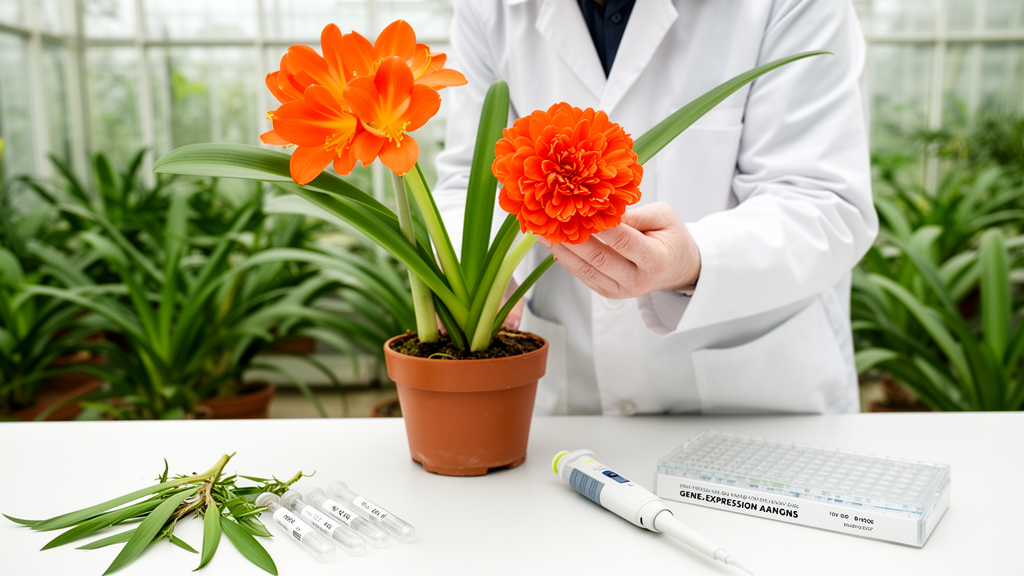
A comparative transcriptome study of the ornamental plant Clivia miniata has identified candidate genes and regulatory pathways associated with stamen petaloidy and double-flower formation. Researchers sequenced flower buds and tepals from single-, semi-double- and double-flowered plants, assembling 127,524 unigenes for analysis. The study, published in BMC Plant Biology, links changes in gene expression to metabolism, phytohormone signaling and floral identity, while providing a candidate framework for further investigation rather than establishing a causal mechanism.

The researchers compared gene expression across the three floral phenotypes and identified 44,140 differentially expressed genes in flower-bud comparisons and 40,278 in tepal comparisons. These genes were enriched primarily in metabolic processes and phytohormone-signaling pathways. The analysis also identified 209 hormone-related transcripts spanning pathways involving auxin, gibberellin, jasmonic acid and other hormones, indicating that several signaling systems varied among the sampled flower forms.

The results show coordinated expression changes in these systems, but they do not demonstrate that any individual hormone directly causes stamen petaloidy or drives the transition from single- to semi-double- and double-flowered phenotypes. Expression shifts occurred among several transcription-factor groups, including MYB, WRKY, NAC, bHLH and bZIP genes, as well as MIKC-type MADS-box genes. The researchers highlighted the class B floral identity gene CmPI_1 because of its pronounced expression differences across floral phenotypes.

Weighted gene co-expression network analysis identified a module termed the blue module that was tightly associated with stamen petaloidy. This module included hub transcription factors, the jasmonate-signaling gene CmJAR1L and CmPI_1. The network analysis therefore places these candidates within an association-based regulatory framework connecting hormone signaling, transcriptional regulation and floral identity, but it does not by itself prove that the relationships are causal.

Quantitative real-time PCR was then used to validate the expression patterns of 13 core candidates. Their measured expression tracked the severity of stamen petaloidy, and CmPI_1 was markedly upregulated in double-flowered flower buds. Across the sequencing, co-expression and expression-validation results, the study identifies a set of genes and pathways for further testing in the molecular control of double-flower formation in C. miniata.

Subject of Research: Comparative transcriptomics of stamen petaloidy and double-flower formation in Clivia miniata

Article Title: Comparative transcriptome analysis reveals candidate genes and regulatory pathways underlying stamen petaloidy in Clivia miniata

Article References: Zhao, X., Yue, L., Li, D., Feng, X., Ren, X., Yue, J., & Lei, J. (2026). Comparative transcriptome analysis reveals candidate genes and regulatory pathways underlying stamen petaloidy in Clivia miniata. BMC Plant Biology. https://doi.org/10.1186/s12870-026-09917-5

Image Credits: AI Generated

DOI: 10.1186/s12870-026-09917-5

Keywords: Clivia miniata, stamen petaloidy, double flowers, comparative transcriptomics, floral identity, phytohormone signaling, MADS-box genes, transcription factors, co-expression network, CmPI_1, CmJAR1L, Comparative

News Source: Juliet Wilcox. (October 25, 2026). Comparative transcriptomics link candidate genes to double flowers in Clivia miniata. Scienmag.


Tags: Clivia miniataCmJAR1LCmPI_1co-expression networkComparativecomparative transcriptomicsdouble flowersfloral identityMADS-box genesPhytohormone signalingstamen petaloidytranscription factors
Share12Tweet7Share2ShareShareShare1

Related Posts

Vitamin D Emerges as Possible Bridge Between Neuropathic Pain and Brain Fog

Vitamin D Emerges as Possible Bridge Between Neuropathic Pain and Brain Fog

October 25, 2026
Soybean cold sensitivity has genetically distinct components, diversity-panel study finds

Soybean cold sensitivity has genetically distinct components, diversity-panel study finds

October 25, 2026

Tiny AI Model Reads Diseased Crop Leaves With Big-Model Accuracy and Explains Itself

October 25, 2026

Soil Bacteria Paired with Humic Acid Shield Wheat Yields from Drought Stress

October 25, 2026

POPULAR NEWS

  • Quercetin reduces formaldehyde-related reproductive and metabolic changes in male rats

    Quercetin reduces formaldehyde-related reproductive and metabolic changes in male rats

    29 shares
    Share 12 Tweet 7
  • Multi-omics study links ELF1 to B-cell states in breast cancer

    29 shares
    Share 12 Tweet 7
  • Comparative transcriptomics link candidate genes to double flowers in Clivia miniata

    29 shares
    Share 12 Tweet 7
  • Same Gene, Two Fates: Sibling Study Reveals Muscular Dystrophy’s Striking Variability

    29 shares
    Share 12 Tweet 7

About

We bring you the latest biotechnology news from best research centers and universities around the world. Check our website.

Follow us

Recent News

Quercetin reduces formaldehyde-related reproductive and metabolic changes in male rats

Multi-omics study links ELF1 to B-cell states in breast cancer

Comparative transcriptomics link candidate genes to double flowers in Clivia miniata

Subscribe to Blog via Email

Enter your email address to subscribe to this blog and receive notifications of new posts by email.

Join 85 other subscribers
  • Contact Us

Bioengineer.org © Copyright 2023 All Rights Reserved.

Welcome Back!

Login to your account below

Forgotten Password?

Retrieve your password

Please enter your username or email address to reset your password.

Log In
No Result
View All Result
  • Homepages
    • Home Page 1
    • Home Page 2
  • News
  • National
  • Business
  • Health
  • Lifestyle
  • Science

Bioengineer.org © Copyright 2023 All Rights Reserved.