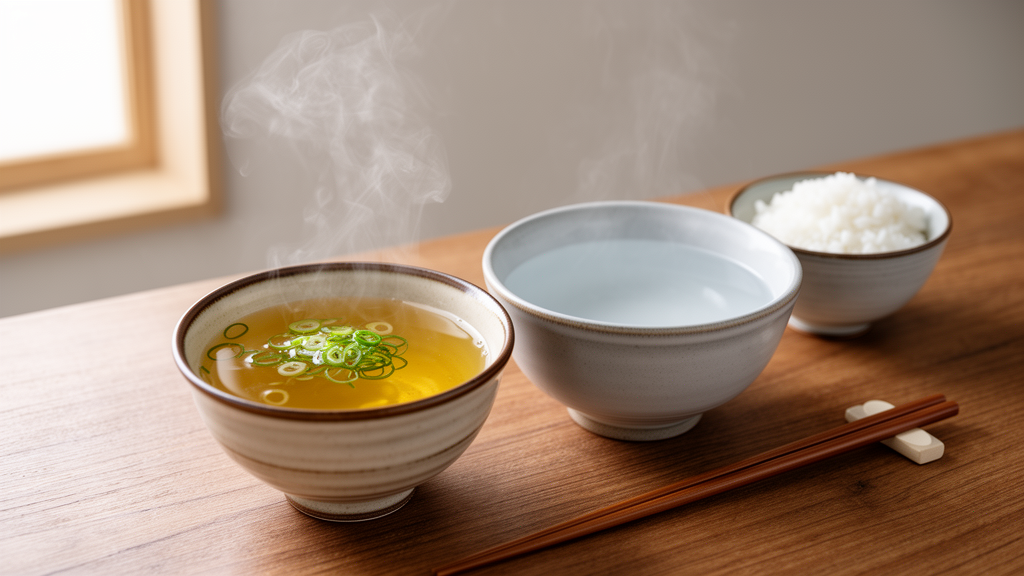
A small randomized controlled trial from Japan has found that drinking dashi, the umami-rich soup stock at the heart of traditional Japanese cuisine, before meals was feasible for patients with type 2 diabetes but did not outperform hot water in changing sweet taste sensitivity or food preferences. The pilot study, conducted at Osaka University Hospital and published in Frontiers in Nutrition, reported high adherence to the intervention, yet its statistical comparisons between the two groups showed no significant differences, leaving the intriguing within-group changes as hypothesis-generating observations rather than evidence of a treatment effect.
The trial enrolled 20 adults with type 2 diabetes who were receiving treatment at the Department of Metabolic Medicine between 2023 and 2024. Participants were randomly assigned, using a stratified permuted block method with age, sex, and body mass index as allocation factors, to consume either 2.5 grams of powdered dashi dissolved in about 50 milliliters of hot water, or plain hot water alone, before breakfast and dinner for four weeks. The dashi powder, a commercial product combining kelp, dried sardine, and shiitake mushroom extracts, delivered a synergistic mix of umami compounds: 22.2 milligrams of glutamic acid, 61.5 milligrams of inosinic acid, and 49.8 milligrams of guanylic acid per serving.
The rationale rested on a well-documented clinical problem. Patients with type 2 diabetes often show reduced sweet taste sensitivity compared with people without diabetes, and preferences for energy-dense foods, including savory high-fat items and sweets, have been linked to poor dietary adherence and glycemic control. Previous experimental studies suggested that monosodium glutamate, the prototypical umami compound, can enhance satiety, reduce subsequent intake of energy-dense or savory foods, and even influence taste receptor gene expression. But those studies mostly used single umami compounds in controlled settings. The Osaka team wanted to know whether a practical, culturally familiar food-based intervention, dashi taken simply as a pre-meal drink, could achieve similar effects in daily life.
The prespecified primary outcome was the between-group difference in the change in sweet taste threshold, measured with a whole-mouth gustatory test in which participants held ascending concentrations of sucrose solution in the mouth and identified the lowest concentration they could detect. Lower thresholds indicate greater sensitivity. After four weeks, the adjusted between-group difference was minus 5.2 grams per liter, with a 95 percent confidence interval spanning minus 13.1 to 2.9 and a p-value of 0.19. In other words, the dashi group’s threshold moved in the direction of greater sensitivity on average, but the difference from the water group was not statistically significant, and the wide confidence interval reflected the trial’s very small size.
Eighteen of the 20 participants, 90 percent, completed the week-4 assessment, and adherence to the dashi intervention reached 97 percent, verified through self-recorded logs cross-checked against leftover powder returned at follow-up visits. No adverse events occurred during the eight-week study period. The mean participant age was approximately 69 years, men and women were nearly evenly split, and the average duration of diabetes was around 20 years. Two participants in the dashi group dropped out before the week-4 assessment, while all ten water-group participants completed it, a differential attrition the authors acknowledged could have influenced their complete-case estimates.
The more provocative results emerged from exploratory within-group analyses. Using the Japan Food Preference Questionnaire, a newly developed instrument that rates preference for Japanese foods on visual analog scales and groups them by carbohydrate, fat, protein, and dietary fiber content, the researchers observed that preference for non-sweet fatty foods and for sweet carbohydrate foods declined within the dashi group, each with a nominal p-value of 0.02. The mean within-group reductions were roughly 11 points on the questionnaire’s 0-to-100 scale. Yet when compared against the water group with baseline adjustment, the between-group differences were minus 11 points for non-sweet fat preference and minus 8 points for sweet carbohydrate preference, both statistically non-significant with confidence intervals that included zero.
A similar pattern appeared in sweet taste sensitivity categories. Among participants who had reduced sweet taste sensitivity at baseline, defined by failure to recognize a 10 grams-per-liter sucrose solution, three of five participants in the dashi group improved to normal sensitivity, compared with zero of four in the water group. That difference yielded a p-value of 0.17, far from significance. The authors stressed that with such small numbers, this finding should not be interpreted as evidence of a subgroup effect. Exploratory improvements in salty and umami taste sensitivity were also reported in the dashi group, again without statistical support.
The authors were unusually candid about the limits of their data. The trial had originally been powered to enroll 40 participants, 17 per group for 80 percent power, but slow recruitment allowed only 20 to be randomized before the study period ended, a decision made before outcome data were examined. The resulting sample halved the statistical power and widened uncertainty. Multiple secondary and exploratory outcomes were evaluated without adjustment for multiple comparisons, so the two nominal p-values of 0.02 may represent chance findings. The open-label design meant neither participants nor outcome assessors were blinded, raising the possibility of expectation effects on subjective outcomes such as self-reported food preferences and taste identification. The same unblinded investigator generally performed both baseline and week-4 taste assessments for a given participant.
Methodological caveats extended to the control condition itself. Hot water is simple and feasible but does not match dashi in aroma, flavor, or umami perception, and it does not control for intervention-related expectations. The study therefore cannot isolate an umami-specific effect; the findings relate to dashi consumption as a whole. The authors also noted that the observed improvement in taste thresholds at four weeks may partly reflect a learning effect from repeated testing, since solutions were presented in ascending concentrations. The second four-week period, in which participants crossed over to the alternate intervention without a washout, was summarized only descriptively because carryover effects could not be excluded, and the decision to treat those data descriptively was itself made after the carryover issue was recognized.
Importantly, the exploratory shifts in food preference were not accompanied by measurable improvements in dietary intake assessed by food frequency questionnaire, biomarkers, or body composition, so the authors explicitly cautioned against interpreting them as evidence of clinical benefit. What the trial does establish is feasibility: pre-meal dashi consumption was simple, well tolerated, and sustained at high adherence in a population of older adults with long-standing diabetes. Whether repeated umami exposure through a whole-food stock can genuinely reshape taste perception and food preferences, and whether such changes translate into meaningful metabolic outcomes, will require larger, longer, and independently conducted randomized trials, ideally with flavor-matched controls and validated measures of clinically important change.
Subject of Research: A pilot randomized controlled trial testing whether pre-meal dashi consumption alters food preferences and sweet taste sensitivity in patients with type 2 diabetes
Article Title: Effects of pre-meal dashi consumption on food preferences and sweet taste sensitivity in patients with type 2 diabetes: a pilot randomized controlled trial
Article References: Beppu, A. N., Mitsushio, K., Baden, M. Y., Kagisaki, T., Kato, S., Horii, T., Ishibashi, C., Hosokawa, Y., Fujishima, Y., Kozawa, J., Nishizawa, H., Furuya, Y., Yonekura, A., Yamashita, T., Kawabe, T., & Shimomura, I. (2026). Effects of pre-meal dashi consumption on food preferences and sweet taste sensitivity in patients with type 2 diabetes: a pilot randomized controlled trial. Frontiers in Nutrition, 13, Article 1903008. https://doi.org/10.3389/fnut.2026.1903008
Image Credits: AI Generated
DOI: 10.3389/fnut.2026.1903008
Keywords: dashi, umami, type 2 diabetes, sweet taste sensitivity, food preferences, randomized controlled trial, pilot study, Japan Food Preference Questionnaire, taste threshold, nutrition intervention, Osaka University, glutamate
News Source: Daisy Hatcher. (October 28, 2026). Pre-meal dashi fails to beat hot water in diabetes taste trial. Scienmag.