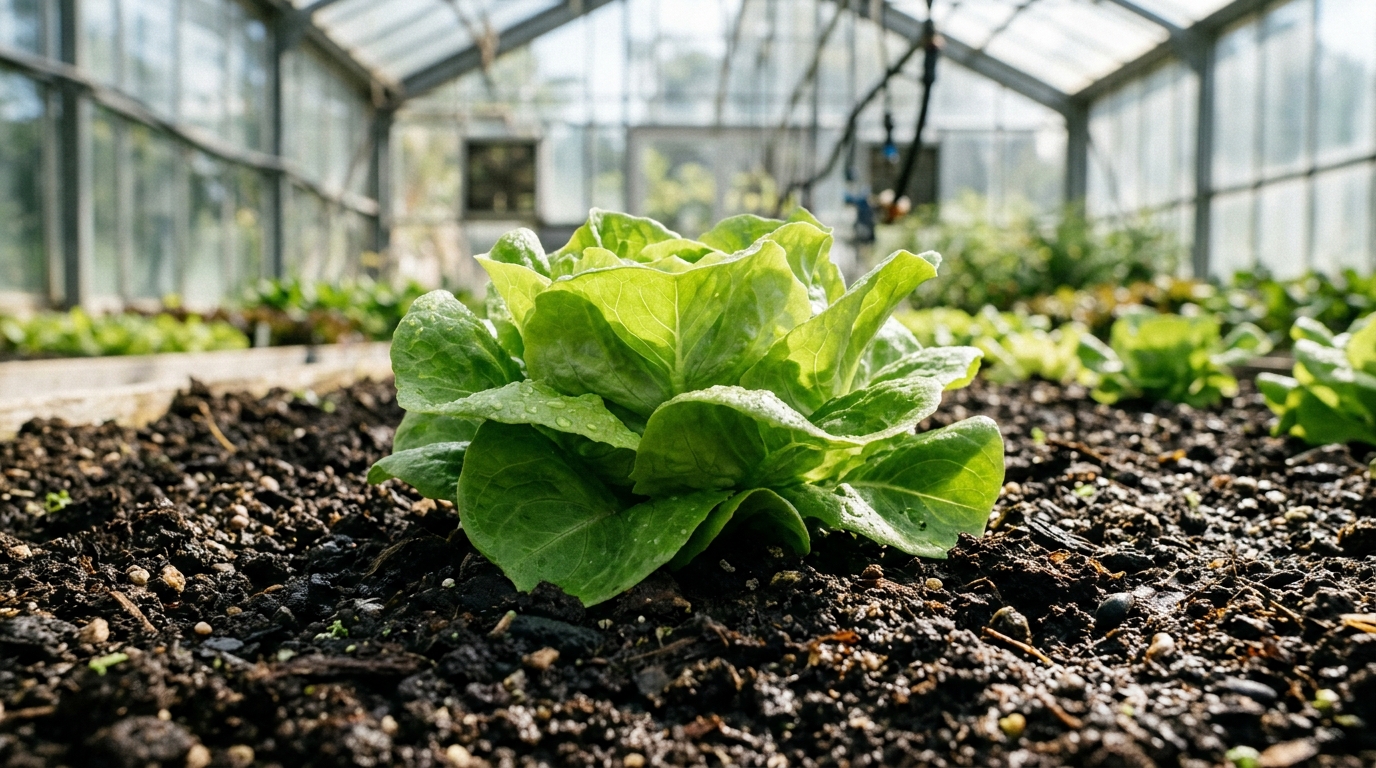
Polystyrene microplastics and nanoplastics can significantly alter the nutrient chemistry of tropical soils without producing any measurable change in the growth of the crops growing in them. That is the central finding of a controlled greenhouse experiment in which researchers applied laboratory-synthesized polystyrene particles to a tropical soil planted with lettuce and monitored both soil chemistry and plant performance over 45 days. The study, published in the journal Microplastics and Nanoplastics, indicates that in tropical agroecosystems, soil nutrient dynamics respond to plastic contamination more sensitively than short-term plant growth does.
The research team synthesized two distinct classes of polystyrene particles in the laboratory: microplastics measuring 5 to 10 micrometers and nanoplastics measuring 100 to 150 nanometers. They confirmed the morphology and chemical identity of both particle types using scanning electron microscopy and Fourier-transform infrared spectroscopy before introducing them into the soil.
The soil used in the experiment was a Typic Rhodustalf, a tropical soil type. The researchers applied the polystyrene particles at concentrations ranging from 0.002 to 0.2 percent by weight, a span designed to bracket conditions from typical agricultural contamination levels up to scenarios resembling industrial pollution. Lettuce (Lactuca sativa) was grown in pots treated with these particles under controlled greenhouse conditions for 45 days, during which the team tracked soil pH, electrical conductivity, available nutrient concentrations, plant biomass, plant height, and relative chlorophyll content.
When the researchers analyzed the results using factorial ANOVA, a clear pattern emerged. At the highest concentrations tested, both polystyrene microplastics and nanoplastics significantly altered soil nutrient dynamics. Specifically, the particles increased the concentrations of ammonium, nitrate, and available phosphorus in the soil. The microplastics produced stronger effects on these nutrient pools than the nanoplastics did, suggesting that particle size influences how polystyrene contamination interacts with tropical soil chemistry.
What makes this result particularly striking is what the researchers did not find. Despite the measurable shifts in soil nutrient availability, the polystyrene particles had no detectable impact on soil pH, electrical conductivity, plant growth, or plant biomass during the 45-day exposure period.
The authors interpret this disconnect between soil chemistry and plant performance as evidence that nutrient cycling disruption occurs before observable plant effects. In other words, the soil processes that govern nutrient availability appear to respond to plastic contamination earlier and more sensitively than the plants themselves do, at least within the timeframe of a single growing cycle. This raises an important question that the study was not designed to answer: whether the changes in soil nutrient availability would eventually translate into plant responses under longer-term exposure or under real field conditions.
The concentration dependence of the findings is equally significant. Changes in soil nutrient availability were detectable only at the highest polystyrene concentrations, corresponding to heavily contaminated soils. At the lower end of the tested range, which the researchers describe as representative of typical agricultural contamination, neither the soil nutrient pools nor the plant growth indicators showed measurable responses. This suggests that the environmental impacts of polystyrene particles in tropical agricultural soils are strongly concentration-dependent rather than uniform across contamination levels.
The study provides what the authors describe as baseline evidence for understanding how polystyrene particles behave in tropical agroecosystems, a setting that has received less attention in the microplastics literature than temperate agricultural systems. By establishing that soil nutrient responses are more sensitive indicators of contamination than short-term plant growth under controlled conditions, the research points toward soil chemistry monitoring as a potentially useful early-warning tool for plastic pollution in tropical farmland.
The 45-day duration of the experiment, while sufficient to capture a complete lettuce growing cycle, remains a limitation when considering the cumulative nature of plastic accumulation in agricultural soils. The effects observed here represent an initial snapshot rather than a steady state. Whether the nutrient shifts documented at high concentrations would intensify, stabilize, or eventually produce visible plant stress under prolonged exposure remains an open question that the authors explicitly flag as requiring further investigation under longer-term and field-based conditions.
For now, the study establishes a clear starting point: polystyrene microplastics and nanoplastics, at concentrations associated with heavily contaminated tropical soils, can increase ammonium, nitrate, and available phosphorus availability without immediately affecting the crops growing in that soil. The finding that microplastics produce stronger nutrient effects than nanoplastics adds nuance to the ongoing debate about which particle size class poses the greater environmental risk, and it underscores the value of studying both fractions simultaneously rather than treating micro- and nanoplastics as a single homogeneous contamination category.
Subject of Research: Effects of polystyrene microplastics and nanoplastics on soil nutrient dynamics and lettuce growth in a tropical agricultural soil
Article Title: Polystyrene micro- and nano-plastics alter tropical soil nutrients without affecting lettuce (Lactuca sativa L.) productivity
Article References: Gimhani, T. D. M., Wiliyam, C. J., Chathurika, J. A. S., Weerasinghe, L., Dandeniya, W. S., Ariyaratne, M., Chadwick, D. R., & Jones, D. L. (2026). Polystyrene micro- and nano-plastics alter tropical soil nutrients without affecting lettuce (Lactuca sativa L.) productivity. Microplastics and Nanoplastics. https://doi.org/10.1186/s43591-026-00220-6
Image Credits: AI Generated
DOI: 10.1186/s43591-026-00220-6
Keywords: polystyrene, microplastics, nanoplastics, tropical soil, lettuce, soil nutrients, ammonium, nitrate, available phosphorus, greenhouse experiment, Lactuca sativa, soil contamination
News Source: Bethany Barker. (November 5, 2026). Polystyrene Micro- and Nanoplastics Reshape Tropical Soil Nutrients but Leave Lettuce Growth Untouched. Scienmag.