• HOME
  • NEWS
  • EXPLORE
    • CAREER
      • Companies
      • Jobs
    • EVENTS
    • iGEM
      • News
      • Team
    • PHOTOS
    • VIDEO
    • WIKI
  • BLOG
  • COMMUNITY
    • FACEBOOK
    • INSTAGRAM
    • TWITTER
Friday, November 6, 2026
BIOENGINEER.ORG
No Result
View All Result
  • Login
  • HOME
  • NEWS
  • EXPLORE
    • CAREER
      • Companies
      • Jobs
        • Lecturer
        • PhD Studentship
        • Postdoc
        • Research Assistant
    • EVENTS
    • iGEM
      • News
      • Team
    • PHOTOS
    • VIDEO
    • WIKI
  • BLOG
  • COMMUNITY
    • FACEBOOK
    • INSTAGRAM
    • TWITTER
No Result
View All Result
Bioengineer.org
No Result
View All Result
Home NEWS Science News Health

Multi-Component Osmolyte-Based Solvents Tuned to Mimic Intracellular Environments

by
November 5, 2026
in Health
Reading Time: 2 mins read
0
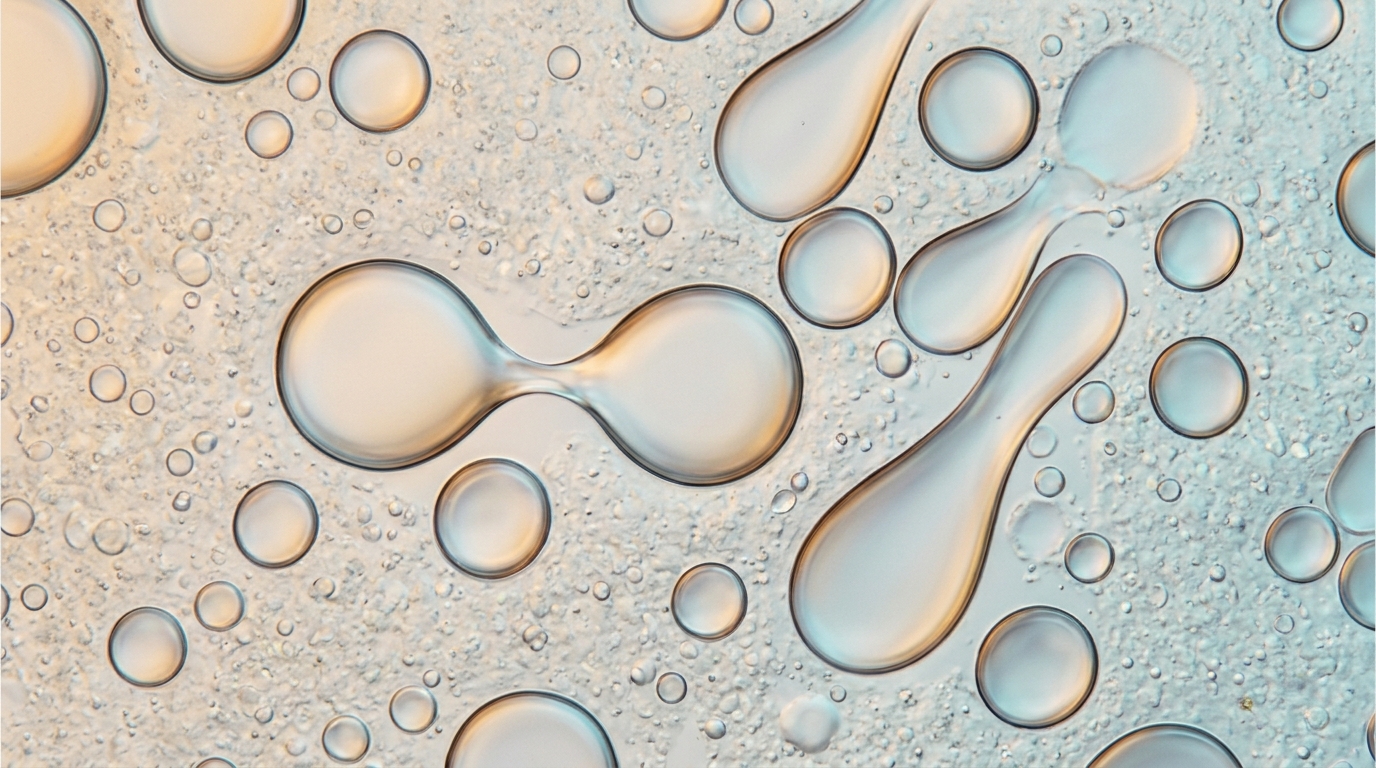
Multi-Component Osmolyte-Based Solvents Tuned to Mimic Intracellular Environments

Multi-Component Osmolyte-Based Solvents Tuned to Mimic Intracellular Environments

Share on FacebookShare on TwitterShare on LinkedinShare on RedditShare on Telegram

Multi-component osmolyte-based deep eutectic solvents inspired by biological systems exhibit highly tunable thermal phase transitions governed by intricate hydrogen-bond networks, with water fraction playing a pivotal role in modulating stability. Investigating formulations designed to mimic complex intracellular environments, researchers Priyanka Yadav, Akshat Satyanarayan Mallya, Elyssa Meixner, and Allison Hubel at the University of Minnesota Twin Cities systematically evaluated mixtures based on naturally occurring metabolites, including amino acids, sugars, sugar alcohols, urea, and trimethylamine N-oxide.

The study coupled COSMO-RS computational screening with experimental characterization across binary, three-component, four-component, and six-component systems. Using polarized optical microscopy, Differential Scanning Calorimetry, and pH measurements, the team evaluated how increasing compositional complexity influences thermophysical properties, including melting temperature, glass transition temperature, latent enthalpy of melting, and pH.

Experimental validation demonstrated significant depression of melting temperatures in amino-acid-based mixtures at low water mole fractions, recording −30.09 °C for proline:betaine and −28.93 °C for proline:sarcosine, consistent with strong eutectic interactions. The addition of sugars and sugar alcohols enabled fine-tuning of thermal and pH profiles, with select combinations preserving an alkaline pH even at elevated hydration levels.

Among binary systems, TMAO:Gua reached a peak melting temperature of −46.13 °C at a water mole fraction of 0.71, while a multicomponent formulation containing TMAO, betaine, taurine, and urea attained a minimum peak melting temperature of −43.78 °C at a water mole fraction of 0.61. The authors noted that combining computational predictions with experimental measurements advances the rational design of sustainable, biocompatible solvents for biotechnological applications such as biomolecular stabilization.

Subject of Research: Thermophysical properties of multi-component osmolyte-based deep eutectic solvents

Article Title: Engineering Osmo-DESs through computational screening and thermophysical validation for pharmaceutical technologies

Article References: Yadav, P., Mallya, A. S., Meixner, E., & Hubel, A. (2026). Engineering Osmo-DESs through computational screening and thermophysical validation for pharmaceutical technologies. Frontiers in Medical Technology, 8, Article 1996526. https://doi.org/10.3389/fmedt.2026.1996526

Image Credits: AI Generated

DOI: 10.3389/fmedt.2026.1996526

Keywords: Deep Eutectic Solvents, Osmo-DESs, Osmolytes, Differential Scanning Calorimetry, COSMO-RS, Phase Transitions, Biomolecular Stabilization, Thermophysical Properties, Engineering, computational, screening, thermophysical

News Source: Ophelia Keating. (November 5, 2026). Multi-Component Osmolyte-Based Solvents Tuned to Mimic Intracellular Environments. Scienmag.


Tags: Biomolecular StabilizationcomputationalCOSMO-RSdeep eutectic solventsdifferential scanning calorimetryengineeringOsmo-DESsosmolytesphase transitionsscreeningthermophysicalThermophysical Properties
Share12Tweet7Share2ShareShareShare1

Related Posts

Isoflurane Anaesthesia Leaves Rabbit Gut Transit and Appetite Largely Unchanged

Isoflurane Anaesthesia Leaves Rabbit Gut Transit and Appetite Largely Unchanged

November 6, 2026
Sphincter-Sparing Rectal Cancer Surgery Shows Acceptable Local Recurrence Rates

Sphincter-Sparing Rectal Cancer Surgery Shows Acceptable Local Recurrence Rates

November 6, 2026

Emergency department records score 88.8% on weighted data quality index

November 6, 2026

Blurry Vision Hits Reading Harder Than Tunnel Vision in Chinese Readers, Simulation Study Finds

November 6, 2026

POPULAR NEWS

  • ECMO shows promise as rescue therapy for combat casualties, but evidence remains thin

    ECMO shows promise as rescue therapy for combat casualties, but evidence remains thin

    29 shares
    Share 12 Tweet 7
  • MRI habitat radiomics maps tumor diversity to predict lymph node spread in early-stage cervical cancer

    29 shares
    Share 12 Tweet 7
  • Japan’s Home Care Use Varies Sharply Across Municipalities Despite Universal Coverage

    29 shares
    Share 12 Tweet 7
  • Long Contact Times on AAV Affinity Resins Reshape Yield and Purity

    29 shares
    Share 12 Tweet 7

About

We bring you the latest biotechnology news from best research centers and universities around the world. Check our website.

Follow us

Recent News

Isoflurane Anaesthesia Leaves Rabbit Gut Transit and Appetite Largely Unchanged

Sphincter-Sparing Rectal Cancer Surgery Shows Acceptable Local Recurrence Rates

Microbial fuel cells promise clean water and power but scaling remains a hurdle

Subscribe to Blog via Email

Enter your email address to subscribe to this blog and receive notifications of new posts by email.

Join 86 other subscribers
  • Contact Us

Bioengineer.org © Copyright 2023 All Rights Reserved.

Welcome Back!

Login to your account below

Forgotten Password?

Retrieve your password

Please enter your username or email address to reset your password.

Log In
No Result
View All Result
  • Homepages
    • Home Page 1
    • Home Page 2
  • News
  • National
  • Business
  • Health
  • Lifestyle
  • Science

Bioengineer.org © Copyright 2023 All Rights Reserved.