• HOME
  • NEWS
  • EXPLORE
    • CAREER
      • Companies
      • Jobs
    • EVENTS
    • iGEM
      • News
      • Team
    • PHOTOS
    • VIDEO
    • WIKI
  • BLOG
  • COMMUNITY
    • FACEBOOK
    • INSTAGRAM
    • TWITTER
Thursday, May 14, 2026
BIOENGINEER.ORG
No Result
View All Result
  • Login
  • HOME
  • NEWS
  • EXPLORE
    • CAREER
      • Companies
      • Jobs
        • Lecturer
        • PhD Studentship
        • Postdoc
        • Research Assistant
    • EVENTS
    • iGEM
      • News
      • Team
    • PHOTOS
    • VIDEO
    • WIKI
  • BLOG
  • COMMUNITY
    • FACEBOOK
    • INSTAGRAM
    • TWITTER
  • HOME
  • NEWS
  • EXPLORE
    • CAREER
      • Companies
      • Jobs
        • Lecturer
        • PhD Studentship
        • Postdoc
        • Research Assistant
    • EVENTS
    • iGEM
      • News
      • Team
    • PHOTOS
    • VIDEO
    • WIKI
  • BLOG
  • COMMUNITY
    • FACEBOOK
    • INSTAGRAM
    • TWITTER
No Result
View All Result
Bioengineer.org
No Result
View All Result
Home NEWS Science News Biology

Plastic pollution causes mussels to lose grip

Bioengineer by Bioengineer
January 29, 2019
in Biology
Reading Time: 2 mins read
0
IMAGE
Share on FacebookShare on TwitterShare on LinkedinShare on RedditShare on Telegram

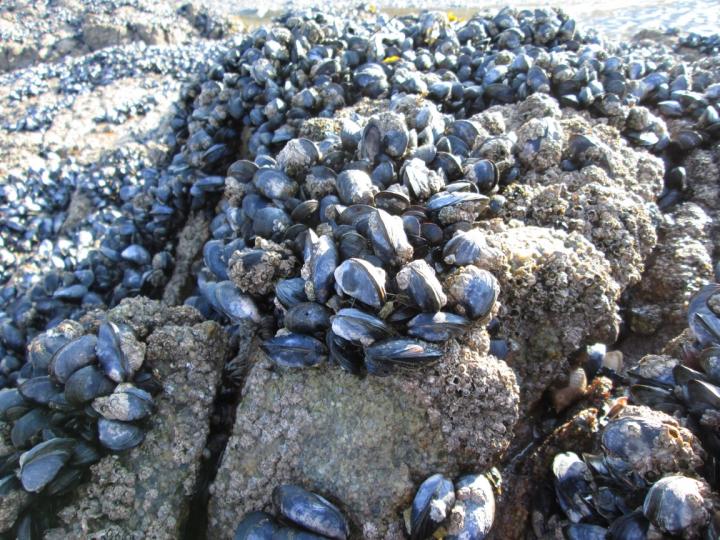
Microplastics potentially threatens future survival of mollusc — new study
IMAGE

Credit: Photograph by Dr Dannielle Green, Anglia Ruskin University


A new study shows that microplastics are affecting the ability of mussels to attach themselves to their surroundings – potentially having a devastating impact on ocean ecosystems as well as a worldwide industry worth between 3-4 billion US dollars per year.

The new research, published in the journal Environmental Pollution, was led by Dr Dannielle Green of Anglia Ruskin University, and was carried out at the Portaferry Marine Laboratory in Northern Ireland.

The researchers found that blue mussels exposed to doses of non-biodegradable microplastics over a period of 52 days produced significantly fewer byssal threads, which are thin fibres that help mussels attach themselves to rocks and ropes.

As well as enabling mussels to survive waves and strong tides, and stay attached to their surroundings, these byssal threads also enable them to form extensive reefs that provide important habitats for other marine animals and plants.

The study also found that the overall tenacity or attachment strength of mussels exposed to microplastics, calculated by measuring the maximal vertical force required for the mussel to become dislodged from its position, fell by 50% compared to a control sample of mussels that were not exposed to microplastics.

And in order to understand potential effects of microplastics on the health of the mussels, the researchers measured the proteins within the mussel’s circulatory fluid or haemolymph, which performs a similar function to blood. This showed that microplastics induced a strong immune response and also affected the mussels’ metabolism.

Dr Green, a Senior Lecturer in Biology at Anglia Ruskin University, said: “Tenacity is vital for mussels to form and maintain reefs without being dislodged by hydrodynamic forces. Our study showed that the presence of non-biodegradable microplastics reduced the number of byssal threads produced by the mussels, which likely accounts for the 50% reduction in their attachment strength.

“Byssal threads help mussels to form aggregations, increasing fertilisation success and making mussels more resistant to predation. A reduction in these byssal threads in the wild could lead to cascading impacts on biodiversity as well as reducing yields from aquaculture, as mussels are more likely to be washed away by waves or strong tides.

“Our research also shows that even biodegradable microplastics can affect the health of mussels. Both biodegradable and non-biodegradable plastic are used in making single-use packaging, which if it becomes litter can break down into microplastics. Better recycling and an overall reduction of these materials can play an important role in helping to safeguard our marine environment.”

###

Media Contact
Jon Green
[email protected]
44-012-456-84717

Related Journal Article

http://dx.doi.org/10.1016/j.envpol.2018.12.017

Tags: BiologyFisheries/AquacultureMarine/Freshwater BiologyPollution/RemediationZoology/Veterinary Science
Share12Tweet8Share2ShareShareShare2

Related Posts

Enhancing Disease Surveillance Through SARS-CoV-2 Diversity Analysis in Wastewater — Biology

Enhancing Disease Surveillance Through SARS-CoV-2 Diversity Analysis in Wastewater

May 14, 2026
Parasite Spread Enhanced by Host Wing-Raising Behavior — Biology

Parasite Spread Enhanced by Host Wing-Raising Behavior

May 14, 2026

Hoverflies’ Sexy Eyes Reveal Secrets of Their Aerodynamic Abilities

May 14, 2026

Why Emus Can’t Fly: Unlocking the Mystery Hidden in Bird Embryos

May 14, 2026
Please login to join discussion

POPULAR NEWS

  • Research Indicates Potential Connection Between Prenatal Medication Exposure and Elevated Autism Risk

    842 shares
    Share 337 Tweet 211
  • New Study Reveals Plants Can Detect the Sound of Rain

    729 shares
    Share 291 Tweet 182
  • Salmonella Haem Blocks Macrophages, Boosts Infection

    62 shares
    Share 25 Tweet 16
  • Breastmilk Balances E. coli and Beneficial Bacteria in Infant Gut Microbiomes

    57 shares
    Share 23 Tweet 14

About

We bring you the latest biotechnology news from best research centers and universities around the world. Check our website.

Follow us

Recent News

UofL Pediatrics Researcher Discovers Novel Signaling Mechanism Linked to Anxiety and Overgrooming

New Study Finds No Evidence Linking First Trimester Pain Reliever Use to Birth Defects

Absolute Quantification of IgG Glycans Unlocks New Avenue for Predicting Biological Age

Subscribe to Blog via Email

Enter your email address to subscribe to this blog and receive notifications of new posts by email.

Join 82 other subscribers
  • Contact Us

Bioengineer.org © Copyright 2023 All Rights Reserved.

Welcome Back!

Login to your account below

Forgotten Password?

Retrieve your password

Please enter your username or email address to reset your password.

Log In
No Result
View All Result
  • Homepages
    • Home Page 1
    • Home Page 2
  • News
  • National
  • Business
  • Health
  • Lifestyle
  • Science

Bioengineer.org © Copyright 2023 All Rights Reserved.