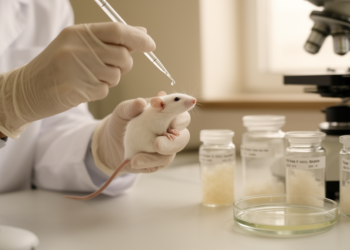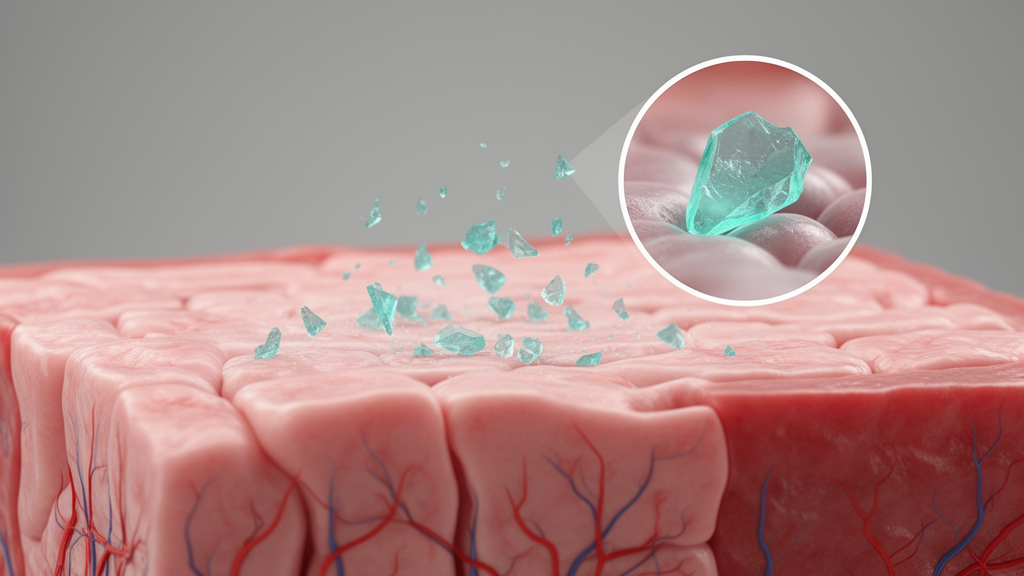
Polyethylene terephthalate microplastics, the shed fragments of one of the world’s most common plastics, may interfere with biological processes tied to recurrent pregnancy loss, according to an exploratory study published in BMC Pharmacology and Toxicology. The research combined computational network toxicology with laboratory experiments to identify molecular targets that could connect PET microplastic exposure with pregnancy loss, though the authors frame the work as hypothesis-generating rather than proof of causation in patients.
The team began by assembling PET-related molecular targets and comparing them with differentially expressed genes from the public dataset GSE165004, which profiles recurrent pregnancy loss. The overlap produced thirty-five intersecting genes. Enrichment and protein-protein interaction analyses were then applied to this set, and machine learning methods narrowed the field to four hub genes: YWHAZ, SRC, CYP1A2 and PAK2. According to the study, these four genes showed promising diagnostic capacity and were correlated with immune cell infiltration patterns.
To probe whether PET itself could physically engage these proteins, the researchers ran molecular docking simulations, which indicated stable binding of PET to all four hub proteins. Docking is a computational prediction of how a small molecule fits into a protein’s structure, so it suggests plausible interaction but does not demonstrate binding in living tissue.
The strongest experimental signal centered on YWHAZ, a scaffolding protein involved in multiple signaling pathways. Single-cell RNA sequencing of decidual tissue showed that YWHAZ was downregulated in multiple decidual cell subsets from patients with recurrent pregnancy loss. A virtual knockout of the gene disturbed immune-related pathways in the computational model. In follow-up cell culture work, treating trophoblast cells and endometrial stromal cells with PET microplastics suppressed both cell viability and YWHAZ protein expression, providing direct in vitro evidence that exposure affects these cell types.
The authors conclude that PET microplastic exposure may contribute to recurrent pregnancy loss through immune and signaling dysfunction, positioning YWHAZ as a candidate PET-responsive mediator and a potential diagnostic biomarker. They emphasize that the study offers exploratory mechanistic insights and candidate biomarkers for microplastic-associated reproductive toxicity rather than established clinical findings. Because the human evidence consists of gene expression patterns from a single dataset and the exposure experiments were performed in cultured cells, the findings will require validation in independent cohorts and in vivo models before any clinical implications can be drawn. Still, the integrated approach illustrates how computational screening followed by targeted cell experiments can prioritize which molecular players merit closer study in environmental reproductive toxicology.
Subject of Research: Computational and in vitro investigation of PET microplastic toxicity mechanisms in recurrent pregnancy loss
Article Title: Toxic mechanisms of PET microplastics in recurrent pregnancy loss: integrating network toxicology with experimental validation
Article References: Su, Y., Zhang, C., Wang, H., & Zhou, W. (2026). Toxic mechanisms of PET microplastics in recurrent pregnancy loss: integrating network toxicology with experimental validation. BMC Pharmacology and Toxicology. https://doi.org/10.1186/s40360-026-01268-z
Image Credits: AI Generated
DOI: 10.1186/s40360-026-01268-z
Keywords: PET microplastics, recurrent pregnancy loss, network toxicology, YWHAZ, molecular docking, single-cell RNA sequencing, trophoblast cells, endometrial stromal cells, immune infiltration, diagnostic biomarker, reproductive toxicology, GSE165004
News Source: Harold Sullivan. (October 28, 2026). PET Microplastics Linked to Pregnancy Loss Mechanisms in Exploratory Study. Scienmag.