A peer-reviewed study of adults evaluated for liver transplantation found that an individualized exercise and nutrition program was associated with improved physical frailty and lower mortality while patients waited for a transplant. Among program participants whose Liver Frailty Index improved by at least 0.4 points, the risk of dying while awaiting transplantation was roughly 50% lower after researchers accounted for age, disease severity and baseline frailty. Researchers from Northwestern University and the University of Pittsburgh analyzed nearly 1,300 adults evaluated at the Pittsburgh transplant center between 2018 and 2022, focusing on 355 who returned for at least two follow-up visits and therefore qualified as prehabilitation participants.
The findings connect measurable improvements in physical function with better survival, although the study design cannot establish that the program itself caused the mortality difference. The intervention was designed for liver transplant candidates at the point of referral to the University of Pittsburgh’s transplantation center. Patients initially underwent tests to assess their strength and nutritional needs.
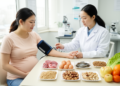
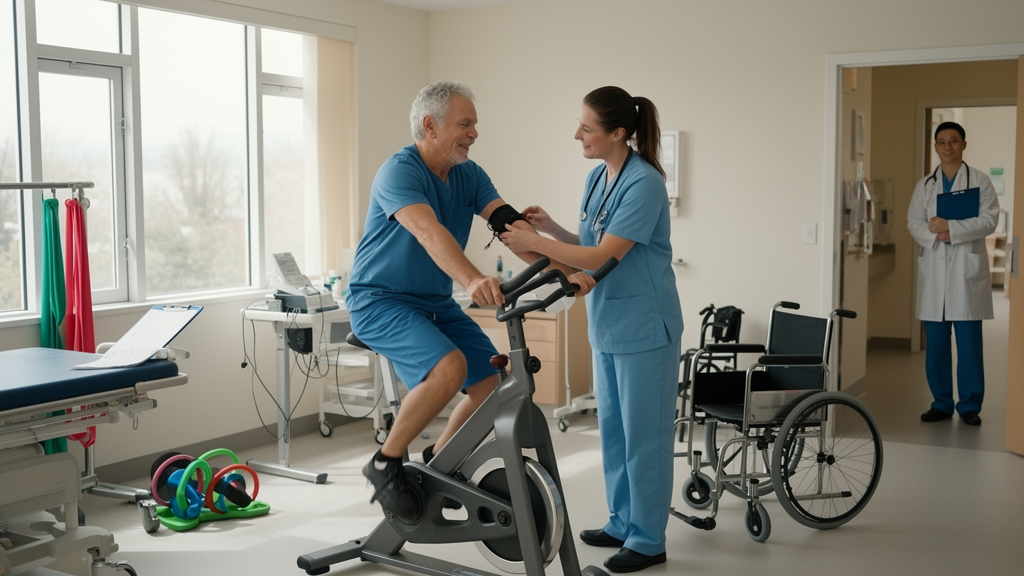
Based on those results, the clinical team developed an individualized plan that combined an at-home exercise program with dietary guidance. Exercise instructions were revised during follow-up appointments held every four to 12 weeks, allowing plans to be adapted as patients’ condition and capacity changed. For each participant, study senior author Andres Duarte-Rojo worked with a physical therapist and a dietitian to establish the fitness and nutrition plans and track progress.
The program therefore used repeated assessment rather than a single exercise prescription for every patient. Researchers tracked changes with the Liver Frailty Index, a composite measure based on three physical tests: grip strength, chair stands, and the ability to hold three balancing positions. Of the 355 patients classified as prehabilitation participants, 64% improved their index.
Patients who attended at least three program visits reduced their score by an average of nearly 0.4 points, according to the university’s report of the findings. The investigators then examined whether larger score changes were related to mortality while candidates remained on the transplant waiting list. Patients whose scores improved by at least 0.4 points had a roughly 50% lower risk of dying while awaiting a transplant, a result that remained after adjustment for factors known to influence mortality.
The study’s most concrete result is therefore a threshold-linked association within the participating group: a decrease of at least 0.4 points in the Liver Frailty Index corresponded to substantially lower mortality risk before transplantation. The score change also gave Duarte-Rojo and his colleagues a potential metric for programs elsewhere. He said transplant centers could use 0.4 as a clinical goal and as a way to identify patients more likely to survive while waiting.
The release did not provide the precise statistical model, confidence intervals, event counts, sensitivity analyses or methods for handling missing follow-up data, so the threshold should not be interpreted as a universally established predictor of an individual patient’s outcome. Safety considerations shaped how exercise was prescribed. Duarte-Rojo, a Northwestern Medicine transplant hepatologist and professor in the divisions of Gastroenterology and Hepatology and Organ Transplantation at Northwestern University Feinberg School of Medicine, said patients were not sent to the gym to lift 100 pounds.
Instead, the program starts at a manageable level and progresses slowly, with precautions adjusted for each patient. “The frailest ones often improved the most,” he said. This approach was intended for people with advanced liver disease, among whom clinicians may be particularly concerned about weakness, injury and the physical demands of transplantation and recovery.
Although Duarte-Rojo has spent 20 years studying fitness programs for patients with advanced liver disease, the reported analysis itself covered candidates evaluated during the 2018–2022 study period. Steven McGowan, a 62-year-old retiree from the Chicago area awaiting both a kidney and a liver transplant, provided a patient perspective on the Northwestern program. He said he was classified as “very frail” during his initial visit and, after months of following the fitness and dietary plan, was considered robust by the treating team.
McGowan reported that he began gaining strength relatively quickly and was walking three to four miles a day. His account illustrates the incremental progress possible for an individual participant, but it does not measure the program’s effectiveness. The mortality estimate came from the group analysis, whereas McGowan’s classification and daily activity were individual experiences described in the research report.
The cohort has an important selection limitation. Although nearly 1,300 liver transplant candidates were evaluated during the four-year study period, only 355 met the program’s criterion of returning for at least two follow-up visits. Patients able to return repeatedly may have differed from those who did not, potentially in motivation, baseline health, functional capacity or adherence.
That possibility limits the conclusions that can be drawn from the participant group. The supplied report also does not state whether participants were randomly assigned or were compared with a separate control group, meaning that residual confounding cannot be excluded. Nor does it establish the independent effects of exercise and nutritional support, because the program delivered both components together.
The study used a structured measure covering strength, chair-standing performance and balance, and its mortality analysis accounted for age, disease severity and baseline frailty. At the same time, the findings apply most directly to the 355 participants in the Pittsburgh pathway. They do not automatically establish the same effects among people who did not return for follow-up, candidates for other organs, or patients treated under different staffing and exercise protocols.
Duarte-Rojo said only about 10 transplant centers worldwide, including Northwestern and Pittsburgh, offer this type of personalized prehabilitation program, indicating that it remains a specialized service rather than routine care across the field. He also proposed that similar programs might be adapted for people facing cancer treatment and certain surgeries, but that possibility was not tested in the reported liver transplant cohort. The study was published on October 21, 2026, in Clinical Gastroenterology and Hepatology under the title “Personalized Prehabilitation: A Pathway to Improved Frailty Metrics and Survival in Liver Transplant Candidates.” Its clearest supported conclusion is that many participating candidates improved measurable physical function and that substantial frailty improvement was associated with markedly lower pre-transplant mortality risk; further controlled and broader study would be needed to determine whether the program caused that survival advantage and how consistently the result applies outside the studied population.
Subject of Research: Personalized exercise and nutrition prehabilitation for liver transplant candidates
Article Title: Fitness program for transplant candidates linked to lower mortality
Article References: Fitness program for transplant candidates linked to lower mortality. Original publication (Bibliographic details unavailable.)
Image Credits: AI Generated
DOI: Not provided
Keywords: liver transplantation, prehabilitation, frailty, mortality risk, exercise, nutrition, physical function, Liver Frailty Index, clinical study, Fitness, program, transplant
News Source: Daisy Hatcher. (October 26, 2026). Personalized prehabilitation linked to lower pre-transplant mortality. Scienmag.