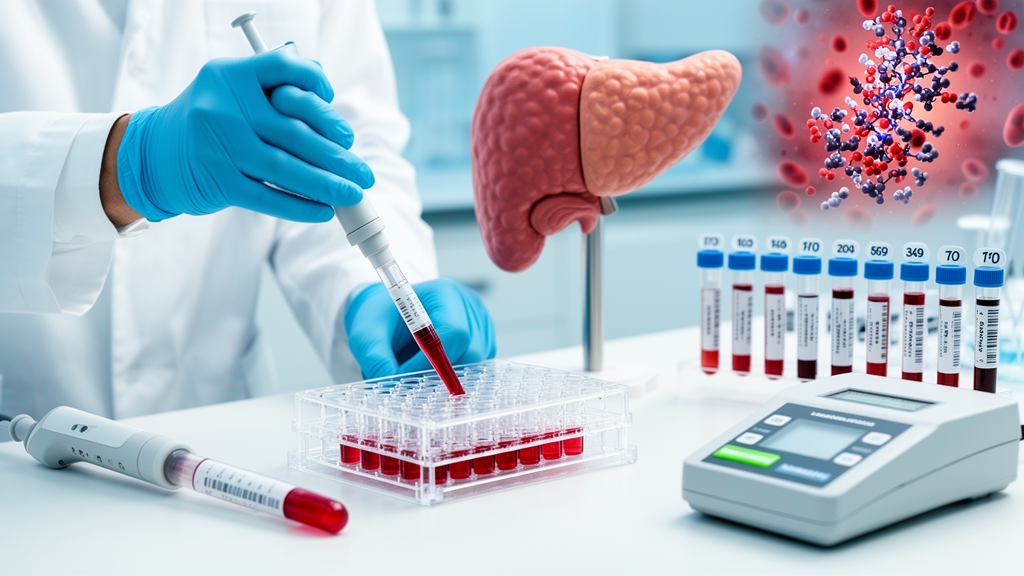
A large prospective population study has identified 12 blood proteins associated with prostate cancer diagnosed more than 15 years after samples were collected, with seven additional proteins linked specifically to aggressive disease. Researchers from Oxford Population Health measured more than 6,000 circulating proteins in men followed for about 16 years and compared their profiles with those of men who did not develop prostate cancer during follow-up. The peer-reviewed study, published in European Urology, indicates that biological differences detectable long before diagnosis may help explain why some prostate cancers later become life-threatening, although the findings are not yet ready for use as clinical tests.
The investigation used blood samples from 982 men who subsequently developed prostate cancer and a randomly selected group of 1,573 men from the European Prospective Investigation into Cancer and Nutrition, or EPIC. Participants were followed for around 16 years, allowing the researchers to examine proteins associated with cancers that emerged many years after collection of each sample. The study was described as the largest population-based investigation to date of blood proteins and future prostate cancer risk, with a particular emphasis on aggressive disease. Its design was observational: it identified statistical associations rather than testing whether any protein caused cancer or directly predicting an individual’s outcome.
Among the 12 proteins associated with prostate cancer occurring more than 15 years after sampling was GZMK, a protein produced by immune cells involved in recognising and destroying abnormal cells. The association suggested that changes in immune activity may precede the development of clinically recognized prostate cancer by a prolonged period. The researchers said this might indicate a role for immune processes in keeping prostate cancer under control, but the blood measurement cannot show whether such activity prevented disease, delayed its onset or simply marked a different biological state. It also does not demonstrate that cancer was already present when the blood samples were collected.
The analysis separately identified seven proteins linked to aggressive prostate cancer. One of them, ANKRD1, was consistently associated with several serious forms of the disease, including cancers that had spread or were ultimately fatal. Other signals pointed toward two biological processes: the interaction of cancer cells with surrounding tissue and the formation of new blood vessels. These findings were reported as associations with future aggressive disease rather than measurements of established tumors, and the release did not provide estimates showing how precisely the proteins could distinguish individuals who would develop life-threatening cancer from those who would not.
The researchers also found links between blood levels of proteins produced by genes already known to be important in prostate cancer, including ERBB3, KRAS and NRAS. These proteins were particularly associated with aggressive prostate cancer diagnosed around a decade after blood collection. Their presence in blood years before diagnosis provides a possible window onto the earliest biological changes associated with later disease. However, the study does not establish the sequence in which cancer-related changes occurred, nor does it show that circulating protein levels represent activity within a developing tumor.
To assess whether the results were robust, the team compared its findings with data from other large population studies and with genetic evidence. Several of the observations were supported by those additional analyses, while not every association could be confirmed. This mixed outcome is important: replication across some evidence sources strengthens confidence that the signals are not confined to one dataset, but the absence of confirmation for every marker also limits claims about their generalizability and potential predictive value. The study does not replace the established clinical importance of age and inherited genetic susceptibility, nor does it suggest that a single blood-protein measurement could do so.
Most of the observed associations were modest, and the proteins are not yet suitable for use in clinical testing. The findings therefore should not be interpreted as a validated blood test for prostate cancer risk, nor as a basis for screening or treatment decisions. Further research would need to establish whether combining the markers with existing genetic and clinical information improves prediction of clinically significant disease, rather than merely identifying broad differences between groups. The team also said more studies are required to determine whether the biological pathways revealed by the protein associations could eventually support strategies to prevent aggressive prostate cancer.
Future work through the Cancer Research UK-funded Prostate Cancer Aetiology and Prevention Programme, known as PCAP, will examine whether the findings can contribute to improved ways of predicting or preventing prostate cancer. Oxford Population Health investigators said the ability to measure thousands of proteins simultaneously allows researchers to look back many years before diagnosis and investigate changes associated with future risk. The approach links long-term population cohorts with detailed molecular measurements, but the next stage must establish which signals remain informative in independent populations and whether they offer meaningful benefit beyond existing risk factors.
The broader biological picture is that prostate cancer is not a single disease. Some tumors grow slowly and may never cause harm, whereas others are aggressive and potentially fatal. By comparing thousands of circulating proteins in men whose cancers were diagnosed up to more than 15 years later with those of men who did not develop the disease, the study identified clues to those differences. The results point particularly to immune activity, interactions between cancer and surrounding tissue, blood-vessel formation and pathways involving known prostate cancer driver genes.
Taken together, the research offers a high-resolution view of biological changes that can be detected before prostate cancer becomes clinically apparent. The evidence supports the timing of several protein associations and identifies processes that merit further investigation, especially in relation to aggressive disease. It does not yet show that the markers can forecast an individual diagnosis or that targeting the associated pathways would prevent cancer. The study’s main contribution is therefore a set of testable leads for subsequent research, with validation and clinical assessment still needed before the findings could become part of prostate cancer risk assessment.
Subject of Research: Prospective analysis of circulating blood proteins associated with future prostate cancer risk
Article Title: Blood proteins could reveal clues to prostate cancer risk more than a decade before diagnosis
Article References: Blood proteins could reveal clues to prostate cancer risk more than a decade before diagnosis. Original publication (Bibliographic details unavailable.)
Image Credits: AI Generated
DOI: Not provided
Keywords: prostate cancer, blood proteins, biomarkers, aggressive cancer, immune system, EPIC cohort, prospective study, proteomics, cancer risk, Blood, proteins, reveal
News Source: Nathaniel Bowman. (October 26, 2026). Blood proteins linked to prostate cancer risk over decade before diagnosis. Scienmag.