A fluorescent imaging agent called JAS239 identified close tumor margins and a hidden lung lesion missed after removal of the main tumor in a veterinary trial involving 20 dogs with pre-existing lung cancer, according to a peer-reviewed study in Science Translational Medicine. The findings also showed that the agent could image metastatic lung lesions in mice and accumulate in excised human lung tumors, providing preliminary evidence for real-time guidance during cancer surgery.
JAS239 is a near-infrared fluorescent imaging agent designed to make residual cancer tissue easier for surgeons to recognize during an operation. Such guidance could address a central challenge in lung cancer surgery: surgeons may leave behind lesions or pockets of cancer cells at resection margins that are difficult to detect by visual inspection alone. The study tested the agent in mice, canine patients and human lung tumor samples, but the results do not yet establish that it improves survival or other patient outcomes in people.
The agent works by selectively binding to choline kinase alpha, or ChoKα, a biomarker reported to be expressed in 60% of human lung tumors but not in healthy lung tissue. After binding, the targeted cells can be detected with near-infrared fluorescence. According to the research team, the approach combines metabolic targeting with optical and pharmacokinetic properties intended to support real-time surgical use. The supplied report does not provide detailed numerical measures of image brightness, drug performance or clinical benefit beyond the observations described.
Researchers first confirmed that JAS239 could image metastatic lung lesions in mice. They then conducted the canine trial in 20 dogs that already had lung cancer tumors. JAS239 highlighted tumor boundaries close to the surgical margins, and in one case detected a hidden lesion that had escaped removal of the main tumor. This observation supports the agent’s potential to reveal clinically relevant tissue during surgery, although the trial was conducted in animals and the release does not describe a randomized comparison or assess long-term postoperative outcomes.
The researchers also examined excised human lung tumors. JAS239 accumulated in the tumor tissue and highlighted regions where ChoKα was expressed, indicating that the agent reached the intended biomarker-positive tissue in the clinical samples. The authors described JAS239 as a next-generation near-infrared fluorescent imaging agent for intraoperative molecular guidance. Further human studies would be needed to determine whether the fluorescence can reliably identify residual cancer in routine lung surgery, how accurately surgeons can interpret the images and whether using the agent changes surgical decisions or improves outcomes.
Subject of Research: Near-infrared fluorescence imaging of residual lung cancer tissue with the ChoKα-targeted agent JAS239
Article Title: Fluorescent imaging agent could enable more pinpointed removal of lung cancer tumors, suggests trial in large animals
Article References: Fluorescent imaging agent could enable more pinpointed removal of lung cancer tumors, suggests trial in large animals. Original publication (Bibliographic details unavailable.)
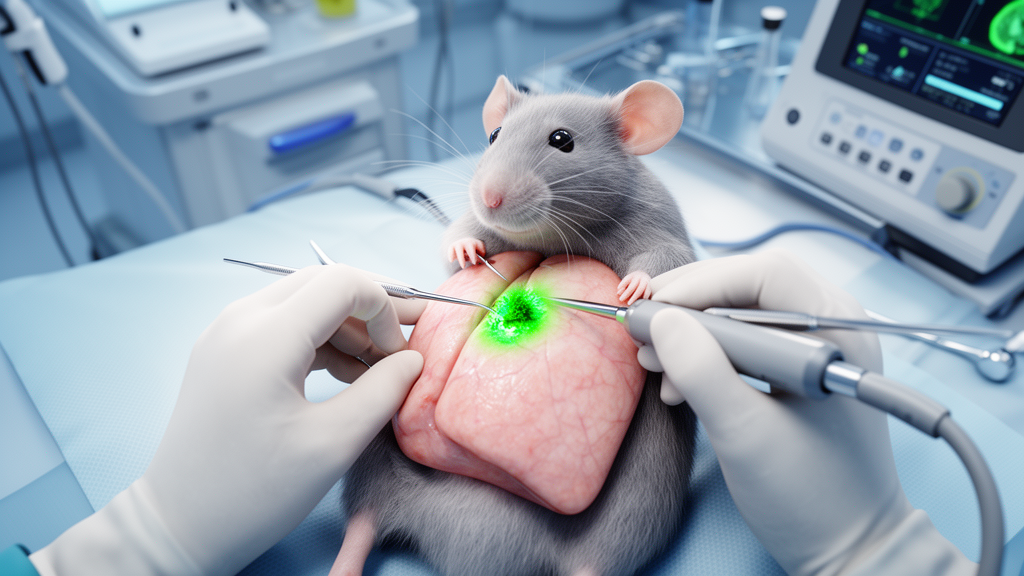
Image Credits: AI Generated
DOI: Not provided
Keywords: lung cancer, fluorescent imaging, JAS239, intraoperative imaging, ChoKα, canine cancer, tumor margins, near-infrared fluorescence, cancer surgery, Science Translational Medicine, Fluorescent, imaging
News Source: Nathaniel Bowman. (October 26, 2026). Fluorescent agent helps surgeons identify residual lung cancer in animal trial. Scienmag.