Study will evaluate therapy for current patients, prophylaxis in health care workers
Credit: Penn Medicine
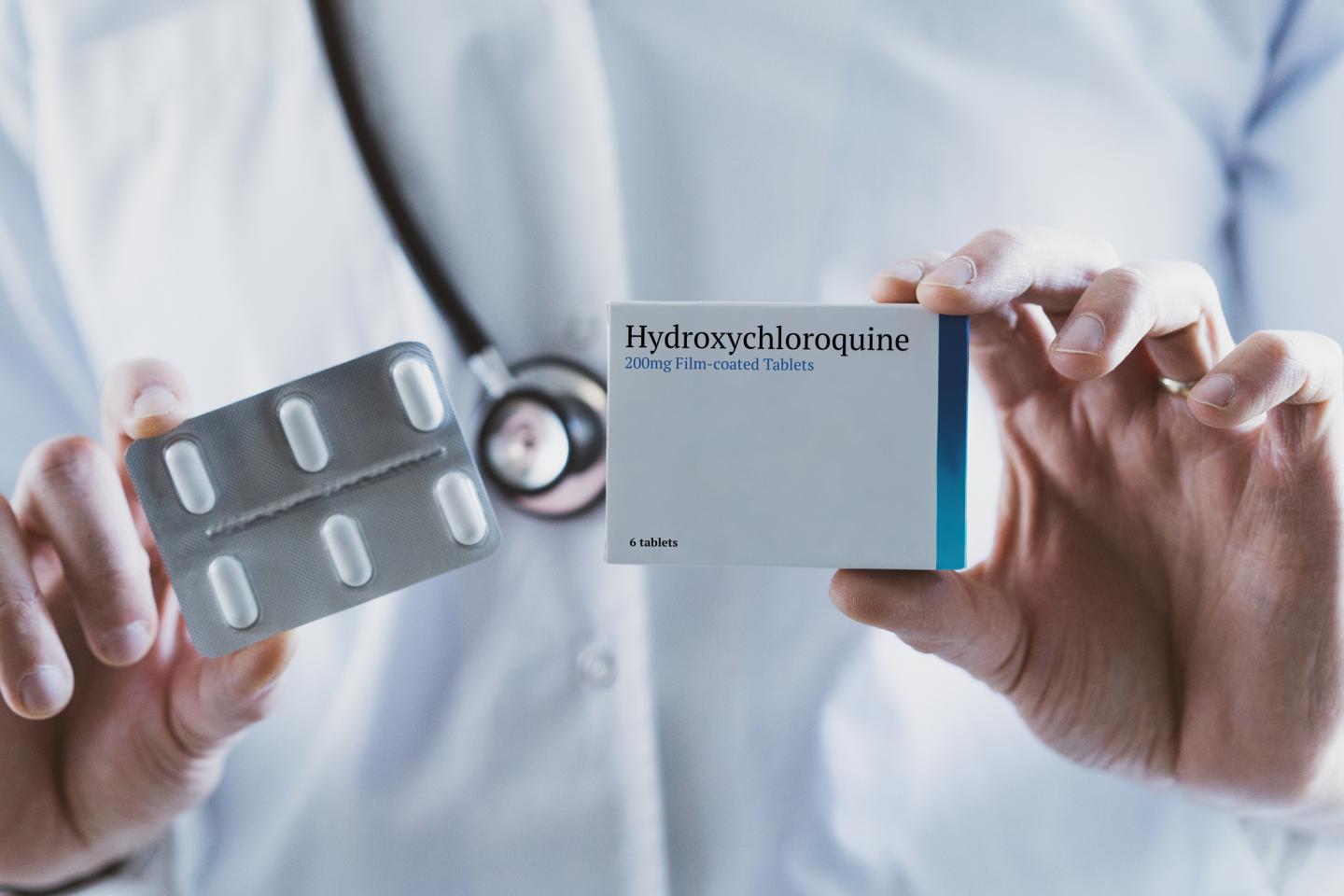
PHILADELPHIA – A new trial led by the Perelman School of Medicine at the University of Pennsylvania will evaluate whether the drug hydroxychloroquine (HCQ) can benefit people infected with COVID-19, as well as whether taking the drug preventatively may help people avoid infection altogether. The study, called Prevention and Treatment of COVID-19 with HCQ (PATCH), is currently enrolling patients in three separate sub-studies (NCT04329923).
PATCH sub-study 1 will evaluate HCQ compared to placebo in infected patients who are quarantined at home. PATCH sub-study 2 will evaluate high dose compared to low dose HCQ in hospitalized patients. PATCH sub-study 3 will evealuate HCQ compared to placebo prophylactically in health care workers working with COVID-19 patients to evaluate whether it can prevent infection. Sub-studies 1 and 3 are double-blind placebo controlled studies, meaning neither the patient nor the doctor will know whether they are taking HCQ or placebo until the end of the study. Importantly, if the patient or health care worker starts getting worse, they can be “unblinded”, and the trial allows crossover to HCQ if the patient was assigned placebo.
“We know HCQ can be an effective anti-viral in a lab setting, but despite recent public conversation, there is no definitive evidence it can work in humans infected with COVID-19. It is our hope that this trial will provide critical evidence as to whether this drug may be effective in combating the current pandemic,” said the study’s principal investigator Ravi K. Amaravadi, MD, an associate professor of Hematology-Oncology who has spent his career studying HCQ and related compounds.
For this trial, Amaravadi is working with a multidisciplinary team at Penn, including Benjamin S. Abella, MD, MPhil, a professor of Emergency Medicine, and Ian D. Frank, MD, associate chief of Infectious Diseases, as well as colleagues in Pathology and Laboratory Medicine, Cardiology, Statistics, and the Abramson Cancer Center.
The first sub-study of the trial will test HCQ in patients who are infected and are well enough to go home, but who need to be in quarantine. Quarantine can be prolonged for some people who have a worse case of the illness, and can impose significant economic, emotional, and psychological hardship on the patient and his or her family. Family members living with a quarantined COVID-19 patient are at high risk of getting the disease themselves. In order to be released from quarantine, they must meet certain criteria according to the Centers for Disease Control (CDC): patients must go 72 hours without a fever, see their symptoms improve, and go seven days since their symptoms first appeared. The primary goal of PATCH sub-study 1 is to find out whether the drug reduces the number of days the patient stays quarantined. Researchers were forced to overcome unique logistical hurdles, including arranging for virtual consents from patients and home delivery of HCQ doses.
The second sub-study of the trial will test HCQ in patients who are hospitalized with COVID-19 to see if it can reduce the time to discharge. Patients in this group will also be randomized into a high dose or low dose group. No one will receive a placebo. The correct dose of HCQ for treating COVID-19 is not currently known and this study will provide valuable information to answer that question.
The third sub-study will test whether HCQ can work as a preventative medicine to stop infection in health care workers at risk of exposure to COVID-19. Researchers plan to enroll 200 workers in the sub-study.
“The need for the third sub-study here is critical, as we try to keep the people working on the front lines of this pandemic healthy so they can continue to keep the nation’s health care infrastructure up and running,” Abella said.
Given the rapid spread of the virus, researchers had to work quickly not only to organize the trial and get it approved from a regulatory standpoint, but also to solve practical problems. In the span of less than a month, they were able to secure funding, arrange for a donation of HCQ, and partner with a group to manufacture an appropriate placebo. The researchers say they are grateful to their partners, and also to their leadership for the support that helped it all come together.
“This is an unprecedented time, and it will take unprecedented cooperation, resources, and leadership to get through it. This trial shows Penn’s ability to step up to meet that responsibility and investigate the scientific questions the world desperately needs to answer,” said J. Larry Jameson, MD, PhD, dean of the Perelman School of Medicine.
###
Patients who have questions about enrolling can visit pennmedicine.org/patch.
Additional Penn investigators on the study include Anish Agarwal, MD, Julie Uspal, MD, Ari Friedman, MD, John Greenwood, MD, Felipe Teran, MD, Michael Milone, MD, PhD, William Short, MD, Keith Hamilton, MD, Kathleen Degnan, MD, Pablo Tebas, MD, E. Paul Wiletyo, Phyllis Gimotty, PhD, and Joseph Carver, MD.
Penn Medicine is one of the world’s leading academic medical centers, dedicated to the related missions of medical education, biomedical research, and excellence in patient care. Penn Medicine consists of the Raymond and Ruth Perelman School of Medicine at the University of Pennsylvania (founded in 1765 as the nation’s first medical school) and the University of Pennsylvania Health System, which together form a $7.8 billion enterprise.
The Perelman School of Medicine has been ranked among the top medical schools in the United States for more than 20 years, according to U.S. News & World Report’s survey of research-oriented medical schools. The School is consistently among the nation’s top recipients of funding from the National Institutes of Health, with $425 million awarded in the 2018 fiscal year.
The University of Pennsylvania Health System’s patient care facilities include: the Hospital of the University of Pennsylvania and Penn Presbyterian Medical Center–which are recognized as one of the nation’s top “Honor Roll” hospitals by U.S. News & World Report–Chester County Hospital; Lancaster General Health; Penn Medicine Princeton Health; and Pennsylvania Hospital, the nation’s first hospital, founded in 1751. Additional facilities and enterprises include Good Shepherd Penn Partners, Penn Home Care and Hospice Services, Lancaster Behavioral Health Hospital, and Princeton House Behavioral Health, among others.
Penn Medicine is powered by a talented and dedicated workforce of more than 40,000 people. The organization also has alliances with top community health systems across both Southeastern Pennsylvania and Southern New Jersey, creating more options for patients no matter where they live.
Penn Medicine is committed to improving lives and health through a variety of community-based programs and activities. In fiscal year 2018, Penn Medicine provided more than $525 million to benefit our community.
Media Contact
John Infanti
[email protected]
Original Source
https:/