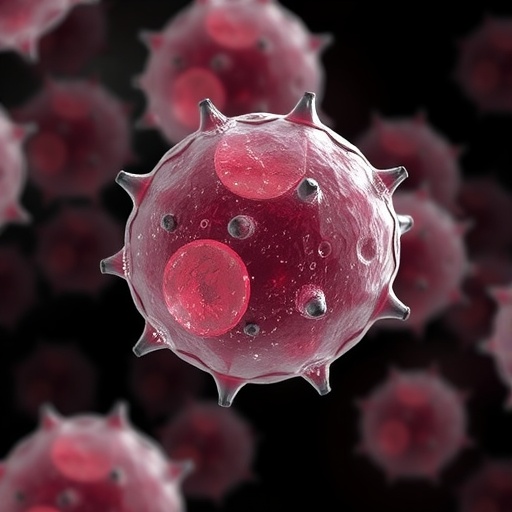
Researchers at The Ohio State University have developed a configurable nanocarrier built from the lipids of human red blood cells, creating a delivery platform that could transport genetic material, proteins and even whole viral vectors used in gene therapy. In a study published in Advanced Healthcare Materials, the team reported that these engineered extracellular vesicles remained in circulation in mice, reached multiple organs and showed a notable tendency to accumulate in the lungs. The particles were also modified to avoid rapid removal by immune cells and to recognize cancer cells, two properties that have long presented major challenges for drug and gene-delivery technologies.
The carriers are engineered versions of extracellular vesicles, nanoscale membrane-bound particles naturally released by cells to transport molecular signals. Because they resemble biological structures, naturally occurring extracellular vesicles have attracted interest as potential vehicles for therapeutic cargo. However, their production can be difficult to scale, and their ability to carry different types and quantities of therapeutic material is often limited. The Ohio State researchers sought to preserve the biological compatibility of red-blood-cell-derived vesicles while gaining greater control over their size, composition and payload.
The team began with expired red blood cells obtained from the laboratory of Andre Palmer, a professor of chemical and biomolecular engineering at Ohio State. These cells can no longer be transfused into patients, but their membranes remain a source of valuable lipids. Palmer’s laboratory already uses hemoglobin recovered from expired blood to develop red blood cell substitutes. In the new platform, the researchers repurposed the remaining cellular material to produce vesicle membranes. Using discarded blood as a starting material could make the approach more sustainable while providing lipids that are naturally adapted to interacting with the bloodstream.
The particles were assembled with microfluidic technology, a method that manipulates very small volumes of fluid through precisely designed channels. As the red-blood-cell lipids pass through the microfluidic system, they organize into nanoscale vesicles around selected therapeutic materials. This approach allows cargo to be incorporated during vesicle formation rather than added in a separate loading step. The distinction is important because post-production loading can damage fragile molecules, reduce the amount of cargo that enters the carrier or create batch-to-batch variation. Microfluidic assembly also gives researchers more control over the resulting vesicles and expands the range of materials they can encapsulate.
In laboratory experiments, the engineered vesicles were capable of carrying genetic material and proteins, as well as adeno-associated viruses, or AAVs. AAVs are widely used as delivery vehicles in gene therapy because they can transport therapeutic genetic instructions into cells. Their usefulness, however, can be limited by the immune system. Some patients have pre-existing antibodies against AAVs, while others may develop immune responses after treatment. The Ohio State team tested whether placing AAV particles inside the red-blood-cell-derived vesicles would preserve their gene-delivery activity while providing an additional protective layer.
The researchers reported that encapsulated AAV remained functional and could still deliver genetic material into cells. They also found evidence that the vesicles shielded the viral vectors from neutralizing antibodies. This result suggests that the particles might eventually help address one of the central problems in viral gene therapy: the immune system can recognize the viral shell before the vector reaches its intended target. The findings do not establish safety or therapeutic effectiveness in humans, but they demonstrate that the vesicles can act as an additional physical barrier without preventing the virus from performing its gene-delivery role.
The team also engineered the vesicle surface to influence how the immune system and diseased cells responded to the particles. Attaching a peptide derived from CD47 to the outer membrane was intended to produce a “self” signal. CD47 is a molecule associated with protection from engulfment by macrophages, immune cells that identify and remove foreign or damaged material. Experiments indicated that CD47-decorated vesicles were less likely to be mistaken for pathogens and consumed by macrophages. Avoiding this rapid clearance could extend the time that therapeutic carriers remain in circulation and increase the opportunity for them to reach tissues beyond the bloodstream.
A second modification gave the vesicles a more selective interaction with tumors. The researchers added molecules that recognize PD-L1, an immune-regulatory protein found on the surface of many cancer cells, including breast tumors that express the target. The anti-PD-L1 nanobodies used in the study were developed in the laboratory of Ohio State collaborator Blaise Kimmel. In mouse experiments, vesicles carrying the PD-L1-recognition molecules showed preferential uptake in PD-L1-positive breast cancer tumors compared with non-targeted particles. The strategy resembles the targeting logic of cancer immunotherapies, but instead of directing a patient’s T cells to attack a tumor, it could direct therapeutic cargo toward malignant cells.
Animal studies provided an initial picture of how the carriers behave after administration. The engineered vesicles circulated through the mice and distributed to several organs in patterns broadly similar to those reported for naturally occurring extracellular vesicles. The lungs showed particularly notable accumulation, a feature that may guide the next phase of development. The researchers plan to investigate the platform for gene therapy and other treatments that could benefit from delivery to pulmonary tissue. Further work will be required to determine how long the vesicles persist, how their materials are metabolized, whether repeated dosing is possible and whether their targeting performance translates from mice to humans.
The study presents the red-blood-cell-derived vesicles as a flexible biological delivery system rather than as a finished therapy. Their membrane composition closely resembles that of natural red-blood-cell extracellular vesicles, which may help explain their compatibility with the body. At the same time, microfluidic production allows investigators to define the cargo and add functional molecules to the surface with greater precision. By combining a source of otherwise discarded blood material with programmable nanomanufacturing, the researchers have created a platform that could carry therapeutic molecules of very different sizes. Before clinical use can be considered, the technology will need extensive testing for manufacturing consistency, biodistribution, immune effects, toxicity and therapeutic benefit. For now, the results suggest that engineered red-blood-cell vesicles could provide a new way to protect viral gene therapies, direct treatments toward tumors and exploit the natural circulation patterns of biological nanoparticles.
Subject of Research: Not applicable
Article Title: Microfluidic Nano-Assembly of Red-Blood-Cell (RBC) Lipids and Components for Engineering Extracellular Vesicles
Web References:
https://advanced.onlinelibrary.wiley.com/doi/10.1002/adhm.202504351
https://news.osu.edu/shedding-new-light-on-the-tiny-bubbles-sending-signals-between-cells/
https://news.osu.edu/leaps-in-artificial-blood-research-aim-to-improve-product-safety-efficacy/
References:
Advanced Healthcare Materials. DOI: 10.1002/adhm.202504351
Keywords: extracellular vesicles, red blood cells, nanocarriers, gene therapy, AAV, viral vectors, cancer targeting, CD47, PD-L1, microfluidics, drug delivery, Ohio State University
Tags: biologically inspired nanomedicinecancer cell recognition in nanocarriersExtracellular vesicle engineeringgene therapy nanocarriersimmune system evasion in drug deliverylung-targeted nanocarriersnanocarrier customization and controlred blood cell lipid-based nanoparticlesRed blood cell-derived nanocarriersscalable extracellular vesicle productiontargeted drug delivery systemsviral vector delivery platforms