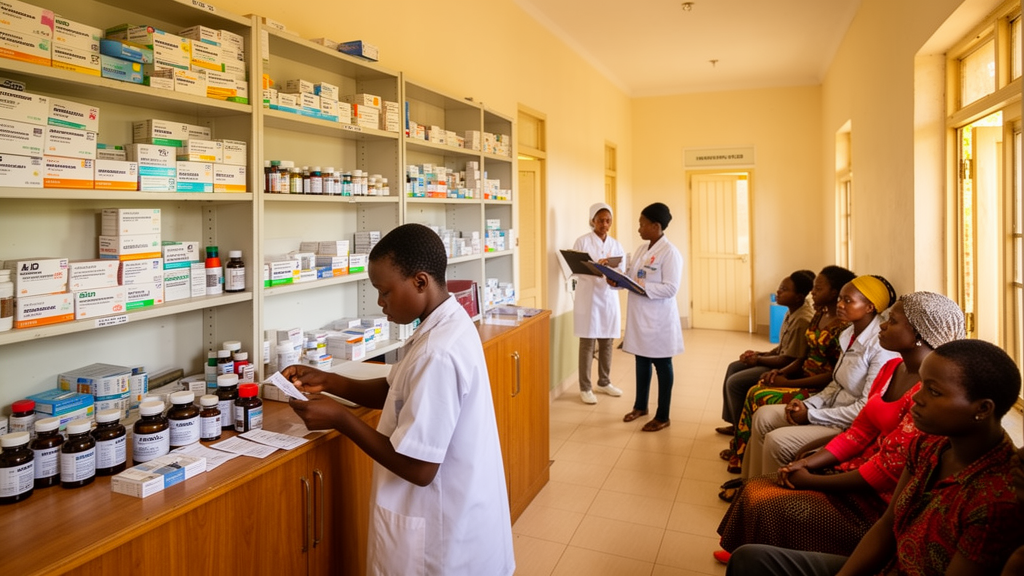
Outpatient antibiotic consumption at Bono Regional Hospital in Sunyani, Ghana, increased from 1.87 defined daily doses per 1,000 inhabitants per day in 2014 to 11.23 in 2021, according to an eight-year retrospective study paired with a cross-sectional survey of prescribers. Researchers analysed 1,014,368 antibiotic prescription records and found that outpatient antibiotic prescribing rose markedly over the period, with the measure temporarily declining in 2020 before increasing again by 2021. The study focused on one regional hospital, so its results describe prescribing at that facility rather than antibiotic use throughout Ghana.
The hospital-based observational study extracted outpatient antibiotic prescriptions recorded in the Hospital Administration Management Software at Bono Regional Hospital from January 2014 through December 2021. Antibiotic utilisation was quantified using defined daily doses per 1,000 inhabitants per day, a standardised measure of consumption. The investigators summarised prescribing patterns with descriptive statistics and examined associations with chi-square tests and binary logistic regression at a significance threshold of p less than 0.05.
In parallel, a cross-sectional survey assessed prescriber characteristics associated with antibiotic prescribing practices. The antibiotic mix was concentrated among a small number of medicines. Amoxicillin/clavulanic acid was the most frequently prescribed, appearing in 146,924 records, or 14.39% of all antibiotic prescriptions.
Erythromycin accounted for 116,816 records, or 11.44%; ciprofloxacin for 116,003 records, or 11.36%; and amoxicillin for 110,527 records, or 10.83%. Five antibiotics together represented more than half of all prescriptions analysed. The researchers described the hospital’s prescribing pattern as showing substantial reliance on broad-spectrum agents, although the reported data did not individually classify each of the four leading medicines as broad-spectrum.
Thirty-five prescribers responded to the survey, giving a response rate of 64.8%. Prescriber age and number of years in practice were associated with antibiotic prescribing in bivariate analyses, but neither factor was significantly associated with prescribing after the researchers fitted multivariable models. Delayed laboratory results were the most frequently reported obstacle to rational antibiotic prescribing.
These results identify reported associations rather than causes: the study did not demonstrate that a prescriber’s age or experience led to higher prescribing, nor did it test whether faster diagnostic services would reduce antibiotic consumption. The single-hospital setting, retrospective prescribing data and partial survey response further limit how broadly the findings can be applied. The authors concluded that outpatient antibiotic prescribing increased over the study period and that there was a need for better management of healthcare resources and enhanced diagnostic facilities to support appropriate antibiotic use and help control antimicrobial resistance.
The analysis itself documents utilisation and prescriber-reported factors; it does not establish the effectiveness of those proposed resource or diagnostic changes. The research was published as an early-access article in BMC Infectious Diseases on 4 September 2026 and was described as an accepted version subject to further editorial changes before the final version of record.
Subject of Research: Trends in outpatient antibiotic prescribing and associated prescriber factors at a regional hospital in Ghana
Article Title: Antibiotic utilisation trends and prescribing-associated factors at a regional hospital in Ghana: an eight-year retrospective study with a prescriber survey
Article References: Gyan, P., Boateng, Y. M., Lasong, J., Usman, M. B., Ohene-Takyi, G., Fynn, Y. G., & Abraham, W. K. (2026). Antibiotic utilisation trends and prescribing-associated factors at a regional hospital in Ghana: an eight-year retrospective study with a prescriber survey. BMC Infectious Diseases. https://doi.org/10.1186/s12879-026-14373-5
Image Credits: AI Generated
DOI: 10.1186/s12879-026-14373-5
Keywords: antibiotic use, antimicrobial resistance, Ghana, outpatient prescriptions, defined daily doses, prescriber survey, healthcare facilities, antimicrobial stewardship, Antibiotic, utilisation, trends, prescribing-associated
News Source: Ophelia Keating. (October 26, 2026). Outpatient antibiotic use rose sixfold at one Ghanaian regional hospital. Scienmag.