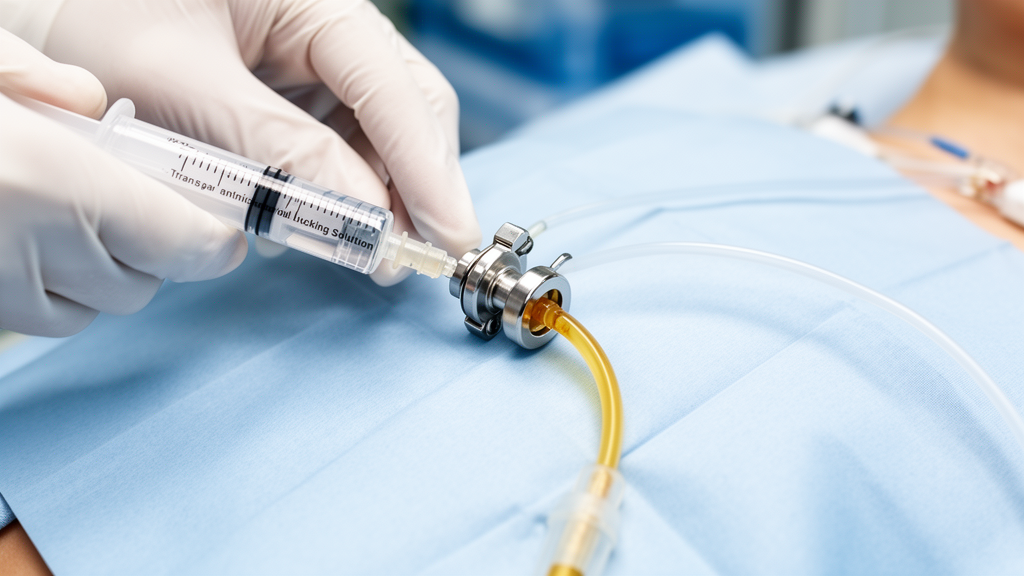
A systematic review and meta-analysis found high rates of early infection control and short-term catheter salvage among adults with cancer who received antimicrobial lock therapy for catheter-related infections. The analysis included 37 studies comprising 1,967 patients, infection episodes or observations. Pooled estimates showed early clinical response in 93.8% of cases (95% confidence interval, 90.3%–97.4%) and early microbiological response in 93.3% (79.6%–98.0%).
Infection resolution was sustained at approximately one month in 82.2% of cases (73.5%–88.5%), while short-term catheter salvage was achieved in 84.2% (78.9%–88.3%). These are absolute outcomes among treated patients and do not establish that antimicrobial locks are superior to other management strategies. The review, published as an early-access article in BMC Infectious Diseases on September 1, 2026, examined therapeutic antimicrobial lock therapy in adult oncology and hematology populations.
The authors followed PRISMA 2020 and searched PubMed/MEDLINE, Embase, Scopus, Web of Science and the Cochrane Library from their inception through September 2025. Studies were included when they evaluated antimicrobial lock therapy for catheter-related infections in adults with cancer. Where outcome definitions and follow-up windows were sufficiently aligned, the team pooled absolute results with random-intercept binomial-logit generalized linear mixed models.
Comparative evidence was evaluated separately by study design and comparator, using design-specific tools for risk-of-bias assessment and GRADE for comparative management-effectiveness evidence. Longer-term estimates were less favorable than the early results. Catheter salvage at approximately three months was 61.2% (56.5%–65.7%), and same-organism relapse was 7.8% (4.4%–13.5%) within approximately one month and 17.4% (13.2%–22.7%) during approximately one to three months.
The relapse estimates came from different studies and risk sets, so they should not be interpreted as a single directly observed progression. Infection-attributable mortality was estimated at 1.45% (0.64%–3.24%). Comparative evidence was limited and rated as having very low certainty.
The review did not establish a consistent advantage for antimicrobial-lock-based conservative management over catheter removal, removal and reinsertion, or systemic antimicrobial therapy without an active lock. Safety assessment and adverse-event reporting were also heterogeneous. In the randomized ETHALOCK trial, catheter malfunction was more frequent with ethanol locks than with vancomycin lock therapy.
The authors conclude that antimicrobial lock therapy may be considered as an adjunctive salvage option in carefully selected patients when catheter preservation is clinically important and immediate removal is not otherwise indicated, while calling for adequately powered, comparator-specific prospective studies with standardized definitions and prespecified follow-up. The review was registered in PROSPERO as CRD420251173835 on December 8, 2025.
Subject of Research: Antimicrobial lock therapy for catheter-related infections in adults with cancer
Article Title: Antimicrobial lock therapy for catheter-related infections in cancer patients: a systematic review and meta-analysis
Article References: Delroba, K., Shahrami, B., Rad, S., Biglari, M., Alijani, N., Masoudi, S., Sepanlou, S., & Arabzadeh, A. A. (2026). Antimicrobial lock therapy for catheter-related infections in cancer patients: a systematic review and meta-analysis. BMC Infectious Diseases. https://doi.org/10.1186/s12879-026-14348-6
Image Credits: AI Generated
DOI: 10.1186/s12879-026-14348-6
Keywords: antimicrobial lock therapy, catheter-related infections, cancer, catheter salvage, systematic review, meta-analysis, infection control, central venous access, Antimicrobial, lock, therapy, catheter-related
News Source: Nathaniel Bowman. (October 26, 2026). Antimicrobial locks show early control of cancer catheter infections. Scienmag.