Glioblastoma remains the most common malignant tumour of the adult central nervous system, and even with the standard combination of surgery, radiotherapy and chemotherapy, mortality rates stay stubbornly high. A new review article, published in Medical Oncology, examines why progress against this disease has been so difficult and argues that the answer lies partly in the laboratory models researchers rely on. According to authors Büşra Yüksel, Ayşegül Doğan and Fikrettin Şahin, conventional two-dimensional cell cultures and simplified three-dimensional systems fail to capture the biological complexity that makes glioblastoma so lethal, and emerging organoid and assembloid technologies may close that gap.
The review identifies three features of glioblastoma that frustrate both biological understanding and therapy development. The tumour shows pronounced intratumoral heterogeneity, meaning that distinct cell populations with different molecular characteristics coexist within a single mass. It grows in a highly invasive manner, spreading into surrounding brain tissue. And it depends strongly on the tumour microenvironment, the surrounding non-tumour cells and structures that influence how the cancer behaves and how it responds to treatment. Flat dishes of cells, the authors note, simply cannot reproduce these intertwined properties.
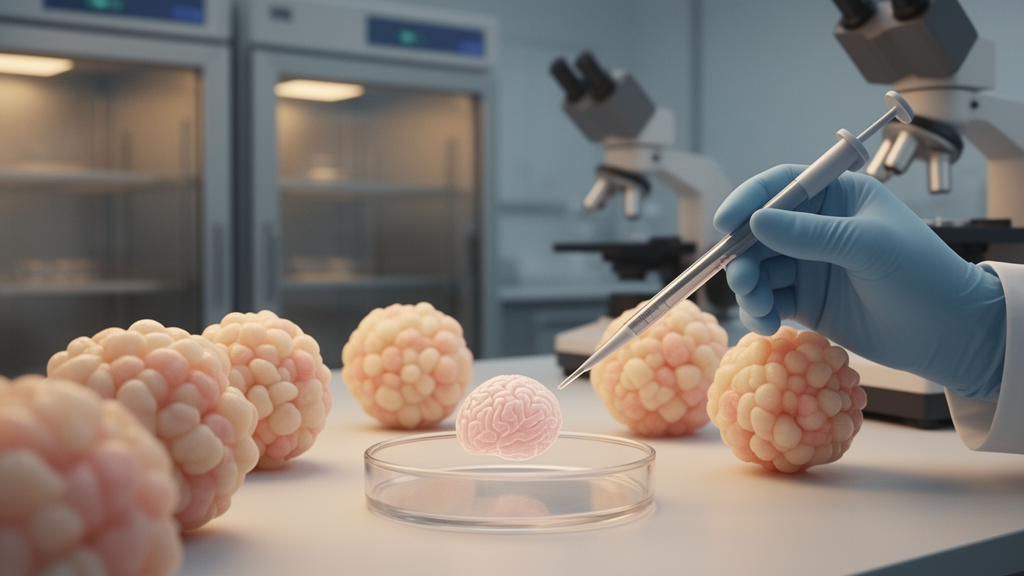
Organoid technologies offer a way forward. These three-dimensional cultures, grown from patient-derived cells, preserve patient-specific molecular profiles and a degree of spatial organization that conventional cultures lack. That means a model can retain the individual biological signature of the tumour it came from, an essential requirement for personalized therapeutic strategies. The review positions these platforms as physiologically relevant systems that bring laboratory experimentation closer to the reality of the disease in patients.
The most advanced of these systems, assembloids, go a step further by integrating multiple cellular components into a single construct. This integration allows researchers to investigate processes that simpler models cannot address, including glioblastoma invasion into surrounding tissue, cellular plasticity driven by the microenvironment, and the mechanisms underlying therapeutic resistance. Because resistance to standard-of-care treatment is a central reason mortality remains high, models that can recreate microenvironment-driven behaviour are of particular interest for translational research.
As a review, the article does not report new experimental findings of its own. Instead, it provides a critical overview of the current landscape of two- and three-dimensional in vitro models used in glioblastoma research, with a focus on emerging organoid and assembloid platforms. The authors weigh the strengths and limitations of each approach and highlight recent innovations in the field, assessing how far these tools have come and where challenges remain. The overall conclusion is cautiously optimistic: by preserving molecular profiles, spatial organization and tumour–microenvironment interactions in the laboratory, organoid and assembloid systems have the potential to advance translational research and support personalized therapeutic strategies for glioblastoma. The review makes clear, however, that these are opportunities rather than achieved outcomes, since the technologies are still developing and their limitations form part of the analysis. For a disease whose standard-of-care outcomes have barely shifted, better models are presented as a necessary foundation for the more effective therapies that clinical practice still lacks.
Subject of Research: Three-dimensional organoid and assembloid models for studying glioblastoma biology and therapy resistance
Article Title: Modelling glioblastoma with organoids and assembloids: Opportunities and challenges
Article References: Yüksel, B., Doğan, A., & Şahin, F. (2026). Modelling glioblastoma with organoids and assembloids: Opportunities and challenges. Medical Oncology, 43(11), Article 354. https://doi.org/10.1007/s12032-026-03472-7
Image Credits: AI Generated
DOI: 10.1007/s12032-026-03472-7
Keywords: glioblastoma, organoids, assembloids, tumour microenvironment, 3D cell culture, therapy resistance, intratumoral heterogeneity, personalized medicine, translational research, brain tumour models, Modelling, Opportunities
News Source: Nathaniel Bowman. (October 26, 2026). Organoids and assembloids reshape how researchers model glioblastoma. Scienmag.